jefferson tools
Tool theft costs UK tradespeople tens of millions every year, and summer only makes it worse. Darren Binns of Jefferson Tools explains what the industry needs to do differently.

Tool theft costs UK tradespeople tens of millions every year, and summer only makes the problem worse. Darren Binns of Jefferson Tools says the industry needs a fundamental rethink in how tools are stored, protected, and managed on site.
Every spring, as longer days bring construction projects back into full swing, a predictable pattern returns. According to Simply Business analysis, tool theft cost UK tradespeople an estimated £98.9 million in 2025, with the average claim rising 24% since 2020. With 94% of stolen tools never recovered, the financial impact is almost always permanent.
For electricians, groundworkers, agricultural contractors and heating engineers, the consequences go far beyond financial loss. A single theft can mean a lost day’s work, missed deadlines, cancelled contracts and a cash-flow crisis that takes months to recover from.
“We speak to tradespeople every day, and tool theft is one of the most common frustrations we hear about,” says Darren Binns, National Sales Manager at Jefferson Tools. “It spikes in summer because vans are parked on site for longer, people are working outdoors, and thieves know exactly what they’re looking for.”
A single break-in can result in thousands of pounds worth of equipment being taken in minutes.
The logic is simple: summer means longer working hours, busier sites, and more tools left in vans overnight or stored in open environments.
Agricultural contractors face additional risks, with machinery attachments and specialist equipment often left across large rural sites with minimal surveillance. For mobile trades such as electricians and installers, tools are constantly being loaded, unloaded, and left temporarily unattended.
At the centre of a more proactive approach is the Jefferson Tools philosophy of reducing opportunity rather than reacting to theft after it happens. Instead of relying solely on vehicle security, the focus shifts towards removing tools from vans whenever possible.
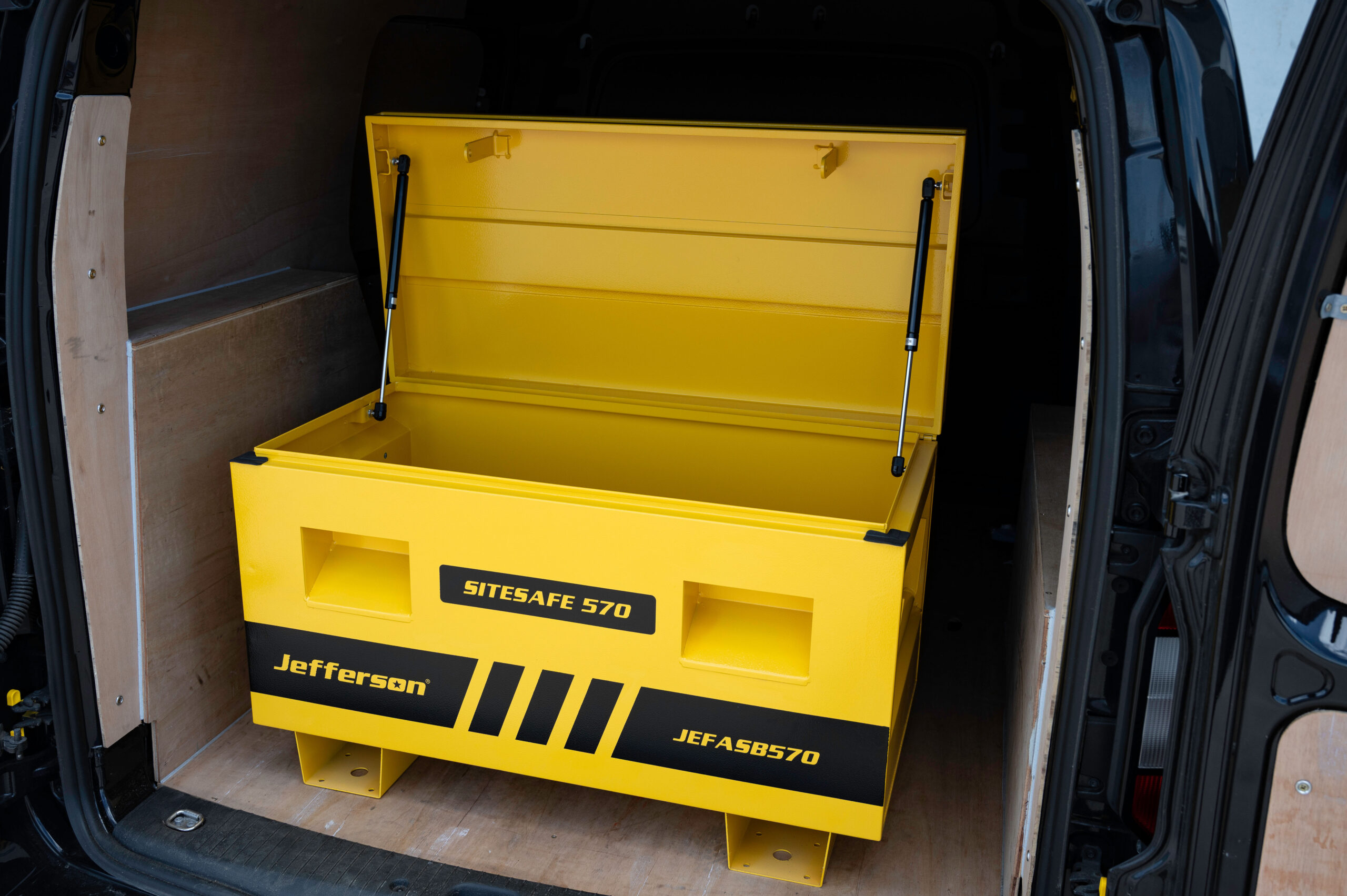
Jefferson Tools SiteSafe Truck Box range is designed for this purpose. Built from heavy-gauge steel with a durable powder-coated finish and twin shielded locking points, the boxes are engineered to resist forced-entry attacks.
The range includes multiple sizes, from compact units for smaller sites to large-capacity boxes capable of holding the contents of an entire van.
“The SiteSafe boxes are popular because they’re built for real working environments,” says Binns. “They’re weatherproof, rated for heavy loads, and the larger units even include forklift skids so they can be repositioned easily on site.”
The twin-locking design is key. Most thefts rely on speed — one weak point is often all it takes. By increasing resistance time, Jefferson Tools storage systems make forced entry far less appealing.
The twin locking points are a deliberate design choice. Tool thieves operate quickly – a single lock point is a single point of failure. Two shielded locks, combined with the structural integrity of heavy-gauge steel, significantly increases the time and effort required to gain entry. In most cases, that’s enough to make a site not worth the attempt.

Security isn’t just about equipment — it’s also about behaviour. The most effective approach combines good habits with reliable Jefferson Tools storage solutions.
Marking tools remains one of the most effective yet underused deterrents. UV marking or engraving tools makes resale more difficult and recovery more likely. Maintaining a photographic inventory also speeds up insurance claims and assists police investigations.
For workshops and depots, secure storage systems add another layer of protection, often used alongside Jefferson Tools products to keep tools locked away when not in use.
“It sounds basic, but most theft is opportunistic,” says Binns. “If tools are visible and accessible, you’re a target. If there are layers of effort involved, thieves usually move on.”
On site, simple habits also make a difference: locking vans, securing compounds, and ensuring consistent security standards all reduce risk without adding cost.
Jefferson Tools and the Reality for UK Tradespeople
Behind every statistic is a tradesperson who couldn’t work that day, a job that was delayed, or a client who had to be turned away. This is why Jefferson Tools continues to focus on practical, real-world protection rather than theory.
Tool theft is now a constant operational risk rather than an occasional disruption. While no solution can eliminate it entirely, combining secure storage, better habits, and layered protection makes a significant difference.
The goal is not just reducing loss, but making sure tradespeople are no longer an easy target — something Jefferson Tools continues to design its products around.
More from Skillbuilder – Tool Theft Fight Back — Home Office Responds
reccomended jeffresons truck boxes – Truck Boxes – Storage, Lifting & Transport – Products Tools & Equipment from Jefferson Tools