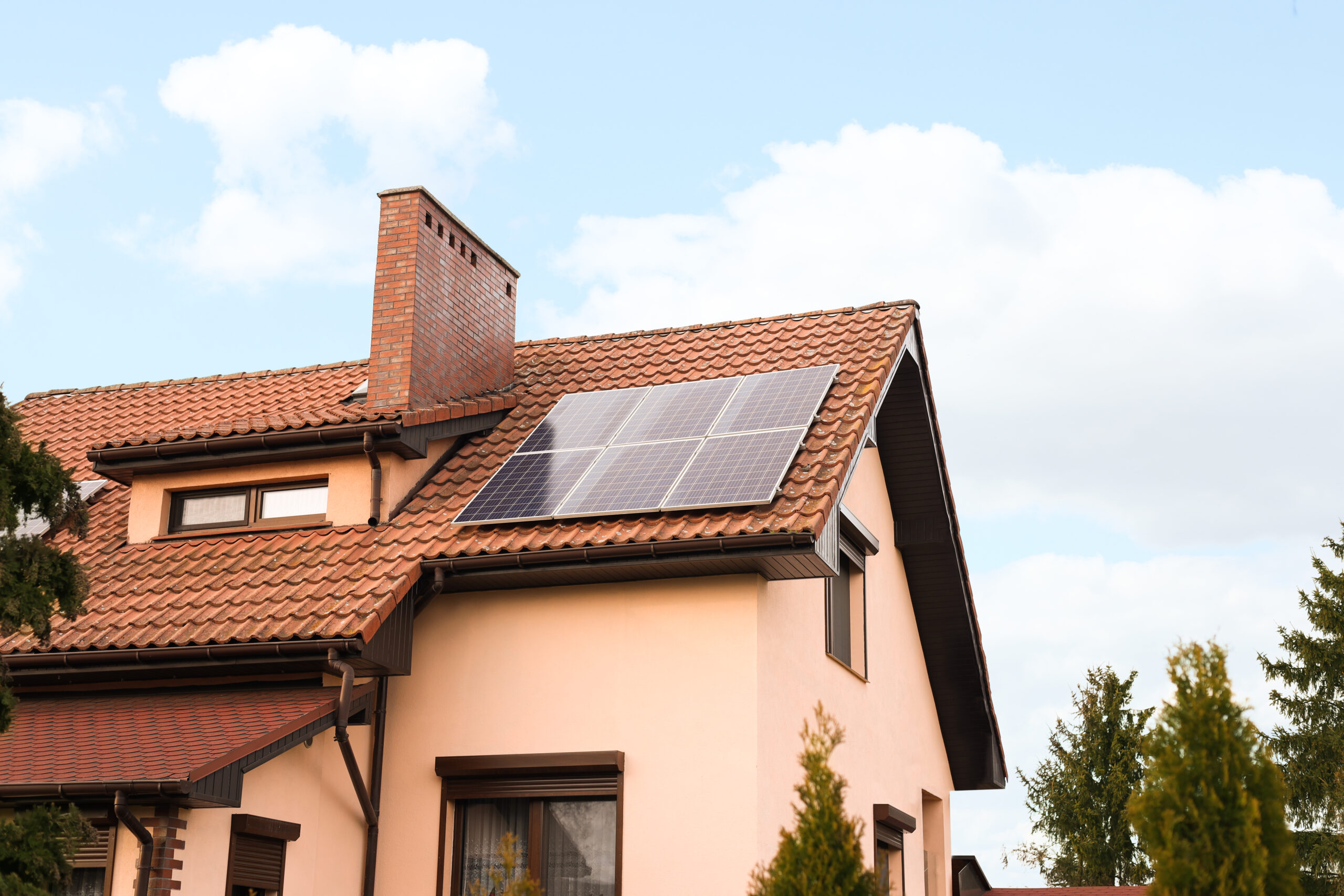
When Does Solar Panel Cleaning Actually Pay?
Solar panels are designed to be low-maintenance, but that does not mean they are completely maintenance-free.
Dust, bird droppings, leaves, pollen and lichen can gradually build up on the glass, reducing the amount of sunlight reaching the photovoltaic cells. For some households, particularly those with panels beneath trees or in dusty environments, that lost generation can translate into a surprisingly persistent cost.
But there is an important question homeowners should ask before reaching for the hose:
Is solar panel cleaning actually worth paying for?
At Recharge Renewable, the focus is not simply on keeping panels looking clean. With more than 20 years of experience in solar installation and aftercare, the team helps homeowners understand what affects solar performance and how to get the best long-term value from their system.
This guide explains how dirty solar panels can affect generation, how to spot genuine soiling losses, when cleaning makes financial sense and how to approach solar panel cleaning safely.
Can dirty solar panels reduce electricity generation?
Yes. Solar panels work by allowing sunlight to reach the cells beneath their glass surface. Anything that significantly obstructs that light can reduce the electricity the system generates.
This is known as soiling and can include:
- Dust and airborne dirt
- Bird droppings
- Leaves and other plant debris
- Pollen
- Lichen and moss
- Agricultural dust
- Construction dust
- Residue that collects along the lower edge of a panel
Not every dirty panel will suffer a significant performance loss. Light dust may be removed naturally by rainfall, while a stubborn deposit of bird mess or lichen can remain in place for much longer.
The Energy Saving Trust says solar panels generally require little maintenance and that rainfall can help keep roof-mounted panels clean, although homes exposed to trees, dust or bird droppings may need more frequent attention.
That distinction is important.
The aim should not be to clean solar panels simply because they are slightly dusty. The aim should be to identify when dirt is actually affecting performance.
How much money can dirty solar panels cost?
For a typical example, consider a 4kW domestic solar PV system generating around 3,800kWh of electricity a year.
Using the July 2026 Ofgem electricity price-cap rate of 26.11p per kWh, every unit of electricity that a household fails to generate may represent another unit that has to be purchased from the grid, assuming the household would otherwise have used that solar generation itself. Ofgem’s 26.11p figure applies to the average Direct Debit electricity unit rate under the price cap from 1 July to 30 September
The potential value of lost generation looks like this:
| Estimated output lost to dirt | Electricity lost each year | Approximate value |
|---|---|---|
| 3% | 114kWh | £30 |
| 4% | 152kWh | £40 |
| 5% | 190kWh | £50 |
| 10% | 380kWh | £99 |
| 15% | 570kWh | £149 |
The calculation is straightforward: annual generation is multiplied by the percentage of output lost, then by the electricity unit rate.
So a 10% reduction in generation on a 3,800kWh system represents around 380kWh of lost electricity. At 26.11p per kWh, that is approximately £99 of electricity.
At 15%, the theoretical value approaches £149 a year.
These are illustrative figures rather than a guarantee of what any individual household will save. Actual generation varies according to the property’s location, roof orientation, pitch, shading, system design and weather.
There is another important consideration: self-consumption.
If a household exports a large proportion of its solar generation, the financial value of recovering that electricity will generally be lower than the cost of buying electricity from the grid. Export payments vary between tariffs, so homeowners should use their own import and export rates when calculating the potential return from cleaning.
Which homes are most likely to benefit from solar panel cleaning?
Some solar installations are naturally more exposed to soiling than others.
Recharge Renewable recommends homeowners pay particular attention if their panels are:
Beneath trees
Trees can create several problems at once. Leaves can settle on the panels, pollen can form a film over the glass and bird activity may increase around branches.
Leaves are particularly worth checking because they can become trapped along the bottom edge of panels, where rainfall may not remove them.
In areas with lots of bird activity
Bird droppings can create concentrated areas of obstruction rather than an even layer of dust.
A single small mark may have little practical effect, but persistent deposits across several panels deserve attention.
On shallow-pitched roofs
Panel angle influences how effectively rain can wash across the glass.
A shallow installation may be less effective at shedding accumulated material, particularly when deposits become sticky or embedded.
Near agricultural or construction activity
Dust from fields, roads and building work can settle on panels and may accumulate more quickly than ordinary household dirt.
Where lichen or moss is visible
Lichen is a different proposition from loose dust.
It can remain attached to the surface and create persistent areas of obstruction that ordinary rainfall is unlikely to remove.
How can you tell if solar panel cleaning is necessary?
This is where homeowners can avoid spending money unnecessarily.
Don’t judge your system on appearance alone.
A dirty-looking panel is not automatically an underperforming panel, and a sudden fall in generation does not automatically mean the panels need cleaning.
Instead, use two pieces of evidence:
1. Look at the panels.
From ground level, check for obvious deposits, particularly bird mess, leaves, lichen or areas of heavy dirt.
2. Check the performance.
Open your inverter or solar monitoring app and look at generation over several bright days.
A persistent reduction in output combined with visible soiling is a much stronger reason to investigate than either sign on its own.
One cloudy week is not enough evidence. Solar generation naturally changes with weather, season, shading and other conditions.
Recharge Renewable’s advice is simple: visible buildup and a lasting performance drop should point in the same direction before homeowners spend money on cleaning.
If generation suddenly falls or one section of the system appears to stop producing altogether, contact the installer or a qualified solar professional. The cause could be an inverter, wiring, monitoring or panel fault rather than dirt.
Does rain clean solar panels?
Sometimes – but not always.
Rain is useful at removing loose dust and surface debris, which is one reason solar panels generally do not require intensive routine maintenance. The Energy Saving Trust notes that rain can do a good job of keeping roof-mounted panels clean, particularly where panels are positioned at an effective angle.
However, rain is less effective against stubborn deposits.
Bird droppings, sticky pollen, lichen and material trapped around panel edges can remain even after repeated rainfall.
That is why “it rains a lot in the UK” does not necessarily mean every solar panel will stay clean.
The right question is not how much rain the property receives. It is whether the panels are visibly accumulating material and whether that accumulation is affecting performance.
Safe solar panel cleaning
Safety should come before efficiency.
Never climb onto your roof to clean solar panels
This is the most important rule.
Solar panels are usually installed in locations that are difficult and dangerous for homeowners to access. A relatively small improvement in electricity generation is not worth risking a fall.
For panels that can safely be reached from ground level – such as installations on a garage or single-storey extension – a homeowner may be able to carry out basic solar panel cleaning.
For anything on the main roof, professional cleaning is the safer option.
Use soft equipment
For safely accessible panels, use a soft brush on a telescopic pole.
Plain water is generally sufficient for light dirt. If necessary, a small amount of mild washing-up liquid can be used, followed by a thorough rinse with clean water.
Avoid anything abrasive that could scratch the glass or damage its surface.
Clean when the panels are cool
Early morning or evening is preferable.
Cleaning hot panels can cause water to dry quickly, potentially leaving streaks and mineral deposits. A significant temperature difference between cold water and very hot glass is also best avoided.
Never use aggressive cleaning equipment
Avoid:
- Pressure washers
- Abrasive pads
- Metal scrapers
- Harsh chemicals
- Aggressive cleaning products
These can damage the panel surface, coatings, seals or frame.
If in doubt, check the panel manufacturer’s maintenance instructions or ask the original installer.
Is professional solar panel cleaning worth the cost?
This is ultimately a calculation rather than a rule.
The cost of professional solar panel cleaning varies according to the number of panels, roof accessibility, location and cleaning method. A whole domestic system may cost somewhere in the region of £80 to £150, although quotes can be higher or lower depending on the installation.
That means a homeowner should compare the cleaning quote with the realistic amount of generation they expect to recover.
For example, if cleaning costs £100 but the evidence suggests the system is only losing around £30 of useful electricity a year because of light soiling, the financial case is weak.
If the same £100 clean addresses heavy soiling that is plausibly costing close to £100 or more a year, the calculation looks very different.
This is why Recharge Renewable’s approach is about evidence rather than a fixed cleaning schedule.
A high-risk, heavily soiled array may benefit from professional attention. A clean-looking system in a rainy location may not.
How often should solar panels be cleaned?
There is no universal answer.
Some homes may benefit from occasional cleaning, while others can go much longer without intervention.
The Energy Saving Trust currently advises cleaning solar panels every 12–18 months, with more frequent attention where panels are exposed to dust, trees or bird droppings. It also stresses that roof-mounted panels can benefit from natural rainfall.
For homeowners, the most sensible approach is to combine that general guidance with the circumstances of the individual installation.
Ask:
- Are there visible deposits?
- Are leaves accumulating?
- Is there lichen?
- Are birds regularly fouling the panels?
- Is the property near a dusty environment?
- Does the monitoring data suggest a persistent performance issue?
- Will the likely recovered generation justify the cleaning cost?
That gives you a much better answer than simply putting “solar panel cleaning” in the diary every year.
When should you call a solar professional?
Cleaning and fault diagnosis are not the same thing.
If the system’s performance changes gradually alongside visible dirt, cleaning may be a reasonable first consideration.
If output suddenly drops, one panel or section behaves differently from the rest, the inverter reports an error, or generation appears abnormal despite clean panels, contact the installer or a qualified professional.
Recharge Renewable has more than 20 years’ experience designing, installing and supporting solar PV systems, and provides aftercare alongside its installation services. The company is MCS accredited and also holds RECC, TrustMark, Quality Mark and NICEIC credentials.
That combination matters because the best solar advice is not simply about cleaning glass. It is about understanding the entire system and distinguishing normal variation from a genuine performance problem.
The bottom line: clean your solar panels when the evidence says to
Solar panel cleaning can be worthwhile, but it should not become another household chore performed simply because the calendar says so.
A little dust washed away by rain is unlikely to justify paying for a professional clean. Heavy bird mess, trapped leaves, lichen and persistent grime are different – particularly when monitoring data suggests that generation is suffering.
For homeowners, the best starting point is remarkably simple:
Look at the panels. Check the generation. Then calculate the potential saving before paying for cleaning.
And if the panels are difficult or dangerous to access, don’t take the risk yourself.
Recharge Renewable’s expertise is ultimately about helping homeowners get more from their renewable-energy investment, from the original system design and installation – through to understanding performance and keeping that investment working effectively for the long term.
For homeowners who are unsure whether their solar system is performing as it should, the sensible next step is to speak to an experienced renewable-energy specialist, rather than guessing.
A cleaner panel may generate more electricity. But knowing whether it needs cleaning in the first place is where the real saving begins.
More Solar Advice from Skill Builder
Want to learn more about looking after your solar installation and getting the most from renewable energy? Explore these related guides from Skill Builder:
Solar Panel Fires: How to Stay Safe Before and After Installation
Find out what can cause solar panel fires, the warning signs to look out for and why ongoing maintenance matters.
Solar Panel Fires Are Rising – Here’s Why
A closer look at the risks associated with solar PV systems and the steps homeowners can take to keep their installation safe.
Plug-In Solar in the UK: Is This the Simplest Way to Start Saving Energy?
Discover how plug-in solar works, who it could suit and what homeowners need to know about safety and installation.