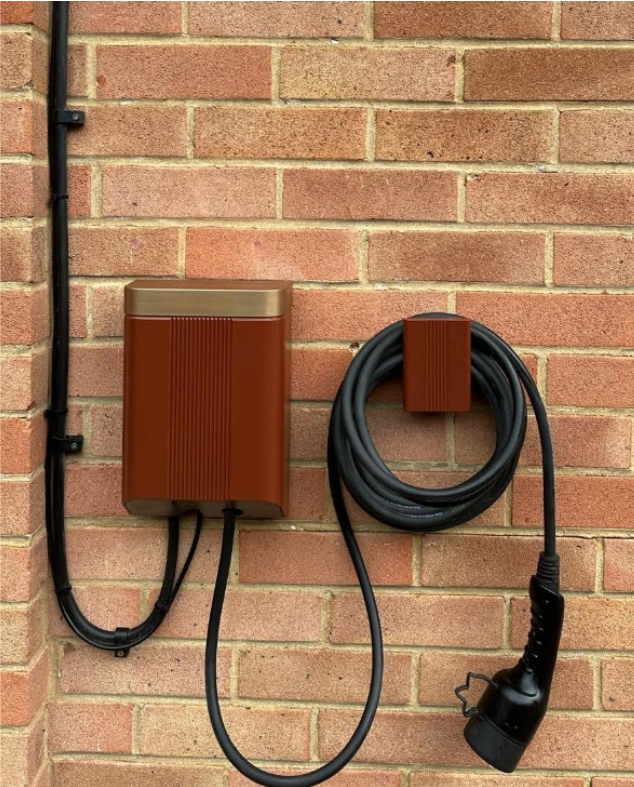
Why Your Home EV Charger Could Cost More Than Expected
For UK households, a home EV charger sold as an £800 to £1,200 standard installation can end up costing more than £2,000 when the property falls outside an installer’s basic package. The increase in EV Charger Installation Cost usually comes from the route to the parking space or electrical work required inside the home, rather than the wallbox itself.
Home EV charging specialists at Recharge Renewable reviewed current UK installation benchmarks alongside government and electrical guidance, to identify five extras homeowners should ask about before accepting a quote. Energy Saving Trust puts a typical home ChargePoint installation at £800 to £1,200, while current market guides show that more complex installations can exceed £2,000.
The difference matters because headline installation prices are normally based on a defined set of conditions. A charger positioned close to a suitable consumer unit with an accessible cable route is one thing; an older property with a detached garage, long cable run or electrical work required before connection is another.
1. Longer Cable Routes Can Increase EV Charger Installation Cost
Standard installation packages commonly include a set amount of cable between the consumer unit and the charger, often around 10 metres. If the parking space is further away, the extra distance can increase both material and labour costs.
Current 2026 guides put additional cable at roughly £10 to £20 per metre beyond the standard allowance. The price can rise further where thicker cable is required or the route involves difficult access, drilling, containment or additional work through the building.
The physical distance is not always the only issue. A cable may need to pass around the outside of a property, through a garage or utility space, or follow a route that protects both the installation and the appearance of the building. Two homes requiring the same charger can therefore produce very different quotations simply because of where the consumer unit and parking space are located.
Before accepting a price, homeowners should ask how much cable is included and whether the proposed route is covered by the standard installation charge.
2. Trenching and Reinstatement Can Add Hundreds
Where the charger is fitted to the house or an attached garage, the cable may be installed without major groundworks. A detached garage, separate parking area or charger located away from the building can be more involved, because the electrical supply may need to cross a garden, path or driveway.
Published estimates put common groundworks at around £200 to £500. Checkatrade lists soft-ground trenching at approximately £30 per metre and a typical £300 minimum for digger hire.
The surface above the cable also needs to be considered. Digging through soil is very different from crossing block paving, concrete or an established driveway. Once the cable has been installed, disturbed surfaces may need to be reinstated, and that work is not necessarily included in the installer’s headline price.
For that reason, any quote involving buried cable should state who is responsible for excavation and making good afterwards. A lower EV Charger Installation Cost can quickly become less attractive if substantial groundworks have simply been excluded from the initial figure.
3. Consumer Unit Work May Be Required
A modern consumer unit with suitable protection and enough capacity may not require major alteration before a dedicated EV charger circuit is added. Older or already full units can present a different situation.
An EV charger introduces a significant new electrical load, so the existing installation needs to be assessed before connection. If the consumer unit is unsuitable, full or requires upgrading, that work can add hundreds of pounds to the project.
Current guides place consumer unit replacement work at roughly £300 to £800, depending on the board, specification and extent of the work required.
This does not mean that installing an EV charger automatically means replacing the consumer unit. In many homes it will not be necessary. What matters is that its condition and available capacity are assessed before the customer is given a final price.
A quote based solely on the cost of mounting the charger and running cable can therefore give an incomplete picture of the eventual EV Charger Installation Cost.
4. Load Management or Supply Upgrades
The additional charging load also has to fit within the electrical capacity available to the property. An installer needs to consider the home’s existing demand alongside the proposed EV charger, particularly where other high-demand electrical equipment is already installed.
Load management can help where available capacity is limited. These systems monitor demand within the property and can reduce the charger’s power when necessary, preventing the overall load from exceeding the available supply.
Some EV chargers already include load limiting or related technology, while others may require additional equipment. The quote should make clear which features are built into the charger and which are being supplied separately.
In less common cases, the incoming electrical supply itself may require alteration. IET guidance notes that EV charging can require load curtailment, an additional supply or another phase depending on the circumstances, while current cost guidance estimates that significant main-supply or capacity upgrades can add around £500 to £2,000.
These are not routine charges for every installation, but they illustrate why the electrical survey is an important part of establishing an accurate price.
5. Safety and Remedial Electrical Work
A home EV charger needs the correct circuit protection and earthing arrangement. Existing electrical defects or missing protective equipment may therefore have to be addressed before the charger can be connected.
Some modern chargers incorporate features such as open PEN protection within the unit. Where those protections are not built in, additional equipment may be necessary.
An isolator can also form part of the work. Checkatrade estimates a new isolator at around £100 to £200, while the cost of wider remedial work depends entirely on the condition of the property’s electrical installation.
Again, these costs do not apply universally. The installer should identify what protection is already provided by the charger, what the existing installation provides and whether anything else is required to make the installation compliant and safe.
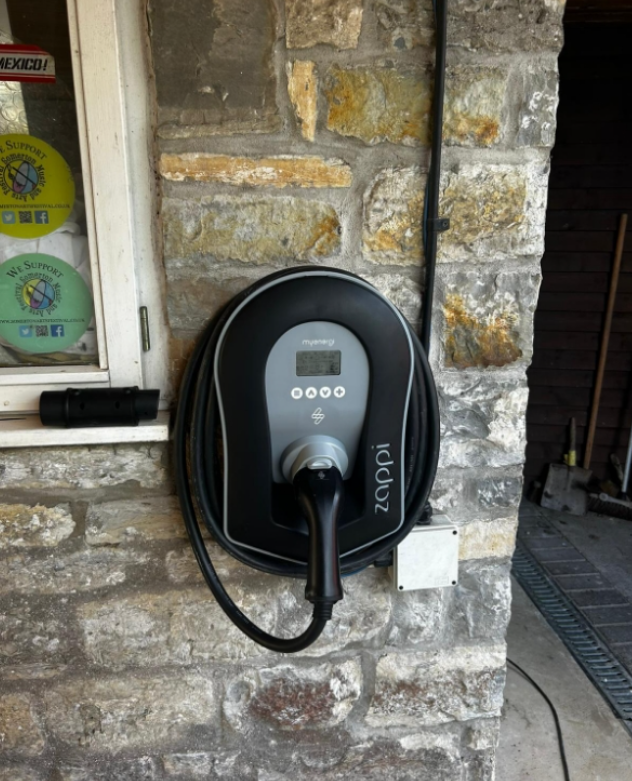
What Should A Standard EV Charger Quote Cover?
A standard package may include the charger, wall fixing, a defined amount of surface-mounted cabling, connection and circuit protection, testing, certification and DNO notification. Groundworks, unusually long cable routes, electrical upgrades and reinstatement are commonly outside that scope, although definitions vary between installers.
That variation makes comparing the headline EV Charger Installation Cost alone unreliable. One installer may include more cable, protection or administrative work than another, meaning a slightly higher initial quote could represent better value once every required element is taken into account.
With the final price driven heavily by the property’s cable route and electrical capacity, the survey should establish exclusions before the customer accepts the figure.
Recharge Renewable recommends asking the installer to state how much cable is included, whether disturbed surfaces will be reinstated, and whether load limiting, electrical protection, DNO paperwork and certification sit inside the quoted price. If the survey identifies extra work, each item should have its own cost and explanation so that competing quotes can be compared like for like.
How To Compare Home EV Charger Quotes
Homeowners should first make sure they are comparing the same charger power, model and tethered or untethered arrangement. They should then confirm the included cable length, proposed route and whether drilling, trenching or making good is covered.
The quote should also identify any consumer unit work, isolator, load management or remedial electrical work. VAT, electrical certification, DNO administration and warranties should be clearly shown rather than left as assumptions.
Grant eligibility and property permissions are worth checking before installation as well. Renters, leaseholders and people living in flats may need approval from a landlord, freeholder or managing agent before work can begin.
Government Support For EV Charger Installation Cost
From 1 April 2026, eligible renters and flat owners can receive 75% of purchase and installation costs up to £500, provided they meet the scheme rules and use an OZEV-authorised installer.
Households relying on on-street parking have a separate grant of up to £500 for an approved cross-pavement solution. An owner-occupier living in a house with private off-street parking cannot use the renters and flat owners scheme.
The grants are scheduled to run until 31 March 2027, so anyone considering an installation should check the latest eligibility requirements before relying on grant funding as part of their budget.
DNO Involvement And Home EV Charging
DNO involvement is a connection process and should not automatically be treated as a paid extra.
The Institution of Engineering and Technology states that if the whole property’s maximum demand remains below 13.8 kVA after installation, the Energy Networks Association must be notified within one month. Where demand exceeds that level, the DNO needs to be contacted before connection.
The installer should explain which route applies to the property and clearly itemise any network or supply work that genuinely carries an additional cost.
Understanding The Real EV Charger Installation Cost
The advertised price of a home charger is useful as a starting point, but it cannot account for every property. Cable distance, ground conditions, the existing consumer unit, available electrical capacity and remedial work can all change the final EV Charger Installation Cost.
These extras will not apply to every household. The important distinction is between work that is genuinely required by the property and work already covered by the installer’s standard package.
A detailed survey should establish that before the customer commits. Asking exactly what is included, what is excluded and why any additional work is necessary gives homeowners a far better basis for comparing quotes and reduces the risk of an £800 to £1,200 installation becoming a much more expensive job later.
As electric vehicles become a bigger part of everyday life..
Getting the charging setup right at home is only one part of the picture. Cost, range, charging time and how an EV performs in real working conditions all matter, particularly for tradespeople considering the switch. Skill Builder has also put an electric van to the test, looking at what it’s actually like to use one for day-to-day trade work and whether electric really makes sense on the road.