Roger takes a look at a viewer’s suspended floor problem, where water has been found pooling beneath the bay window and causing damp floors.
When you discover damp floors, it can be tempting to assume the problem is coming from a leaking pipe, rising damp or a failure in the floor itself. But when water is found beneath a suspended timber floor, the real source of the problem may actually be outside the building.
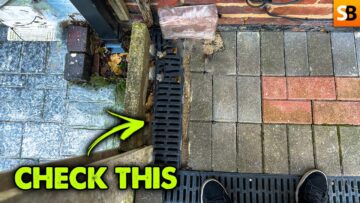
In this case, water is collecting beneath the bay window. That makes the surrounding driveway, paving, gullies and drainage important areas to investigate when trying to find the cause of the damp floors.
One possible cause is surface water running towards the property. If the levels around the bay window have changed over time, rainwater may be directed towards the building rather than away from it. Block paving can also settle, creating low spots where water collects. Eventually, that water can find its way into the ground beneath the house and contribute to damp floors.
A blocked or leaking gully is another potential cause of damp floors. Gullies are designed to collect surface water and direct it into the drainage system. But if a gully is blocked with silt, leaves or other debris, water can overflow and soak into the surrounding ground.
There may also be a problem with a channel drain installed when the block paving was laid. If the channel drain was poorly connected, damaged or discharging into the wrong place, it could be directing water towards the foundations and contributing to damp floors.
Damp Floors: Follow the Water Back to Its Source
Before ripping anything apart, Roger explains the importance of approaching the problem like a detective. Investigating damp floors is often about finding the source of the water rather than simply dealing with the visible symptoms.
Start by asking what has changed. Was the paving installed recently? Has the problem only appeared after landscaping work? Have the external ground levels been raised? Has a drain or gully been altered?
These details can provide valuable clues when investigating damp floors.
The next step is to clear away any debris and inspect the drainage points properly. A blocked drain can create an apparently complicated problem with damp floors that is actually relatively simple to solve.
It is also worth observing what happens during heavy rain. Does water collect around the bay window? Does it flow towards the house? Does the ground remain saturated long after the rain has stopped?
Testing the drains with a hose can also reveal problems. By introducing water into gullies and channels, you may be able to identify leaks, blockages or poorly connected pipework. This can help establish whether the source of the damp floors is related to surface water drainage.
Older properties can present another potential problem: clay drainage pipes. These can crack, move or become displaced over time. A damaged underground pipe may be leaking water into the surrounding soil, keeping the ground permanently wet and contributing to damp floors.
The important lesson is not to jump straight to the most destructive solution. A suspended floor may be affected by moisture, but the floor itself may not be the original cause of the damp floors.
When investigating damp floors, always look beyond the visible symptoms. Check the paving. Check the levels. Check the gullies. Check the drains. Check what has changed.
Water usually leaves clues. The challenge is following them back to the source.
The correct diagnosis is essential when dealing with damp and moisture problems in older properties. Guidance from Historic England highlights the importance of understanding how moisture moves through traditional buildings before choosing a remedial treatment.
_______________________
🔑 Key Insights
• Water under a suspended timber floor needs investigating quickly, especially if joists show signs of long-term staining or damp.
• If a problem appears after paving or drainage work, always look first at what has changed outside the house.
• Block paving, channel drains and gullies must be properly connected, otherwise surface water can end up against the foundations.
• Old clay or salt-glazed drain pipes can crack and leak underground, allowing water to escape beneath the house.
• A simple hose test, ideally during a dry spell, can help reveal whether a gully or underground pipe is leaking.
• Clear leaves and debris from gullies and channel drains, as overflowing rainwater can cause serious damp problems.
• If the drain is damaged, replacing the faulty section with modern plastic pipe and suitable connectors is usually a straightforward job.
• Before spending big money, do some basic detective work, because the fix may be simpler than it first appears.
_______________________
Got a question of your own? Send it in — Ask Skill Builder is a free service!
📪 ASK SKILL BUILDER
https://skill-builder.uk/send
We have over 1,300 episodes. Join 740,000 subscribers and help us hit that 1 million milestone!
More from Skillbuilder – https://skill-builder.uk/rising-damp-keeps-returning-because-of-this
_______________________
#DampProblems #SuspendedFloor #Drainage #DIYHomeMaintenance #SkillBuilder