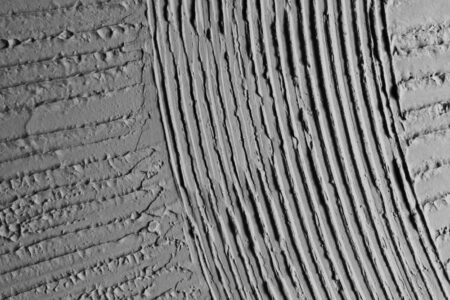
Artex ceilings often get treated as a cosmetic problem.
The texture looks dated. The pattern is unwanted. The surface may have been painted several times and now looks tired, uneven or difficult to decorate.
So the obvious solution seems simple: cover it up.
Perhaps apply a layer of plaster. Perhaps skim over the top. Perhaps scrape the texture away and start again.
But with older properties, the surface you can see is not always the real problem.
In many cases, Artex ceilings are simply the visible finish over a much older construction.
Underneath that textured coating could be traditional lath and plaster, old plasterboard, previous repairs or a ceiling that has already experienced years of movement.
That means the most important question is not always:
“How do I get rid of the Artex?”
It may be:
“What condition is the ceiling actually in underneath?”
The Problem With Treating the Surface
A textured coating can hide a lot.
Small cracks may disappear into the pattern. Previous repairs can become difficult to identify.
Areas of movement may not be obvious until the surface is painted or a new layer of plaster is applied to the Artex Ceilings
This is one of the reasons that dealing with Artex ceilings requires more thought than simply choosing a new finish.
If the existing ceiling is stable and well bonded, covering it may be a perfectly reasonable approach.
But if the existing plaster is loose, cracked or moving, adding another finish over the top does not necessarily solve the problem. It may simply add weight and moisture to a surface that is already struggling.
The result can be a ceiling that looks perfect for a short period before cracks begin to reappear.
Sometimes the new finish can even make the original problem more difficult to diagnose.
Artex Ceilings and Old Lath and Plaster
Many older UK properties contain traditional lath and plaster ceilings.
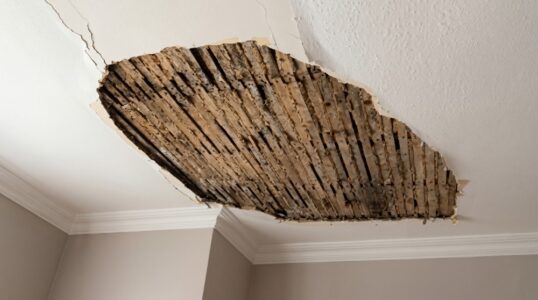
These ceilings were constructed using narrow strips of timber, known as laths, fixed to the underside of the joists.
Plaster was then pushed between the gaps in the laths, creating small keys that helped hold the plaster in place.
When new, this was a highly effective construction method.
But old lath and plaster can deteriorate over time.
The timber laths can move. The plaster keys can break. The ceiling can sag. Previous alterations can weaken sections of the construction.
In some cases, a textured finish such as Artex was later applied over the original ceiling to improve its appearance or cover minor imperfections.
This can create a layered construction in which the visible finish is only one part of the overall ceiling.
The textured coating itself may be perfectly sound, while the plaster underneath is failing.
Alternatively, the old plaster may be stable, but the surface may not be suitable for the weight or moisture associated with a new plaster skim.
Understanding what is beneath the Artex is therefore an important part of deciding how to proceed.
Why Adding Moisture Can Make Things Worse
One of the most common approaches to covering Artex ceilings is to apply a plaster skim.
This can produce a smooth, modern finish, but it is not automatically the right solution for every ceiling.
Plaster products contain water. When applied to an old surface, that moisture can be absorbed into the existing materials.
On a sound, stable substrate, this may not cause any significant problem.
But if the existing plaster is already weak, poorly bonded or vulnerable to movement, introducing additional moisture can create complications.
The old surface may soften.
Weak areas may lose further adhesion.
Different materials may dry and shrink at different rates.
And as the new finish dries, movement in the original ceiling can transfer through the new skim.
The result can be cracking, hollow areas or sections of plaster that eventually detach.
This does not mean that plastering over Artex ceilings is always wrong.
It means the condition of the existing ceiling needs to be considered first.
A new finish is only as reliable as the surface supporting it.
Is Overboarding a Better Option?
In some situations, overboarding can provide a more reliable solution.
Rather than relying on an old, uncertain surface to support a new plaster finish, new plasterboard is fixed to the structure, creating a fresh substrate.
The existing ceiling remains in place, but the new board provides a stable surface for the final finish.
This can be particularly useful where the original ceiling is uneven, cracked or difficult to assess.
However, overboarding is not something that should simply be carried out without thought.
The fixing method matters.
The position of the joists or other structural supports needs to be identified. The new boards need to be properly supported and securely fixed.
There are also practical considerations.
Adding a new layer to the Artex ceiling can affect ceiling height. Electrical fittings, light fittings, coving and other details may need to be adjusted.
In older buildings, the construction above the ceiling may also need to be considered before drilling or fixing.
So while overboarding can often provide a more dependable result than attempting to rescue a failing surface, it still needs to be carried out properly.
The objective is not simply to cover the problem.
The objective is to create a sound ceiling system.
Scraping Artex Off Is Not Always the Answer
Another option is to remove the textured coating entirely.
This may seem like the most direct solution, particularly when the homeowner wants to restore the ceiling to a smooth finish.
But scraping Artex from an old ceiling can create its own problems.
The texture may be firmly bonded to the plaster underneath. Removing it aggressively can damage the original surface.
You may end up removing part of the ceiling rather than simply removing the decorative coating.
There is also an important safety issue.
Some older textured coatings may contain asbestos.
The presence of Artex Ceilings does not automatically mean asbestos is present, and the age and composition of a textured coating cannot be reliably determined simply by looking at it.
However, if there is any doubt, the material should be assessed before it is disturbed.
Sanding, scraping, drilling or otherwise breaking into an older textured coating can create unnecessary risk if asbestos-containing material is present.
That is why testing and professional advice may be appropriate before carrying out work on older Artex ceilings.
The Finish Is Not the Foundation
This is the point that often gets missed.
People naturally focus on the finish they can see.
They want a smooth ceiling.
They want the pattern gone.
They want the room to look modern.
But the quality of the final finish depends heavily on what is underneath it.
A perfectly smooth skim over a moving substrate is not a successful repair.
A beautifully decorated ceiling that begins cracking a few months later has not solved the underlying problem.
The strongest approach is to assess the condition of the existing ceiling before deciding how to finish it.
Is the surface stable?
Is there movement?
Are there cracks?
Are sections hollow or loose?
Is the existing plaster properly bonded?
What is the ceiling constructed from?
And could the existing textured coating contain asbestos?
These questions are more important than simply deciding which product to apply next.
When Should You Get Professional Advice?
Some problems are relatively straightforward.
A stable ceiling with a sound existing surface may be suitable for a new finish, depending on the materials and preparation required.
Other situations are less clear.
If the ceiling is sagging, cracking significantly or showing signs of movement, it should be investigated rather than simply covered.
Likewise, if there is evidence of water damage, the source of the moisture needs to be resolved before any new finish is applied.
A ceiling that has been damaged by a roof leak or plumbing leak may look dry on the surface while the materials underneath remain weakened.
Applying a new finish before the problem has been properly dried and repaired can simply hide the damage.
Older properties can also contain a mixture of construction methods and materials. A single ceiling may have been repaired or altered several times over its life.
That makes careful assessment particularly important.
The Best Way to Deal With Artex Ceilings
There is no single solution for every property.
Some Artex ceilings can be skimmed.
Some may be better overboarded.
Some may need sections of the original ceiling repaired first.
And in other cases, the existing ceiling may need more extensive work.
The correct solution depends on the condition of the ceiling and the construction beneath the surface.
The key lesson is simple:
Do not confuse a cosmetic problem with a structural one.
If you’re dealing with Artex ceilings yourself, take a moment to check what you are actually fixing.
A textured finish may be ugly, outdated or difficult to decorate, but that does not necessarily mean the entire ceiling needs to be removed.
At the same time, covering the problem without understanding what lies underneath can create more problems later.
A solid, stable base matters far more than the finish on top.
In many cases, creating a new, properly supported surface through overboarding may provide a more reliable result than repeatedly trying to rescue a failing old ceiling.
And if the property is older and there is any doubt about the composition of the existing textured coating, get it checked before disturbing the surface.
Because when it comes to Artex ceilings, the most important part of the job may be the part you cannot see.
Got a question of your own? Send it in — Ask Skill Builder is a free service!
📪 ASK SKILL BUILDER
https://skill-builder.uk/send
We have over 1,300 episodes. Join 738,000 subscribers and help us hit that 1 million milestone!
Recomended – https://www.hse.gov.uk/asbestos/location-materials.htm?ContensisTextOnly=true&utm_source=chatgpt.com
_______________________
🔑 KEY TAKEAWAYS
• If Artex is on lath and plaster, overboarding is usually the safest option
• Skimming over Artex can cause sagging due to moisture loosening the bond
• Painted textured coatings behave differently and can sometimes be skimmed
• Always check for potential asbestos in older Artex before disturbing it
• Overboarding creates a stable, modern surface that’s easier to plaster
_______________________
#DIY #artex #overboarding