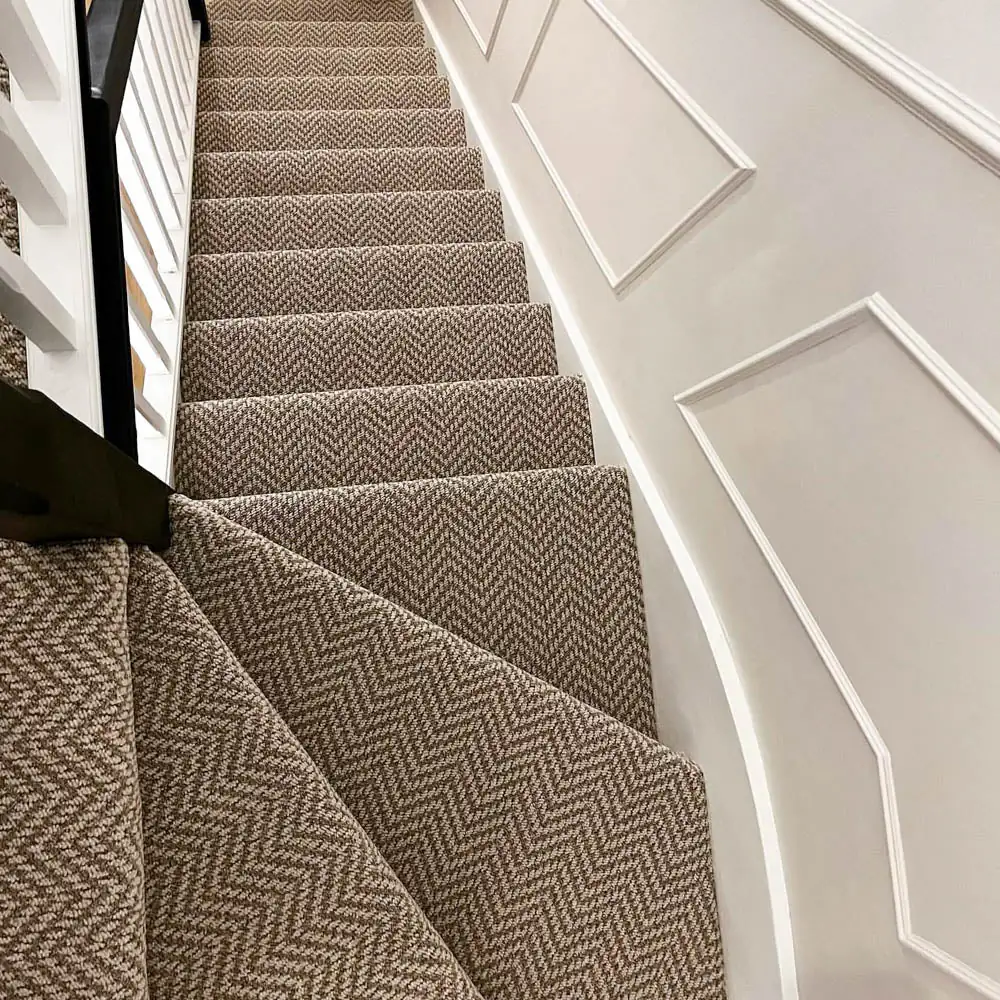
Why Herringbone Carpets Work So Well in Period Homes
Period properties can take pattern well, but the floor still has to work with the building rather than compete with it. Hallways, stairs and landings can bring several original features together, from timber balustrades and deep skirting to decorative plasterwork, so the carpet becomes part of a wider renovation decision rather than a finishing touch chosen in isolation.
Herringbone carpet can suit that setting because the pattern adds definition without relying on a bold colour. For builders, fitters and homeowners, the practical questions are how the pattern will work in the space, how it will meet adjoining areas and what needs checking before the carpet is ordered.
Start With the Route Through the Property
On a renovation job, the hallway and stairs are often the first places where a patterned carpet is considered. They connect several rooms, remain visible from more than one angle and usually have fixed architectural features that the new finish needs to sit beside.
Before choosing a pattern, look at the full route from the entrance to the landing rather than treating each section separately. Doorways, turns in the staircase and changes in width can all affect how much of the design remains visible. A small sample may look quiet on a table but become much more prominent once it runs across several metres of floor.
For period renovation projects where a patterned carpet is needed for stairs, landings or hallways, Urmston Carpets offers herringbone carpet options in wool, wool-blend and stain-resistant synthetic fibres. Viewing a larger sample can help before the final choice is made because both scale and colour are easier to judge in context.
Match the Pattern to the Space
The direction of a herringbone carpet design becomes particularly noticeable in narrow spaces. That makes it worth deciding the intended orientation before ordering rather than leaving the question until fitting day.
In a straight hallway, the pattern can be planned around the main line of travel. On stairs, the visual effect also depends on how the design continues from tread to riser and then onto the landing. Where several sections meet, consistency matters. A pattern that changes direction unexpectedly can draw attention to the join rather than the overall finish.
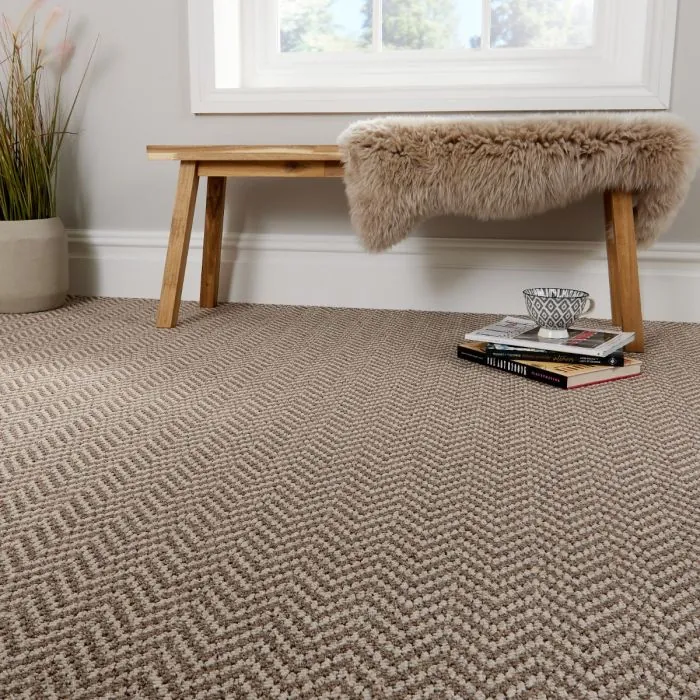
Room size matters too. The scale of the repeat is worth viewing in the space itself. A design that looks subtle on a small sample can appear much stronger across a landing, stair or corridor. There is no single correct scale for a period property, so the surrounding joinery, wall colour and available floor area should guide the choice.
Measure With Pattern Matching in Mind
Patterned carpet needs more planning than a plain surface because the repeat has to be considered where separate lengths meet. That is particularly relevant on stairs, landings and hallways where several pieces may need to look continuous once fitted.
A room measurement alone does not tell the whole story. The fitter also needs to know the carpet width, the pattern repeat and where joins are likely to fall. Stairs can add another layer of planning because winders, landings and changes in direction may alter the amount of material required.
It is worth settling this before the quote is finalised. Allowing for the pattern at the ordering stage reduces the chance of discovering later that there is too little material for a clean match. It also gives the client a clearer picture of how the chosen design will work across the whole area.
Check the Existing Floor Before Fitting
A patterned carpet will not solve problems in the floor beneath it. Loose boards, raised fixings, damaged sections and uneven surfaces are better dealt with before the underlay and carpet go down.
Older properties deserve a careful look because the floor may have been repaired or altered several times. What appears to be a minor uneven area can turn out to be a loose board or an old patch once the previous covering is lifted. Not every period floor will need major work, but any defects that could affect the finished fit are better identified at this stage.
The same applies at doorways and transitions. Check how the carpet will meet timber, tile or another floor covering in the next room, and confirm that doors will still clear the finished build-up. These details are much easier to solve before fitting than after the carpet is already in place.
Choose Fibre and Underlay for the Actual Job
Herringbone describes the pattern, not one fixed carpet construction. Available ranges can use wool, wool blends or synthetic fibres, and the right choice depends on the room, the household and the level of use expected.
For a staircase or entrance hall, the client may prioritise resilience and straightforward maintenance. In a bedroom or sitting room, feel underfoot may carry more weight. Rather than assuming one fibre is automatically best for a period renovation, check the specification of the particular range and whether it is intended for the area being covered.
Underlay should be treated in the same way. It needs to suit the carpet, the subfloor and the location, so the product guidance and fitter’s recommendation are more useful than a generic rule. On stairs, the way the carpet is secured and aligned also deserves particular attention because a repeated pattern can make poor fitting more noticeable.
Make the Final Details Part of the Plan
The edges and transitions matter almost as much as the main field of carpet. Skirting, thresholds, stair rods, runners and adjoining finishes can all change how traditional or contemporary the final result feels.
If the carpet is being used as a runner, border and edging choices should be agreed before the material is cut. In a fully carpeted hallway, the emphasis may instead be on keeping the pattern aligned as it passes doors and reaches the foot of the stairs. Neither approach is automatically more suitable for an older property. The right one depends on the building and the brief.
For renovation work, herringbone carpets work best when the pattern is considered alongside the building itself. The repeat, direction, existing floor and choice of material all affect how convincing the finished result feels. Planning those details before fitting helps the carpet sit naturally within the property rather than looking like a decorative addition chosen at the last minute.
Related Skill Builder Guides
- Floor Levelling Compound – Learn more about preparing and levelling floors before fitting new flooring.
- Smooth & Level Floors with Dunlop LX-360 Fibre Leveller – A guide to achieving a smooth, level surface ready for floor coverings.
- No More Creaks! DIY Stair Repair Tutorial – Helpful advice for identifying and repairing creaky stairs before carpet fitting.