A slipped lead hip might not look dramatic from the ground, but once the lead moves down the roof, it can leave the timber beneath exposed to wind and rain. That’s when the real problems begin, as water quickly finds its way into the roof structure and starts to cause hidden damage that often goes unnoticed until staining or rot appears inside the property.
In this repair, Roger deals with a slipped lead hip that has already allowed moisture to penetrate the roof space. The displaced lead has lifted away from its correct position, exposing the timber beneath and leading to rot in places where water has been repeatedly entering. Although the movement looks relatively small externally, the internal damage can be far more extensive.
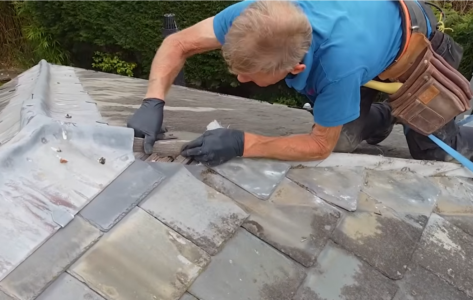
Rather than stripping the entire section and starting again, Roger takes a practical and measured approach. The existing leadwork is carefully assessed and found to still be in usable condition, so it is reused where possible. Only the worst affected timber is removed and replaced. This avoids unnecessary disruption while still restoring structural integrity and protecting the roof from further deterioration.
Slipped Lead Hip Repair: Assessment and Reinstatement
The first stage of repairing a slipped lead hip is understanding why it moved in the first place. In many cases, it is caused by a combination of thermal expansion, failed fixings, or deterioration of the timber substrate beneath the lead. Once the cause is identified, the repair can focus not just on putting it back in place, but on preventing it from happening again.
Roger carefully strips back the affected area to expose the full extent of the damage. Any rotten or weakened timber is cut out and replaced with new, treated sections that restore strength to the roof structure. This is a key part of dealing with a slipped lead hip, as simply repositioning the lead without addressing the substrate would only result in repeat failure.
Once the structure is sound, the lead is reformed and repositioned. Care is taken to ensure correct overlaps, secure fixing points, and proper support along the hip line. The goal is to allow natural movement in the lead without it slipping again. A properly repaired slipped lead hip should sit securely while still accommodating thermal expansion over time.
Attention is also given to water flow. Lead detailing must guide rainwater smoothly off the roof without creating pockets where moisture can sit. If this is not done correctly, even a repaired slipped lead hip can eventually fail again due to standing water and repeated freeze-thaw action.
This repair highlights an important principle in traditional roofing. Not every defect requires full replacement. In many cases, a slipped lead hip can be repaired effectively by combining selective timber replacement with careful reuse of existing leadwork. This reduces waste, controls cost, and maintains the original character of the roof.
Finally, the roof is returned to a dry, stable condition. The repaired slipped lead hip is now properly secured, the underlying structure is sound, and the risk of further water ingress has been removed. It is a reminder that even relatively small movements in roof coverings can lead to significant problems if left unaddressed.