Wendy got in touch after noticing a damp patch on a recently renovated wall. Fresh plaster and decoration had already begun to blister, bubble and show clear signs of peeling plaster, despite the work being newly completed. As Roger explains, this is rarely just a surface issue.
Peeling Plaster: What Causes It?
Looking at the photos, Roger examines the key clues before drawing conclusions. The wall has been altered with new studwork, plasterboard, fresh plaster and decoration. A visible joint shows where the new work meets the original masonry, and movement between these materials can easily lead to cracks and peeling plaster over time.
The damp pattern is uneven, affecting the original masonry more than the plasterboard. This suggests more than one possible cause and highlights why diagnosing peeling plaster from photos alone is unreliable.
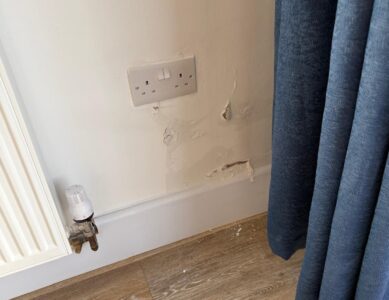
One possibility is moisture entering from outside. Cracked render, failed seals around the bay window or blocked air bricks can allow rainwater into the wall. Once inside, moisture can travel through masonry and emerge far from the entry point, eventually leading to peeling plaster.
Another possibility is a hidden plumbing issue. The renovation included radiator pipework buried within the wall. Even a small leak at a joint or elbow can slowly release water, causing damp patches and resulting in peeling plaster and damaged decoration.
Roger stresses that rising damp should not be assumed quickly. Many cases of damp near floor level are misdiagnosed. Penetrating damp, trapped moisture from new plaster, movement between old and new construction, and plumbing leaks can all produce symptoms, including peeling plaster.
Testing is essential. On sealed heating systems, a pressure test can identify leaks. On open-vented systems, monitoring the header tank over time can reveal slow water loss. These checks are often key to explaining peeling plaster after renovation work and preventing repeat damage.
New plaster also contains moisture as it dries. If ventilation is poor, drying slows down significantly. As moisture escapes, finishes may fail, leading to bubbling, staining, and peeling plaster even without an external leak or obvious defect in the building fabric.
The key message is that investigation must come before treatment. Every detail matters, from damp patterns and wall construction to plumbing routes and external defects. Only by following the evidence can the true cause of peeling plaster be identified and fixed.
If you’re dealing with peeling plaster, don’t assume it’s rising damp. A thorough inspection may reveal a simpler issue such as a small leak, trapped construction moisture, or external water ingress that is often easy to overlook but important to resolve.
Have a building or DIY question? Send it to Ask Skill Builder.
📪 ASK SKILL BUILDER
https://skill-builder.uk/send
We have over 1,300 episodes. Join more than 740,000 subscribers and help us reach our next milestone of one million subscribers.
More on damp with Skillbuilder – Simple DIY Cure For This Damp Wall
Top Damp Proofing Products Recommended by Skill Builder – Safeguard Europe – Leading UK Manufacturer in Building Protection
🔑 Key Insights
- Don’t assume every damp patch near the floor is rising damp.
- Recent building work can create several possible causes, including plaster movement, cracked joints, buried pipework and trapped moisture.
- The join between new plasterboard and older masonry is a potential point for movement and cracking.
- External render, bay details and air bricks should all be checked before making a diagnosis.
- Newly installed radiator pipework should always be tested if moisture appears after renovation work.
- A tiny heating pipe leak can create a surprisingly large damp patch over time.
- Pressure testing or monitoring the header tank can help identify hidden heating system leaks.
- Correctly diagnosing peeling plaster saves time, money and unnecessary repairs.
_____________________
#AskSkillBuilder #DampWall #RisingDamp