Live Dig Radar Is Changing Excavation Safety – And the UK Just Took a Major Step Forward
For decades, avoiding underground services has relied on a familiar routine: scan the area, mark what’s there, dig carefully, and hope the information is accurate. Live Dig Radar is helping to change that. It’s a process every excavator operator knows, but it’s also one that still results in thousands of utility strikes every year.
The numbers speak for themselves. More than 60,000 utility strikes occur annually in the UK, costing the economy an estimated £2.4 billion through project delays, damaged infrastructure, traffic disruption and, most importantly, serious safety risks to those on site.
That’s why the recent announcement from Network Plus is worth paying attention to.
The utility infrastructure contractor has become the first company in the world to roll out RodRadar’s new 30cm Live Dig Radar® (LDR) across its fleet, with more than 200 excavators set to receive Live Dig Radar technology over a multi-year programme delivered alongside UK distributor Machinetech.
How Live Dig Radar Works
Most underground detection systems do their job before the first bucket enters the ground. Live Dig Radar takes a different approach.
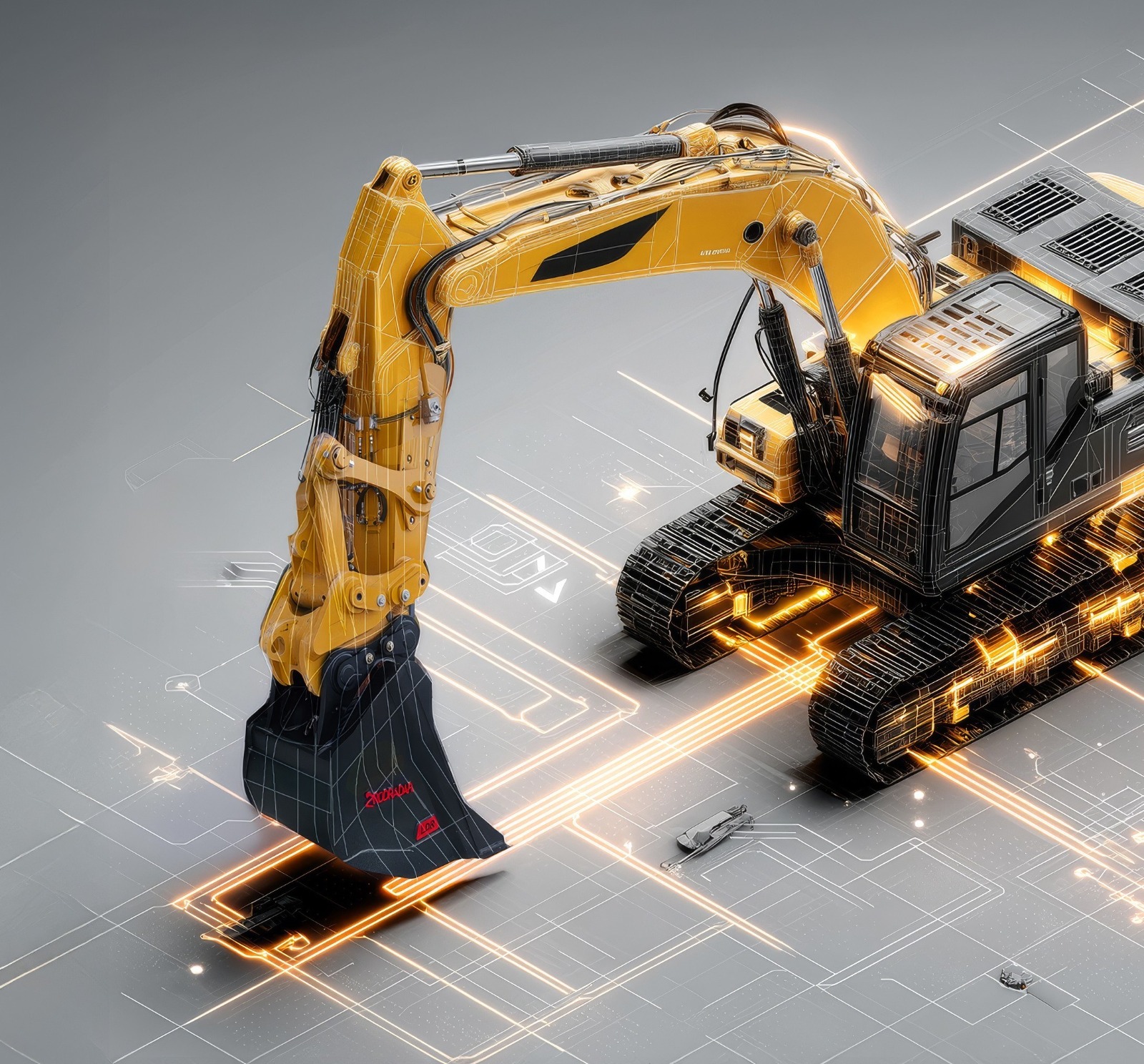
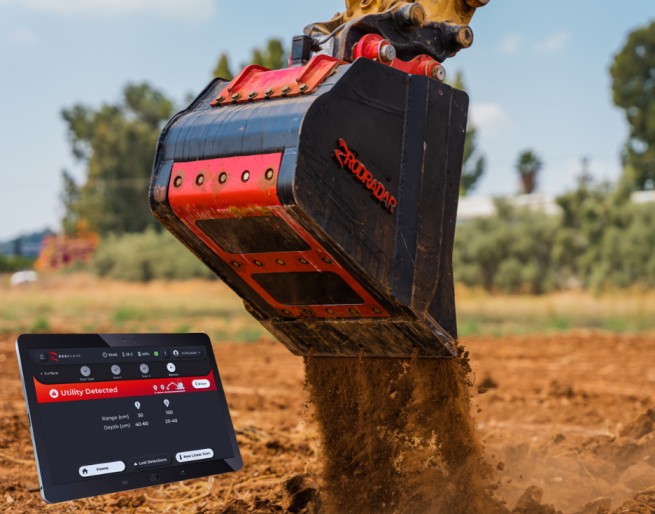
Instead of relying solely on pre-work surveys, the ground-penetrating radar is built directly into the excavator bucket itself. As the machine digs, it continuously scans the ground ahead, warning the operator in real time when buried utilities are detected.
That distinction matters.
Ground conditions change. Records aren’t always complete. Utilities aren’t always where the drawings say they should be. Live detection adds another layer of protection at the exact moment the risk exists.
The latest version is particularly significant because it’s integrated into a 30cm (12-inch) bucket – the narrowest live radar digging bucket developed to date. That makes it ideally suited to congested urban environments, where underground services are tightly packed and precision excavation matters most. It also highlights how compact excavators are evolving from simple digging machines into increasingly intelligent, technology-enabled tools for modern construction.
A Shift in How the Industry Thinks About Risk
Dave Fleming, Head of Plant at Network Plus, described the technology as “a complete game changer for risk management.”
It’s easy to see why.
Every avoided cable strike or damaged water main means less downtime, lower repair costs, fewer emergency callouts and, crucially, fewer people exposed to unnecessary danger.
For contractors working on behalf of organisations such as Severn Trent Water, Cadent Gas, National Grid and UK Power Networks, reducing excavation risk isn’t simply good practice—it’s fundamental to maintaining essential infrastructure safely and efficiently.
Technology Won’t Replace Competence
It’s important to recognise what systems like Live Dig Radar are, and what they aren’t.
No technology replaces proper planning, accurate utility information, competent operators or safe digging procedures. Radar isn’t a licence to ignore PAS 128 surveys, permit systems or CAT and Genny checks.
Instead, it’s another tool that strengthens the safety chain.
The best site safety systems don’t rely on a single defence. They build multiple layers that reduce the chance of a mistake becoming an incident.
Real-time detection during excavation could prove to be one of the most significant new layers the industry has seen in years.
The Future of Excavation Is Smarter
Construction is steadily becoming more connected, more data-driven and more intelligent. Machine control, telematics, automation and digital site management are already transforming how projects are delivered.
Whether Live Dig Radar becomes the new industry standard remains to be seen, but its adoption by Network Plus shows that real-time underground detection is moving from innovation to everyday practice.
Rather than simply hoping operators avoid buried services, the machine itself becomes part of the decision-making process, providing information precisely when it’s needed.
If technology can help prevent even a fraction of the UK’s 60,000 annual utility strikes, the impact on safety, productivity and project costs could be enormous.
For those working in excavation, that’s a development well worth watching.