Home Blog Page 73

The Capel Build Part 3 – Timber Frames

0

This is the third part of our second building project series on Skill Builder. The Capel Build sees carpenter and builder Robin Clevett renovate and extend an unusual property in Surrey. In this episode we look at the timber frames.

Robin has now taken delivery of the timber frame which was a day’s work in itself as some of the timber beams were huge. All of the timber came loose and everything was assembled on site.

Robin explains why it’s critical when building a timber frame home to set everything out perfectly and repeatedly checking everything, right from positioning the sole plates and checking the corners.

Robin is pleased with the quality of the timber frame as most of it fitted together perfectly. There were a couple of minor issues with four of the trusses but within 24hours or discovering the issues the manufacturer had made new ones, delivered them to the site and taken the old ones away so it didn’t hinder the build. The glue laminated beams were good fun. The joints were put together using a combination of Simpson Strong Tie products including the TUBSR Concealed Beam Hanger and the TU28 Concealed Beam Hanger which offer a completely invisible assembly.  It is a butt joint which will offend some purists who would like to see some tennons into those posts but the key thing is that it works and makes a strong joint.

Robin talks through some of the installation process which includes:

TU28 Concealed Beam Installation

  • Make a vertical notch in the joist end (width 6mm for TU12 and 9mm for TU16 to TU28),
  • Mark the position of the dowels on the joist before drilling holes – diameter of the hole according to the diameter of the dowel
  • Insert the top dowel in the joist
  • Route a  6mm deep pocket in either the joist end or the header. This is not compulsory, but is  improves the aesthetic of the connection making it tight to the post.
  • The hanger is screwed into the post and the joist is lowered onto the hanger.
  • Hammer in the stainless steel dowels

TUBSR Concealed Beam Installation

  1. Make a vertical notch in the joist end (width 6mm for TU12 and 9mm for TU16 to TU28),
  2. Mark the position of the dowels on the joist before drilling holes – diameter of the hole according to the diameter of the dowel
  3. Insert the top dowel in the joist
  4. Route a  6mm deep pocket in either the joist end or the header. This is not compulsory, it is used to improve the aesthetic of the connection
  5. Fix Install the joist onto the concealed beam hanger by hooking the joist onto the concealed beam hanger.  Top dowel hooks into slotted top hole on the concealed beam hanger.
  6. Install reamining dowels.the concealed beam hanger to the header with nails or screws

The next job for Robin is cutting the rafters and pitching the roof. Subscribe to the Skill Builder YouTube channel to stay up-to-date with this project.

What Will The New Year Have in Store for the Construction Industry?

0

Ian Anfield, Managing Director for construction audit and contract provider, Hudson Contract, shares his construction industry predictions.

“This time last year, I shared my thoughts on what would dominate the construction agenda in 2017. Some of the observations I made, such as Brexit being linked to skills shortages, were fairly safe, while others, like losing one of the major contractors due to decreased investor confidence, were a little more risky.

“Unfortunately, I imagine Brexit will continue to be blamed for every ill running through 2018, and Carillion limps on despite being morally and financially bankrupt.

At the moment, the company is being propped up by government contracts but surely this can’t spoil my predictions again and continue into 2019 – I foresee an end to Carillion’s long and painful death by June 2018.

As predicted last year, the cost of materials will continue to rise through 2018, the oil price, demand and poor old Brexit being blamed as the main drivers.

“As predicted last year, the cost of materials will continue to rise through 2018, the oil price, demand and poor old Brexit being blamed as the main drivers.

“This time last year, I projected that subcontractor rates would climb by 3% and in fact they went up by 3.8%, which is above inflation.

Therefore, unlike the rest of the UK workforce, if you believe government figures, on average, self-employed construction workers are better off now than they were 12 months ago.

Let’s hope it carries on and go for a prediction of another 4% next year taking the average earnings to £870 per week.

“As expected, the government has made lots of noise about penalties for land banking and relaxing planning laws, but ultimately the housebuilders will continue to build at a pace that minimises their risks and maximises their profits.

Reaching the government target of building 300,000 new homes next year will depend on how many schemes are designed to lend money to people who can’t afford to borrow it, rather than government policy on affordable homes, or the new City and Metro Mayors building a few council houses here and there.

It looks like the crash of 2008 is long forgotten and we may be building our debt pile ready for the next one.

“The London property bubble continues to float and will do so throughout 2018 as long as the Conservatives cling to power.

I have heard from a very good source that the foreign investors, who buy London property for their retirement pot, are far more worried about the damage Jeremy Corbyn and Labour could wreak on the economy than they are about Brexit.

And the banks are setting up satellite offices in the EU rather than moving lock, stock and barrel, so no shortage of potential purchasers to buy up the flats around the fringes.

Offsite construction is the new buzz for policymakers and commentators who seem to think we have never tried it before, or this time it will work much better and be more efficient

“Offsite construction is the new buzz for policymakers and commentators who seem to think we have never tried it before or this time it will work much better and be more efficient – and maybe they are right, we will have to wait and see, but I doubt 2018 will see a huge shift mostly because the cash-flow system does not work for heavy factory based outlay, and consumers are sceptical.

“Payment terms should be top of the agenda but with the government’s Construction Leadership Council dominated by major contractors and the consulting engineers who work with them, nothing significant will change in 2018.

“The most disappointing part of reading back through last year’s predictions was seeing the hopeful words around ending the CITB levy.

Despite the CITB being the most toxic brand in construction – hated by those who are forced to pay a levy under the threat of legal action and who get no help with training in return – the government seem to like them and look set to give them another 3 years to ‘reform’.

“In 2018, Hudson clients will continue to create their own success despite government policy rather than because of it, and the freelance builders who sell their services under Hudson will crack on and continue to out-perform the rest of the economy in terms of income.”

www.hudsoncontract.co.uk

Getting back to basics – Training & Development in the Construction Industry

Serena Kennedy, HR Manager for fit out and refurbishment experts, ITC Concepts, explains why she believes investing in the future of employees working in the construction industry pays dividends.

In October 2017, ITC Concepts won the Croydon Business Excellence award for Employee Training and Development. We couldn’t have been prouder – investment in our employees, through various types of development and training, is something we take great pride in at ITC.

We believe that ensuring that our employees are able to learn and develop is one of the reasons why our staff stay with us for 8 years on average, and why 91% of our team believe ITC Concepts is a great place to work.

If it benefits our employees, it benefits our company as a whole. This is something that holds true for any company, in any profession.

Investing in employees, by supporting additional training and qualifications maintains a high level of knowledge and skills across the business. This has a big impact on the productivity of a company.

Naturally, a higher standard of training means a higher standard of work. On top of this, allowing and encouraging staff to pursue education and development goals means that they feel supported and valued by the company that they work for. For so many companies – ITC included – staff are a business’s most important asset, and facilitating and investing in their training and development is one of the many ways to reflect this.

Employees who feel valued are more likely to stay with a company; which contributes immensely to staff culture and loyalty, the value of which to any company in any sector cannot be understated.

Appropriate training makes staff feel confident and empowered, which in turn creates an atmosphere where employees feel able to do their best work

However, it is important that the support you provide is guided by your employees – not purely by what might seem to be best for the business in terms of profitability. The training that creates benefits in the long term is the training that holds its employees best interests at heart. Appropriate training makes staff feel confident and empowered, which in turn creates an atmosphere where employees feel able to do their best work, supported by their company.

At ITC, we have implemented a programme for employee development that includes: induction training for new employees, management and soft-skills training, appraisals and support to gain higher education qualifications. Additionally, we approach training for each employee differently, depending on their existing skills, interests and their position within the company. For instance, office-based employees are encouraged to go on site visits to enhance their understanding of how other teams work.

We encourage employees to discuss their development aspirations. Whether that’s obtaining a degree, achieving a new accreditation, being matched up with a mentor, or completing an online course, their suggestions are what guide our decisions.

Those who believe in working their employees until they burn out, then moving onto the next set of hires, are misguided in their approach

This approach has consistently resulted in success; employees who feel valued, are committed to our culture and high-quality results. Those who believe in working their employees until they burn out, then moving onto the next set of hires, are misguided in their approach. They run the risk of breaks in communication and an uncommitted team.

We believe that ITC would not have experienced the success it has over the past 25 years had we not incorporated employee training and development so completely from the beginning.

Our employees are what make our company – supporting them is a no-brainer.

Building an Extension Part 4 – Brickwork & Insulation

0

In Part 4 of our series following the building of an extension we cover the brickwork and insulation stage and some points to consider when insulating your home.

In this episode, Roger Bisby explains the benefits of using Rigid thermal PIR insulation, an alternative to mineral wool fibre insulation.

Installing insulation such as PIR board insulation can help make a home warmer and reduce energy costs.

Thanks to its high rate of return per square metre Rigid thermal PIR home insulation can help increase energy efficiency and achieve part-L compliance.

EcoTherm insulation has a lambda value of just 0.021 – 0.027 W/mk. For example: By using a 100 mm thick Eco-Versal board you can achieve a thermal resistance (R value) of 4.55m2K/W.

To achieve the same value with traditional insulation you may require up to 200mm thickness of insulation.

In the case of this project using Ecotherm Insulation Boards has helped the homeowner to significantly exceed the insulation requirements which means they can increase the extension’s glazed area with the addition of large windows and bi-fold doors.

This made this sustainable insulation material the best insulation for their requirements.

As ever this episode of the extension series covers technology, tips and techniques designed to help anyone undertaking building work.

Building an Extension

  • Building a brick pier to support the steel beams
  • Putting in wall ties
  • Cutting a thermalite block with an Irwin block saw
  • How to cut a block with a hammer and bolster
  • Damp proof course going in on the outer skin
  • When and why you need an expansion joint in your brickwork to prevent cracking
  • The insulation installation

www.ecotherm.co.uk

Don’t forget to subscribe to our channel to keep up to date with all of the latest episodes.

Bosch Impact Driver review: GDR & GDX 18v Impact Drivers

In the eighth and final test of our big Impact Driver round up we put the Bosch GDR 18 V-LI & GDR 18-LI Impact Drivers and Bosch GDX 18 V-EC impact wrench through their paces.

These tests complete this series of cordless impact driver tests which has covered models from Makita, Milwaukee, Bosch, Hilti, Metabo, Pansonic, DeWalt and Hitachi.

Find all of the tests on our YouTube channel and watch out for the test conclusion coming soon.

The GDR 18 V-LI is said to be the first 18-volt impact driver with a flexible battery system.

FEATURES
– Unique choice between the “Premium” (longer battery runtime) and “Compact” (less weight for even more comfortable work) batteries
– High torque and high impact rate (3,200 bpm) for fast work progress when driving screws in metal (up to M 14) and wood
– Very short design for perfect handling, even in the tightest spaces and overhead
– Unique Bosch Premium lithium-ion technology for unbeatable battery runtime
– Bosch Electronic Cell Protection (ECP): protects the battery against overload, overheating and total discharge
– Practical battery charge level indicator constantly shows how much energy is left in the battery

The GDR 18-LI is said to be the shortest and lightest cordless impact driver in its class.

FEATURES

– The shortest design in its class (only 138 mm) for optimum ergonomics and handling
– Extremely lightweight: only 1.3 kg (with Compact battery) for the best handling, especially when working overhead
– Integrated LED light for illuminating the work area, even in dark places
– Powerful 130 Nm torque for all conventional cordless impact driver applications in metal and concrete
– High speed (2 600 rpm) for fast work progress
– Bosch Electronic Cell Protection (ECP): protects the battery against overload, overheating and deep discharge

The Bosch GDX 18 VE-C is said to be the most universal impact wrench in its class – with even longer lifetime

FEATURES

– Special bit holder combines 1/2″ square and 1/4″ hexagon – for even more applications
– Very compact design for perfect handling, even in the tightest spaces and overhead
– Speed can be set to 0 – 1300/2000/2800 rpm
– Brushless EC motor technology from Bosch – for up to 100% longer lifetime
– 3-stage PowerControl – for different torques in a wide variety of applications
– Impact rate can be set to 0 – 1100/2600/3200 bpm

www.bosch-pt.com

Pecavoid Max Frank ~ The Capel Build #2

It’s time for the second instalment of the Capel Build which follows the renovation and extension of an unusual property designed by architect Michael Newberry in Surrey.

Carpenter and Builder Robin Clevett is taking the first glass and steel house in the UK which was built in 1957 and extending it and refurbishing it while paying homage to its original design values.

Pecavoid Max Frank

The building was revolutionary at the time it was constructed when similar structures had been built across parts of California but they’d never been done in the UK.

In the second episode of the series, Robin provides an update on the Pecavoid system he has used for the foundations.

A traditional foundation system wasn’t possible for the project because of the clay ground and surrounding vegetation.

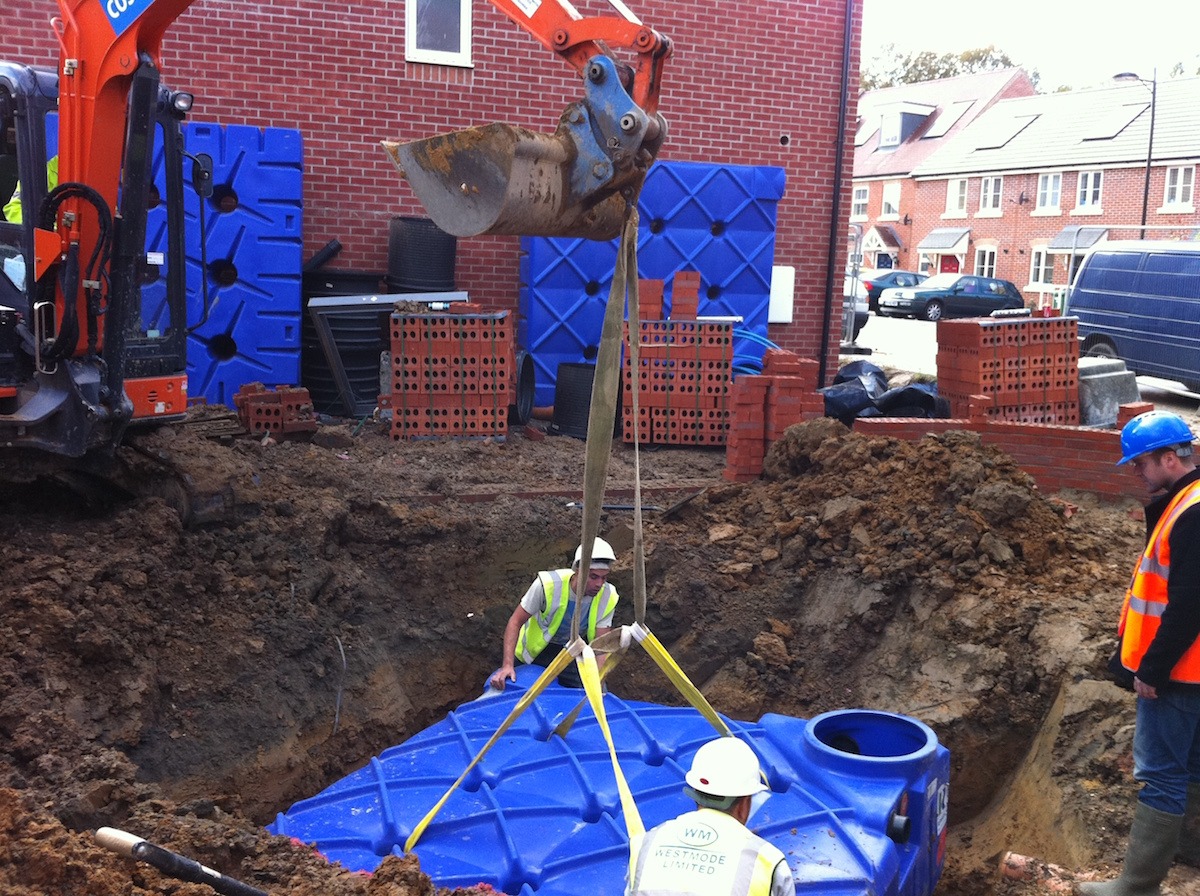
Instead, Robin is using the Pecavoid system which is manufactured from interlocking sections of expanded polystyrene and is designed to compress when ground heave takes place.

See more with Robin on Skill Builder.

The Search for Redland and Icopal Apprentice of the Year

0

Following the success of its inaugural event in 2017, Redland – the manufacturer and supplier of pitched roof systems – has announced the launch of the 2018 Apprentice of the Year: but with an important twist.

Redland has joined forces with sister BMI Group company, Icopal, the major flat roofing business. Together they will offer two apprentice awards: one for pitched roofing and one for flat.

February 1st and May 4th 2018 are the opening and closing dates respectively for entries; and the competition is open to all roofing apprentices who are currently enrolled with a participating college or training group or who are employed by a member of the Intelligent Membrane Association or Team Icopal.

Other employers wishing to enter an apprentice should contact their training provider and encourage them to link up with the BMI Student Support Programme through which these awards are being delivered.

What’s your Motivation?

The key theme for picking this year’s finalists will be ‘Motivation’ – whereby entrants are being asked to communicate what motivated them to enter the roofing industry; how they motivate themselves and those around them at college and at work; or to describe a person who has motivated them to succeed.

Candidates will then be selected for the final, which takes place over two days at the BMI National Training Centre in Gloucestershire.

Finalists will receive professional coaching on all aspects of running a roofing business – including business planning, presentation skills, and technical skills – before being assessed, making this a complete learning experience.

Apprentice of the Year

A selection of leading figures in the roofing industry will be judging the candidates.

They will also take part in ‘knowledge-sharing sessions’ over the course of the two days to answer questions and share the benefits of their experience to help pass the baton on to this next generation of roofers.

The two-day final will culminate in the Apprentice of the Year Awards Dinner – consisting of the finalists, their tutors and employers, and judges – where the winners of the 2018 competition will be announced.

Cash Prizes

At stake is a £2,000 cash prize – £1000 for each category – to invest in the future, the title of Redland Apprentice of the Year 2018 or Icopal Apprentice of the Year 2018, together with a trophy, a lifetime supply of free-of-charge courses at the group’s National Training Centre and a prize pack containing high-quality roofing swag.

All finalists will receive access to a selection of free courses at the BMI National Training Centre and also take away a prize pack full of roofing goodies.

Mat Woodyatt, Redland Technical Training Manager, explains: “Skills shortages are a pressing issue across construction as a whole; yet perhaps most keenly felt in roofing.

These shortages hinder recruitment, and national building capacity – and if not properly addressed, in time the sector will grind to a halt.

These awards are part of a group strategy to recognise and reward those coming into the industry; as part of wider initiatives to raise the appeal of roofing and motivate more youngsters and career-changers to get involved”.

Andy King, President of the National Federation of Roofing Contractors and chair of the judging panel, said of last year’s event: “The competition itself took all of the trainees outside of their comfort zone, and as a judge it was interesting to witness the individual way they adapted to the various challenges.

All the competitors benefited from the experience and each of them took something away and will hopefully use it to further their careers”.

www.redland.co.uk

See more on apprenticeships with Skill Builder.

The Capel Build part 1: The foundations

This is the start of our second building project series on Skill Builder. The Capel Build follows the renovation and extension of an unusual property designed by architect Michael Newberry in Surrey.

Carpenter and Builder Robin Clevett is taking the first glass and steel house in the UK which was built in 1957 and extending it and refurbishing it while paying homage to its original design values. The building was revolutionary at the time it was constructed when similar structures had been built across parts of California but they’d never been done in the UK.

In the first episode Robin introduces the project and discusses the challenges of finding a suitable foundation system that would work with the trees and clay.

Subscribe to Skill Builder to follow Robin through this project.

How to tie in a wall securely with Tiger cavity wall ties

Tiger says its unique, patented ‘one-shot’ Cavity Wall Ties mean faster fixing, easier application, stronger grip and less room for error. Roger Bisby tries them out.

Tiger says its cavity wall ties will transform professional & DIY building fixings, forever.

The secret is in Tiger’s patented wall fixing system. Insert, twist and the fixing becomes its own plug. An E.D.P.M. sheath is compressed, swells a full 360° within the hole, also making it waterproof. Designed to be more effective than old fashioned fixings, and lateral strength (pulling out as opposed to supporting) is significantly improved too. Building a wall just got easier.

Tiger Fixings can be repositioned right up to the last twist.

Whether it’s Starter Ties, Cavity Wall Ties, Eye, Hook or L Bolts Tiger says you can say goodbye to conventional wall plugs. The only tool you need is a drill.

www.tigerfixings.com

Panasonic Impact Driver review

In Part 5 of our mega-roundup, Roger puts the Panasonic EY75A7 Dual Volt 18v/14.4v Impact Driver through its paces; see how he gets on.

The Panasonic EY75A7 impact driver is a dual voltage model, which means it’s compatible with 18v and 14.4v Panasonic batteries.

This particular version is the body only packaged without batteries or charger. Improvements over the previous EY75A1 impact driver include a new “self-drilling screw mode”, improved durability, new brushless motor, and a stylish new “carbon black” design.

– Tough Tool IP56 dust and splash protection means that you can use this tool in any conditions.

– Self-drilling screw mode: the tool starts at the highest speed to cut the hole, then transfers to “hard” (high-impact) mode to cut the thread. After that the load is reduced, so the tool switches to “soft” (soft-impact) mode to limit potential thread stripping.

– New brushless motor is more powerful, more compact, and more well-balanced. It will provide you with up to 200% more cycles, and has a thicker motor shaft to provide greater strength for heavy-duty use. – Improved durability: see below for details.

– Improved drivetrain design reduces “centre run-out”, improves accuracy, reduces damage to the screw, and allows smoother driving with lower noise and vibration levels even during heavy usage. – Hard, medium, and soft modes are ideal for fastening long bits and bolts, furniture, and plasterboard respectively. – 3-speed provides even more application flexibility.

– Electric brake improves user and tool protection.

– Usability features include improved anti-slip grip pattern, belt hook, LED work light, and tapered bit holder that enable quick and easy bit changes.

– Housing: metal plates have been added where the battery locks into the tool. This helps to prevent wear and tear caused by abrasion and vibration during heavy use.

– Anvil: the redesign and improvement of anvil materials have increased the durability of the impact parts, which ensures a longer service life and increased overall performance.

– Switch: the hybrid switch uses rigid metal parts in the trigger for 200% more durability compared to the previous switch model.

– Motor: the thicker motor shaft (5mm) ensures greater strength, for heavy-duty use.

– Elastomer Bumper: increased amounts of rubber and resin coating on the bottom of the tool which helps prevent damage if dropped from elevated areas.

www.panasonic-powertools.eu

Building an Extension Part 3 – Suspended Beam and Block Floor

Roger Bisby talks through the beam and block floor stage of building an extension.

Generally speaking there are two options for constructing ground floors. You can opt for a solid floor which involves laying wet concrete directly onto your ground surface or you can choose a beam and block floor which is also known as a suspended floor which allows you to achieve a low cost concrete floor.

Beam and block

Beam and block flooring can also be used for suspended flooring to subsequent levels and can even be used to support partition walling.

The advantage of a beam and block floor is that you don’t have to prepare the oversite saving time, materials and money because no hardcore or oversite concreting is required. If you’ve got an oversite which is a bit rough or spongy and you don’t want to compact concrete onto it you can simply put these beams over the top of it and it doesn’t matter what the ground does underneath so it’s great in clay or in made up ground.

It’s also a good system to use because it’s fairly cheap and as demonstrated it is quick and easy to install.

Other advantages of a concrete floor include a high thermal mass which can help reduce a building’s energy consumption as well as noise-reducing properties and fire-resistant properties.

This episode includes:

  • Raking out the oversite ready to lay the weed barrier and vapour barrier which stops the moisture coming up through the ground to the underside of the beams
  • Inclusion of air blocks underneath the beams
  • Putting the block into the beam – it’s important to clean the snots off the beams, sometimes you might need to use a brick hammer to scrape through
  • Why you need to run grout over the blocks, which is basically wet sand and cement which will fill in all the little gaps and tightens the floor up

Don’t forget to like the video if you want to see more like this.

Housing Association fined after exposing workers to Hand Arm Vibration Syndrome (HAVS)

0

HSE is reminding companies of the necessity of monitoring workers’ health after a South Wales Housing Association was fined for exposing workers to Hand Arm Vibration Syndrome (HAVS).

Cwmbran Magistrates’ Court heard how Charter Housing Association Ltd. reported six cases of HAVS following a health surveillance programme launched in June 2015. The affected employees were all part of the maintenance team.

An investigation by the Health and Safety Executive (HSE) found the six workers’ conditions were likely to have been caused or worsened by the use of vibratory power tools while in Charter Housing’s employment. It was also found that staff in the maintenance and refurbishment departments at Charter Housing experienced significant exposure to hand arm vibration in their daily work which put them at risk of developing or exacerbating existing HAVS.

The investigation also found the company neither adequately planned its working methods nor trained or informed employees on the risks to their health. Furthermore, Charter Housing did not limit the duration and magnitude of exposure to vibration and failed to put in place suitable health surveillance to identify problems at an early stage.

Hand Arm Vibration Syndrome (HAVS) is a serious and permanent condition caused by regular and frequent exposure to hand-arm vibration. HAVS results in tingling, numbness, pain and loss of strength in the hands which may affect the ability to do work safely and cause pain, distress and sleep disturbance.

Charter Housing Association Ltd (now part of Pobl Group Ltd) of High Street, Newport pleaded guilty to breaching Regulations 5, 6, 7 and 8 of the Control of Vibration at Work Regulations 2005. The company was fined £100,000 and was ordered to pay costs of £9,896.88.

Speaking after the hearing HSE inspector Joanne Carter said: “An individuals’ health should not be made worse by the work they do. If Charter Housing had correctly implemented its health surveillance earlier, it would have ensured the right systems were in place to monitor workers’ health. The six affected employees’ conditions may have been prevented from developing or developing to a more severe stage.

“How people work today can affect their health and wellbeing tomorrow. This case serves as an important reminder of the necessity of task based risk assessments to establish the level of exposure, control measures to reduce that exposure to as low as is reasonably practicable and effective health surveillance systems. In the case of Charter Housing this realisation came too late.

“All employers need to do the right thing to protect workers’ health.”

www.hse.gov.uk

Stay warm on site with body mapping workwear

A change of season means a change of focus on what you wear on site.

With this in mind, Snickers FLEXIWork, RUFFWork, LITEWork and ALLROUND Workwear is said to ensure you keep your cool when the heat is on or stay warm and comfortable when the temperature drops.

Interweaving 37.5 Technology fabric into Snickers’ working clothes means that you’ve got a wide choice of waterproof and windproof jackets, mid-layer fleeces and stretch hoodies.

There are also base-layer undergarments, gloves and headgear that excel at ventilation and moisture transportation to keep you working comfortably wherever you are on site.

“So, to make sure you get the right protection, flexibility, durability and ventilation, check out the newest workwear in our latest Autumn Brochure for precisely the right garments to fit your workday,” suggests Snickers.

www.snickersworkwear.co.uk

Lightweight beanie fits under hard hats for warmth and safety

As the chilly weather sets in JSP has launched a new thermal helmet beanie called the Surefit Beanie which is fully approved to be worn with all the JSP Evo range of Safety Helmets.

Compatibility is key when combining PPE and this new Beanie will prevent workers from wearing incompatible and dangerous alternatives such as hoodies under their helmets.

Designed to cover the entire ear for maximum comfort and warmth, this thermal Beanie is made from stretchy material making it a good fit for all head sizes. It is lightweight for all day comfort and machine washable at 30oC.

The Surefit Beanie is specifically sized to be worn under the JSP Evo range of Helmets so no complicated fitting to the harness is needed. The ear flaps can be custom embroidered with a corporate logo for branding purposes.

www.jspsafety.com

Metabo SSW 18 LTX 400 BL Impact Wrench – Roundup Part 3

0

The Metabo 18v 2×3.5ah LiHD cordless impact wrench features the unique Metabo brushless motor for quick work progress and highest efficiency for any application. Featuring LiHD battery pack for ultimate performance, extremely long service life with minimal temperature generation and Ultra-M technology for highest performance, gentle efficient charging, optimum energy utilisation and long service life.

Features include:

• Unique Metabo brushless motor for quick work progress and highest efficiency for any application

• Overload protection: protects the motor from overheating

• High torque accompanied by an exceptionally compact design • High torque machine with low kick-back torque

• Twelve speed/torque levels for a wide range of applications

• Integrated work light for illumination of the work area

• Robust die-cast aluminium gear housing for optimum heat dissipation and durability • Handy belt hook, can be fixed either on the right or left side

• Battery packs with capacity display for checking the charge status

• Ultra-M technology: highest performance, gentle charging and 3 years of warranty on the battery pack.

Technical Specification:

Max. no-load speed: 0 – 2150 rpm

Maximum impact rate: 4250 bpm

Maximum torque: 400 Nm Speed/torque levels: 12

Supplied With: 1 x Belt Hook 2 x LiHD battery packs (18 V/3.5 Ah) 1 x Charger ASC 30-36 V “AIR COOLED” 1 x Plastic carry case

Average Tradesperson Earns £781 per Week

0

Hudson Contract has revealed this year’s winners and losers across 10 regions and 17 trades in its annual Construction Pay Trends Index with plumbers enjoying biggest pay rise in 2017 while electricians have experienced a pay drop.

The index shows that self-employed builders in England and Wales have seen a year-on-year increase in average weekly earnings of 3.8% – with the biggest uplift experienced by those working in the East of England (3.8%).

The full national picture can be found in the Construction Pay Trends Index, which harnesses payroll data from more than 2,200 construction firms: www.hudsoncontract.co.uk

The interactive tool reveals weekly pay differences by region, age and trade sectors, providing builders, construction companies, building apprentices and other industry analysts with an insight into pay levels across the country. It also reveals the impact of weather, location and economic factors on earning potential.

Across the construction trades, plumbers experienced the highest increase in earnings (9.4%) followed by those working in demolition and wrecking (8.3%), and insulation (8.2%).  Electrical (-0.1%) and steel and timber frame erection (-4.5%) saw the biggest decreases in pay, year-on-year.

The biggest drop in average weekly pay was experienced in Wales which saw a 4.1% decrease in earnings, followed by a 0.3% decrease in London. Earnings for those in the West Midlands and South West remained the same year-on-year according to the figures.

The top 10 regions in terms of earning fluctuations were highlighted as:

East of England (+3.8%)
East Midlands (+3.3%)
Yorkshire and the Humber (+2.1%)
North West (+1.3%)
South East (+1.0%)
North East (+0.4%)
South West (no change)
West Midlands (no change)
London (-0.3%)
Wales (-4.1%)

Ian Anfield, Managing Director at Hudson Contract, said: “It’s been a year of uncertainty in the construction industry with the surprise General Election and the implications of Brexit remaining unclear.

Weather has also put a dampener on things on a few occasions, with storm Doris back in February and heavy rainfall throughout the summer months.

“However, it is encouraging to see that on a national level, sub-contractors have experienced an uplift of 3.8% in earnings despite these factors – highlighting confidence in the sector and a positive picture overall.

“Our Construction Pay Trends Index continues to provide insights into pay levels across the sector. Not only is it a resource for those working in the industry, but those looking to begin a career in the sector too.”

To access Hudson Contract’s Construction Pay Trends index, please visit:

www.hudsoncontract.co.uk/construction-pay-trends

Construction Industry Warns Against Brexit ‘Cliff Edge’ for EU Workers

0

The construction sector has come together to warn the Government of the dangers of the industry facing a ‘cliff edge’ regarding access to EU workers.

In an unprecedented show of unity, seven of the construction industry’s major trade bodies have set out what they believe to be the sector’s responsibilities and requirements in a post-Brexit labour market.

The ‘Construction Industry Brexit Manifesto’ commits the sector to do much more to recruit and train additional UK workers to reduce its future reliance on migrant labour.

However, it makes clear that this will not be able to happen overnight and that, for some time, there will likely remain an ongoing need for significant levels of skilled EU workers.

The document sets down the industry’s key messages to the Government on what it will need from a post-Brexit immigration system in order to be able to deliver the Government’s strategic objectives for new housing and infrastructure:

  • The Government should agree a transition period of at least two years as soon as possible, during which time EU workers arriving in the UK should continue to have a path to settled status
  • The post-transitional migration system should be based on key occupations that are in short supply, rather than on arbitrary thresholds based on skill levels or income

The Manifesto comes with the support of seven major construction trade bodies: Federation of Master Builders, Association for Consultancy & Engineering, Build UK, Civil Engineering Contractors Association, Construction Products Association, Home Builders Federation, and National Federation of Builders

Brian Berry, Chief Executive of the Federation of Master Builders, said: “The construction industry has been criticised in the past for being too disparate but it has come together here with one voice and set of clear messages.

We know we need to step up as an industry and train more home-grown talent but we also have to be realistic about the future.

There will continue to be some ongoing need for migrant workers and our post-Brexit migration rules will need to be fit for purpose.”

Dr Nelson Ogunshakin OBE, CEO of the Association for Consultancy & Engineering, said: “Without the skills that many EU nationals bring to the industry, we could be facing severe setbacks to the UK’s national infrastructure pipeline.

ACE’s own surveys show that there is an increase in the number EU staff leaving the UK for jobs on the continent and this will only get worse if we do not bring certainty to EU workers’ residency rights.

This Manifesto provides a road map for both Government and industry to ensure that the UK can continue to access world-class talent to deliver world-class construction.”

Suzannah Nichol MBE, Chief Executive of Build UK, said: “Construction, like other major industry sectors, has substantial concerns over the impact of Brexit on its ability to recruit, train and retain talent.

It is essential that industry works together to present the need for an effective partnership between Government and industry, enabling us to deliver the UK’s infrastructure, homes and communities.”

Industry Against Brexit

Marie-Claude Hemming, Director of External Affairs at the Civil Engineering Contractors Association, said: “The UK’s decision to leave the EU will have a notable impact upon the ability of the infrastructure sector to source the skills needed for current and future projects.

But if we are to ensure that the UK remains an attractive place to live and work in a post-Brexit world, Government must maintain its focus on construction and infrastructure.

To this end industry has joined together to publish a skills manifesto which we believe will enable our sector to continue to drive future economic growth. It is vital that industry and Government work together to ensure the UK’s global competitiveness is not impacted upon by delay in the delivery of world-class construction projects.”

Prof. Noble Francis, Economics Director at the Construction Products Association, said: “Access to the right skills will be absolutely critical for the whole construction supply chain in the next few years if it is to help Government achieve its aims of building more affordable housing and improving the UK’s infrastructure, which will be vital for boosting UK productivity.”

John Slaughter, Director of External Affairs at the Home Builders Federation, said: “With the Budget having confirmed a target to deliver 300,000 homes a year by the mid-2020s, home builders will need to continue to bring more skilled people into the industry.

Companies are building on their existing investment through the successful work of the CITB-supported Home Building Skills Partnership and are committed to doing even more, but to deliver the national social and economic necessity of an improved housing supply we will also continue to need access to foreign workers under a manageable migration system.”

Richard Beresford, Chief Executive of the National Federation of Builders, said: “With the country facing a shortage of skilled workers and the most acute housing crisis in living memory, the Government needs to provide certainty to existing EU workers in the UK and enable construction SMEs to attract more home-grown talent into the industry.”

See more on Brexit with Skill Builder.

Bright idea: ProVan LED light review

0

Roger Bisby lets a lot more light into the black hole that was the back of his van.

There are few things more frustrating than rummaging around in the back of your van trying to find something and not having enough light to see. As winter draws in I find myself in this situation once again, I know it is in there somewhere but where?  The back of my van is a black hole that consumes matter. There is no other way to explain why I can never find items that I know are in there.

The back of my van is a black hole that consumes matter. There is no other way to explain why I can never find items that I know are in there

I am not the only one who struggles and it makes me wonder why van manufacturers still seem to attach so little importance to providing load areas in vans with decent lighting. It really isn’t that hard now that we have LED lights so why do they persist with old technology? LED is a game changer, no question,  because they are brighter, whiter and use less power.  The only thing that stops most of us taking out the original original equipment and upgrading it with a superior after market product is the hassle. We are simply too busy earning a living to start messing around with interior lighting rigs.

Now ProVan has taken the hassle out of changing your load area lighting by coming up with a direct replacement that simply plugs in to your wiring loom. There is no need to crimp or cut cables, just flick out the old fitting and pop in the new. It is plug and play. It took me less than 2 minutes to pop this Lab Gear Light into the socket and when I switched it on it was as if there just hadn’t been any lighting in there prior to this. The Cree LEDS are seven times brighter than the original lights and the light is more like daylight so you don’t get that colour washout.

The body is polycarbonate and you will notice on the back of the lighting unit that there is an aluminium heatsink similar to the kind you find on desktop computers. If there is a switch on your light then there is a switch on the replacement and all the major van makes and models are catered for. If you type your registration number into their website it automatically selects the right model.

provanled.com

Real Deals For You: Roughneck Gorilla Bar Junior Twin Set

0

Skill Builder has once again teamed up with Real Deals for You to take a look at a selection of products from their Christmas campaign. 

In the sixth instalment of this series Roger Bisby tries out the Roughneck Gorilla Bar Junior Twin Set.

Real Deals for You is a year-round campaign run by one of Europe’s leading hand and power tool distributors, Toolbank, and created to support a network of participating retail outlets and trade merchants across the UK and Ireland.

Over 2,000 stockists throughout the UK and Ireland feature the Real Deals for You promotion, which is designed to provide significant savings on leading brand products while helping to support local trade.

www.realdealsforyou.com

Hitachi WH18DBDL2 Impact Driver Review – Roundup Part 2

In the second part of the Skill Builder super impact driver roundup, we look at the Hitachi (rebranded to HiKOKI as of October 2017) WH18DBDL2 brushless 18v impact driver.

Hitachi WH18DBDL2/JX 18v 2×6.0ah Li-ion Brushless Impact Driver

The WH18DBDL2/JX 18v Brushless Impact Driver features a high power brushless motor with a selection for 4 speed modes: Soft Mode for delicate work, Normal mode, Power Mode for heavy work and Self Drilling mode for use with screws.

Features and Benefits 

– High power brushless motor with maximum tightening torque of 207Nm (hard)

– IP56 rating for dust resistance & waterproofing

– Triple hammer mechanism: three anvils for higher power and extended life

– Electric brake – 3 mode LED work light: always on/automatic/always off

– Soft grip handle

– Forward & reverse switch

– Side hook can be fitted on right or left

– Driver bit not included Technical Specification: No-Load Speed

– Soft Mode: 0-900 No-Load Speed

– Normal Mode: 0-2900 No-Load Speed

– Power Mode: 0-2900 No-Load Speed

– Self Drilling Mode: 0-2900 Full-Load Impact Rate

– Soft Mode: 0-1900 Full-Load Impact Rate

– Normal Mode: 0-4000 Full-Load Impact Rate

– Power Mode: 0-4000 Full-Load Impact Rate

– Self Drilling Mode: 0-2100 Max Torque: 207Nm (Hard) Drilling Capacity

– Screw: 4-10mm Drilling Capacity

– Bolt: M5-M18 Drilling Capacity

– HT Bolt: M5-M14 Drilling Capacity

– Self Drilling: 3.5-6 Overall Length: 124mm Weight: 1.6kg Supplied With: 1 x Hitachi WH18DBDL2/JX 18v 2×6.0ah Li-ion Brushless Impact Driver 2 x 6.0Ah Li-Ion batteries 1 x UC18YSL3 fast charger with USB output