Home Blog Page 79

NSF International and the Indian Plumbing Skills Council (IPSC) sign agreement

Global public health organization NSF International and the Indian Plumbing Skills Council (IPSC) have signed a memorandum of understanding (MOU) to provide local testing and certification services for the plumbing industry in India.

This MOU will help improve the quality of Indian plumbing products and the skills of Indian plumbers through IPSC’s skill development initiatives under the aegis of the National Skills Development Corporation (NSDC) and India’s Ministry of Skill Development and Entrepreneurship (MSDE).

Under the MOU, NSF International and IPSC will work cooperatively to develop a joint facility where IPSC will offer training to plumbers and NSF International will operate a testing and certification laboratory. This agreement provides the Indian plumbing industry with local access to NSF certification, improving the quality of Indian plumbing products and subsequently creating opportunities for the export of Indian plumbing products. This agreement also demonstrates NSF International’s investment in India’s plumbing certification industry and skilled plumbers.

“NSF International is committed to the continued advancement of public health and safety in India’s plumbing industry,” said Mr. Dave Purkiss, General Manager, Plumbing Products, NSF International. “With the training expertise of the Indian Plumbing Skills Council and NSF International’s testing and certification leadership, we will work together to advance education, public health and sustainability initiatives in design, specifications, installation, inspection and regulation for the Indian plumbing industry.”

The agreement also expands NSF International’s presence in India, which currently provides independent, third-party services to the water, food, consumer goods and pharmaceutical industries. Located in Gurugram, in the capital city region of Delhi, NSF International’s India office focuses on water and food safety including certification of drinking water treatment chemicals and distribution systems, water filters, piping and plumbing components.

“IPSC is dedicated to developing excellence in plumbing skills,” said Mr. Vinay Gupta, Vice Chairman, IPSC. “IPSC believes this excellence will be further enhanced by the agreement with NSF International, a global leader in the water industry. Our commitment is to train and up-skill plumbers in India on the importance of public health and safety practices for the water and sanitation industries. Locating our training facility on the same site as an NSF International testing laboratory demonstrates a true commitment by IPSC and NSF to improve the quality of the plumbing sector throughout India.”

www.nsf.org

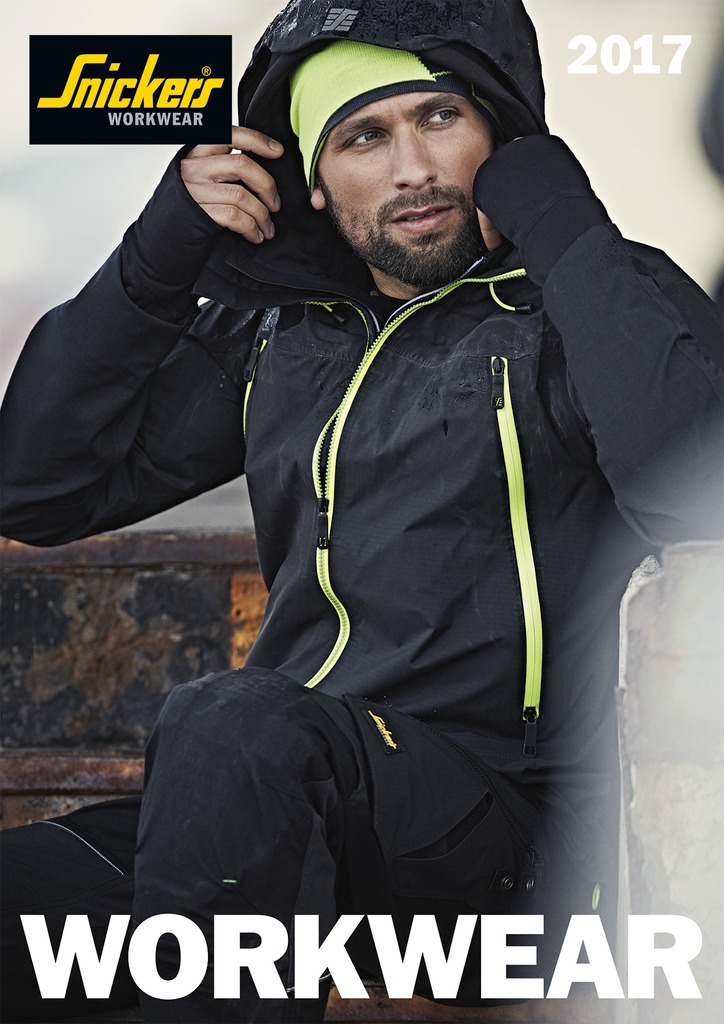
Snickers FLEXIWork range offers freedom of movement on site

While fabric, functionality and fit have always been hallmarks of its working clothes, Snickers says it’s the innovation and technology in the design of FLEXIWork garments that sets them apart from other brands.

They’re designed for fast-paced working environments with body-mapping designs said to ensure superior freedom of movement on site.

There are waterproof jackets, fleeces, t-shirts and hoodies, plus work trousers made from a durable, stretch and rip-stop fabric and polyamide reinforcements.

As well as fashionable looks, all these clothes are packed with comfort and functionality, specially designed for professional craftsmen who are always on the go, always delivering top class work and always a step ahead on site.

Designed for professionals who rely on their gear in demanding environments, Snickers says they’re a must for everyone who takes a pride in their work on site.

For more information on Snickers’ FLEXIWork working clothes, visit the website at www.snickersworkwear.co.uk where you can download a digital catalogue – or call the Snickers Helpline on 01484 854788.

£1m Fine for Crossrail Contractor Following Three Incidents

0

A joint venture comprising three companies established to support the Crossrail tunnel construction has been fined a total of more than £1m following three separate incidents on the project, including the death of a worker.

Southwark Crown Court heard Renè Tkáčik died after being crushed by falling wet concrete on 7 March 2014.

Two other men were injured following separate incidents within six days of one another, on 16 and 22 January 2015. All three incidents took place in the tunnels around the Fisher Street area.

The three workers were operating under Bam Ferrovial Kier (BFK), an unincorporated joint venture made up of three companies; BAM Nuttall Limited, Ferrovial Agroman (UK) Limited and Kier Infrastructure and Overseas Ltd.

Renè Tkáčik, 43 from Slovakia, was working on a team enlarging the tunnel by removing rings of the existing pilot tunnel and spraying walls with liquid concrete.During this operation, a section of the roof collapsed, fatally crushing Mr Tkáčik.

On 16 January 2015 Terence ‘Ian’ Hughes was collecting some equipment from inside one of the tunnels when he was struck by a reversing excavator. He suffered severe fractures to his right leg and crush injuries to his left knee and shin.

Six days later worker Alex Vizitiu, who was part of a team tasked with spraying liquid concrete lining, was assisting with the cleaning of the pipes that supply the concrete.

Due to a lack of communication, one of the lines was disconnected and he was hit by pressurised water and concrete debris. He suffered head and hip injuries as well as a broken finger and was hospitalised for six days.

A Health and Safety Executive (HSE) investigation found a failure to provide a safe system of work relating to the operations Renè Tkáčik and Alex Vizitiu were working on.

It was also found there was a failure to properly maintain the excavator which reversed into Ian Hughes.

On all three occasions, the investigation found a failure to properly enforce exclusion zones that would have helped protect workers from foreseeable harm.

Bam Ferrovial Keir, of the corner of Charterhouse Street and Farringdon Road, London has pleaded guilty to three offences.

In relation to the death of Renè Tkáčik, it has admitted to breaching Regulation 10(2) of the Work at Height Regulations 2005. It has today been fined £300,000 in relation to this offence.

BFK has pleaded guilty to two separate breaches of Section 22 (1a) of the Construction (Design and Management) Regulations 2007, relating to the two incidents in January 2015.

The joint venture has been fined a £600,000 for the incident involving Ian Hughes on 16 January, and £165,000 for the incident relating to Alex Vizitiu on 22 January.

The total fine is therefore £1,065,000. The defendant was also ordered to pay costs of £42,337.28.

HSE Head of Operations Annette Hall said: “The omission to implement exclusion zones in a high hazard environment was a consistent failure in this case. Had simple measures such as these been taken, all three incidents could have been prevented, and Renè Tkáčik may not have died.

“We believe every person should be healthy and safe at work. Here, all three workers were taking part in one of the most important and challenging infrastructure projects of the decade.

It was this joint venture’s duty to protect its dedicated and highly-skilled workforce. On these three occasions, BFK failed in its duty, with tragic consequences for Renè Tkáčik and his family.”

www.hse.gov.uk

Free Expert Advice and Hot Rolls on Offer at Builders Merchant

0

Covers Timber and Builders Merchant in Gosport will be hosting a free Trade Day on Monday 7th August.

From 7.30am until 1pm, visitors to the branch, which is located on Gunners Way, will have the chance to meet a variety of experts from a range of top suppliers including ACO Drain, Brett Paving, Dale Windows, Icopal, K-Rend, Millboard Decking and Wienerberger.

Visitors to the Trade Day will have the chance to speak to a number of trade specialists, who will answer queries and provide tips, advice, and demonstrations, on everything from new products to the latest industry techniques.

Each visitor will receive a free hot roll and, for those looking to make a purchase, there will be a range of on-the-day exclusive offers and discounts available.

Chris Collard, Depot Manager at Covers Gosport, said:

“Our Trade Day is a great chance for anyone looking to find out more about the latest products on the market, and an opportunity to benefit from specialist knowledge from some of the top suppliers in the trade.”

www.covers.biz

Business booming for concrete firm

A leading Midlands construction firm has unveiled record turnover, bucking the national trend which reported a 9% drop nationwide.

Besblock, which has two factories in Telford producing award-winning concrete blocks, said turnover was up 65% year-on-year. It flies in the face of a national slump which was blamed for dragging down Q2 growth.

Sales director Martin Fulwell said efficiencies in production, new shift patterns and high-profile contract wins had boosted output.

“We’re incredibly proud of how hard the team has worked in the last 12 months,” he said. “They have broken all targets and worked together to take on board new systems and approaches.

“But as well as driving new innovations and efficiencies at the factory, we have developed strong relationships with the biggest names in housebuilding.

“The construction industry is incredibly tough and there are rocky times ahead but we’re performing exceptionally well in the current climate.”

The figures make for incredible reading. Besblock produces the equivalent of a 9km long, one-metre high wall of blocks each and every day.

The firm’s fleet of lorries travelled more than 840,000kms during their deliveries, unloading an average of 1,261 tonnes a day.

Besblock also plans to plough further investment into technology and environmentally friendly vehicles.

The expansion plans will allow the family company, which employs 50 people, to travel further afield taking orders outside the Midlands with larger load capacity. New machinery means the company will also be able to produce more blocks while saving vital energy and reducing greenhouse gas emissions.

“While we have and always will be a family-run firm, this will not limit our ambitions: we are keen to expand production as the market grows,” added Besblock MD Andrew Huxley.

“Besblock has secured some important contracts in recent months and remain key players in Britain’s growing house-building market.”

Kier Living commits to creating new woodland to mitigate its carbon usage

As part of its new Greener Living campaign, which launches today, Kier Living, part of the Kier Group, has partnered with Forest Carbon, a company leading the way in voluntary carbon woodland creation in the UK, and has committed to planting 45,000 new trees by 2020 to offset its carbon usage.

Through its partnership with Forest Carbon, Kier Living will create new woodlands totalling 15,000 trees per annum over the next three years – to balance, in time, its annual 3,500 tonne CO2 footprint.

As well as its work with Forest Carbon, Kier Living is implementing greener working practices across all of its development sites. This includes changes in the way it uses energy, disposes of waste and how it uses equipment. It is also helping new home buyers at all Kier developments to become more energy efficient in everyday life, providing guidance on using household appliances, transport and energy resources.

John Anderson, executive director, Kier Living, said, “Although we are pleased to be leading by example and to be the first UK housebuilder to commit to this initiative with Forest Carbon, we know that we – and the house building industry – need to do more for the environment. It is a major undertaking but one which we are 100% committed to achieve, and we’re looking forward to becoming a more carbon efficient house builder by 2020.”

“As well as rolling out the Greener Living campaign across our business, we are talking to the communities we work in about the impact everyday actions have on the environment. Our communication with a wider audience means we ensure as many people as possible benefit from our commitment to becoming a more sustainable business.”

Stephen Prior, Director at Forest Carbon, said, “UK forestry is in desperate need of expansion. We are among the least forested countries in Europe, and yet for example a staggering 80% of the timber we use is imported. We also need new woodlands for habitat, flood mitigation, cleaner rivers and community access, all on top of carbon capture. Kier Living’s tremendous contribution is across all these project types”

Forest Carbon has planted 5.5 million trees in the UK since 2006 and, through partnerships with responsible businesses like Kier Living, is removing over 1,200,000 tonnes of CO2 from the nation’s atmosphere.  Its efforts also support flood mitigation, river improvement and public access and are assured by the UK government’s Woodland Carbon Code (WCC) for important areas such as additionality, risk management and carbon capture estimates.

www.kier.co.uk

One-in-ten builders making a loss due to material price hikes

A third of small building firms say that soaring material prices are squeezing their margins with more than one-in-ten builders report making losses on their building projects as a consequence, according to the latest research by the Federation of Master Builders (FMB).

Construction SMEs have reported a range of material price increases since the depreciation of sterling following the EU referendum in June 2016. Small building firms were asked which materials have increased the most and the results were as follows:

1) Timber
2) Insulation
3) Bricks
4) Blocks
5) Windows
6) Plasterboard / slate (joint sixth)
7) Boilers and radiators
8) Porcelain products

The impact of these material price increases have been wide-ranging and include:

• 85% of builders think material price rises could drive consumers to hire rogue traders in an effort to save money on their building projects;

• One third of construction SMEs (32%) have had their margins squeezed;

• Almost one quarter (22%) have been forced to pass material price increases onto their clients, making projects more expensive for consumers;

• More than one-in-ten builders report making losses on their building projects due to material price increases.

Brian Berry, Chief Executive of the FMB, says: “Material price increases have left builders under severe pressure. This research shows that following the fall in the exchange rate, timber is the material that the majority of builders say has increased most in price but the problem doesn’t end there – everything from insulation to windows to bricks and blocks are soaring in price.

“A third of builders report that these price increases are eating into their already razor-thin margins – and this on top of increased wages and salaries stemming from long-term construction skills shortages. Furthermore, one-in-ten builders say that they’ve actually made losses on projects due to material price increases – this is most likely to happen when a particular product or material jumps up in price mid-project when then builder has already quoted for the work. Perhaps unwisely, some builders are absorbing these extra costs as opposed to re-quoting for the project.”

Berry concludes: “Material price spikes aren’t just a problem for builders – they’re also a problem for the home owner, with almost one quarter of builders saying that they have had to pass on price increases to their clients. This means that building projects now cost significantly more than they did this time last year. What with stagnant wages and price inflation across the economy, consumers are feeling the pinch and it might be that they decide not to commission that loft conversion or extension after all. Or worse still, 85% of builders believe that home owners will be tempted to hire rogue traders who are quoting a lower price than a professional building firm such as those that belong to the FMB. If that’s the case, material price rises could lead to a flurry of botched jobs and distressed consumers. We’re calling on home owners to hold their nerve – they’re better off commissioning a more modest project from a professional builder than a high spec project from a cowboy. Don’t take the risk.”

Worker Killed by Collapsing Trench Wall

A North East based company Mike Neesam & Son Limited has been fined after a collapsing trench wall which led to the death of 43-year old Steven Ratcliffe.

Peterlee Magistrates’ Court heard how Mr Radcliffe an employee of Mike Neesam & Son had been working on a toilet refurbishment project on Hall Hill Farm County Durham, when he attempted to walk out of a shallow trench he was struck and crushed by a collapsing wall weighing approximately 2.2 tonnes.

Mr Radcliffe died as result of crush injuries.

An investigation by the Health and Safety Executive (HSE) into the circumstances of this tragic incident found the company failed to take the appropriate measures to prevent structures from collapsing; it was found the wall in question was left unsupported at the time of the incident and put employees at risk of harm.

Mike Neesam & Son Limited of Coundon Industrial Estate, Bishop Auckland has today pleaded guilty of breaching Section 2 (1) of the Health and Safety at Work Act 1974.

The company has been fined £20,000 and ordered to pay costs of £5928.28. A victim surcharge of £120 was also ordered.

Speaking after the hearing HSE inspector Andrew Woodhall said: “The company failed to identify the risks associated with free standing walls and as a result this ultimately cost Mr Ratcliffe his life.

“This tragic case should act as a reminder to all duty holders that appropriate safety measures need to be taken to protect employees at all times.”

Heavy duty safety barrier

The Oxford Plastics Strong Wall Heavy Duty plastic Pedestrian
 Safety Barrier is a robust and stable
 barrier system which is designed to meet the demands of
 providing safe access for pedestrians through 
construction works.

The barrier comes with an 18kg base which ensures that
 the barrier is stable in windy conditions.

Strongwall features include:

• Compliant with Chapter 8 Streetworks
• Heavy recycled base of 18kg – standard colour black
• Top section is supplied in orange
• High density (HD) moulded top section can be water filled,
  which will add a further 15kg
• Designed for compact stacking to provide low
  transport costs
• Anti-tamper linking system – prevents
  unauthorised dismantle
• Can be personalised with corporate colour and logo
  as standard
• Recycled and 100% recyclable
• Designed and manufactured in the UK
• Performs well in windy conditions.

www.oxfordplastics.com

Companies Fined £1m After Failure to Review Asbestos Survey

0

Three companies have been fined a total of more than £1m after workers were exposed to asbestos while refurbishing a school in Waltham Forest.

Southwark Crown Court heard that on 24 July 2012 a worker removed part of a suspended ceiling in one of the ground floor refurbished rooms at St Mary’s school and identified suspect asbestos-containing materials. Asbestos fibres were subsequently found in numerous areas in the school.

The court heard that the London Borough of Waltham Forest had a contract with NPS London Limited to manage development and refurbishment of its estate. At the time of the incident, the Principal Contractor for the work was Mansell Construction Services (aka Balfour Beatty) and the subcontractor was Squibb Group Limited.

A Health and Safety Executive (HSE) investigation found that although an asbestos survey was completed, there were multiple caveats and disclaimers which were not appropriately checked.

Balfour Beatty Regional Construction Limited (previously Mansell Construction Services Limited) of Canary Wharf, London was fined £500,000 and ordered to pay costs of £32,364 after pleading guilty to breaching Section 2(1) and 3(1) of the Health and Safety at Work Act 1974.

NPS London Limited, of Business Park Norwich, Norfolk was fined £370,000 and ordered to pay £32,364.84 in costs after pleading guilty to breaching Section 3(1) of the Health and Safety at Work Act 1974.

Squibb Group Limited, of Stanford Le Hope, Essex was fined £400,000 and ordered to pay costs of £175,000 after being found guilty after a trial of a breach of Section 2(1) of the Health and Safety at Work Act 1974.

Speaking after the hearing HSE inspector Sarah Robinson said: “The principal contractor and contractors on site did not review the survey report in detail, and did not take into consideration the multitude of caveats.

“Therefore the work undertaken did not adopt the high standards of control expected for working where there was the potential to expose workers to asbestos.”

Growth Slows for Construction SMEs

0

The SME construction sector grew in the second quarter of 2017, albeit at a slower rate in most parts of the UK than the first three months of the year, according to the Federation of Master Builders (FMB).

Key results from the FMB’s State of Trade Survey for Q2 2017, which is the only quarterly assessment of the UK-wide SME construction sector, include:

  • Q2 2017 was the 17th consecutive quarter of positive growth which means that the construction SME sector has been growing for more than four years.
  • Almost one in two construction SMEs predict rising workloads in the coming three months, with just 9% predicting a decrease in activity.
  • 83% of builders believe that material prices will rise in the next six months.
  • 60% of construction SMEs are struggling to hire bricklayers; 57% are struggling to hire carpenters and joiners, and 47% are struggling to hire plumbers.
  • Almost two-thirds (62%) of construction SMEs expect salaries and wages to increase in the next six months.

Brian Berry, Chief Executive of the FMB, said: “Rising material prices and salaries could be starting to dampen growth among construction SMEs.

However, it is encouraging to see that the sector has continued to grow despite the recent snap General Election and the resulting hung Parliament.

The construction SME sector is particularly vulnerable to any dips in consumer confidence that might come from periods of political uncertainty.

It may be that a number of homeowners decided to delay any big spending decisions on new extensions or loft conversions while the election campaign was underway – this would account for the slow-down in growth seen in the second quarter of 2017.”

Berry concluded: “Looking ahead, almost two-thirds of construction firms expect wages and salaries to increase over the next six months and this is in contrast to stagnant wages elsewhere in the economy.

Rising salaries are undoubtedly the result of the escalating construction skills shortage – construction workers know their worth and are demanding higher wages from their employers.

The majority of construction SMEs are struggling to recruit key tradespeople such as bricklayers and carpenters and we’re seeing shortages in other trades, such as plumbers and plasterers, starting to creep up.

With Brexit on the horizon and worrying talk of the so-called ‘Tier 2’ immigration system replacing the free movement of people, the construction industry urges Ministers to bear in mind their strategic house building and infrastructure targets before pulling up the drawbridge on EU migrant workers.”

See more on SMEs with Skill Builder.

JB Kind’s weather resistant door – easy to fit in a day

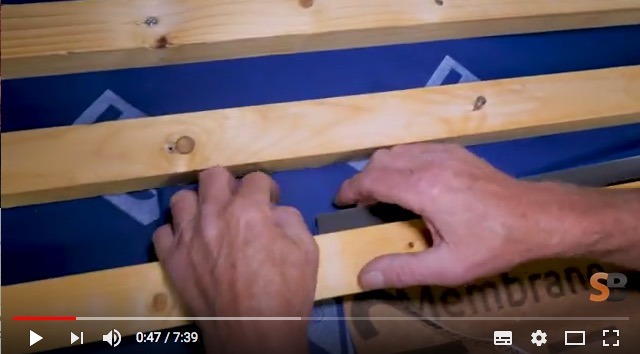
In this video Roger Bisby demonstrates how to fit a weather resistant door from JB Kind. 

Doors which swell in the winter and shrink in the summer are a common problem for homeowners.

JB Kind’s External Extreme door offers a more stable solution as it’s made with Medite Tricoya Extreme Durable MDF, a groundbreaking construction material which we have covered before on Skill Builder.

The exceptionally durable and dimensionally stable material means the doors can withstand all weathers – JB Kind is so convinced of its effectiveness they even offer a ten year guarantee.

The doors are issued factory finished and ready to use and as demonstrated they are also easily fitted in a day by a competent joiner into an existing or new wooden door frame.

www.jbkind.com

Scaffolding alternative supplied

Easi-Dec, the working at height safety specialist, has supplied Everest with 72 Roofline systems to provide installation teams with a safe, efficient and cost effective solution for accessing roofline level when carrying out gutter, soffit and fascia replacements.

After working with scaffolding for several years, Everest investigated alternative working at height solutions. Having approached Easi-Dec about its Roofline system, the Everest health and safety and purchasing departments received numerous product demonstrations with the Easi-Dec team visiting Everest branches and existing projects to highlight how its system can accommodate different types of properties. Impressed by the safe, easy to use and cost effective system, Everest placed an order for 72 Easi-Dec Roofline platforms.

After working with scaffolding for several years, Everest investigated alternative working at height solutions.

The Easi-Dec system allowed trained operatives to erect the access equipment on the day of the installation and remove it upon completion, which caused less disruption to customers. The system removes the need to appoint external scaffold companies on some installations. Its individual platforms can also be used on window replacement contracts which offer further flexibility with the equipment.

The Easi-Dec system allowed trained operatives to erect the access equipment on the day of the installation and remove it upon completion, which caused less disruption to customers.

“The Easi-Dec Roofline system is well known within our industry and it not only offers a cost effective solution, but it also does not compromise on safety,” says Andy Hunter, Health & Safety Executive at Everest. “We purchased a significant amount of Easi-Dec equipment, and as a result, we worked closely with the company to deliver 72 training sessions around the UK in a very short space of time.  The service was excellent and the delivery of the equipment and training ran without any issues.  It was an absolute pleasure to deal with all of the team at Easi-Dec and I could not recommend them highly enough.”

Easi-Dec Roofline is a modular system incorporating one or more Easi-Dec platforms linked securely with Easi-Dec Catwalk to form a continuous fully-guarded platform. It has been designed to provide simple, rapid access to roofline level by eliminating the time constraints of erecting scaffolding and can be set up in less than 30 minutes. The 8 metre Roofline system comprises 2 Easi-Dec platforms and a Catwalk. It features telescopic legs that provide height adjustment in 30mm increments and can even cope with sloping ground. With a comprehensive range of accessories the Easi-Dec Roofline offers numerous benefits and can overcome a wide variety of challenging access situations.

The Roofline system is available with a standard leg height of 3.3m -5.5m, with alternative leg lengths also available enabling workers to cover the majority of properties, ranging from 2.34m (typical bungalow) up to 6.8m (2 storey town house).

easi-dec.co.uk

Firm Fined After Exposing Workers to Hand Arm Vibration Syndrome

An engineering firm has been fined for failing to control the risk to employees using handheld power tools from Hand Arm Vibration Syndrome (HAVS).

Manchester and Salford Magistrates heard how Newfield Fabrications Co Ltd (NFCL) failed to ensure the risks to its employees from exposure was adequately controlled.

The company also failed to ensure its employees were given sufficient information, instruction and training on the effects of working with vibrating hand tools.

An investigation by the Health and Safety Executive (HSE) found that sometime towards the end of 2015, a welder who had been working at the company for a number of years had been given a job that involved a significant amount of grinding and polishing.

After a number of hours on the task, the worker began to experience numbness and tingling. He asked to swap with another worker but was told to carry on.

Whilst his symptoms continued he was told by his supervisor to carry on using vibrating tools.

A few weeks later, a 20-year-old apprentice welder also began to suffer from vibration-related symptoms from using similar tools.

Newfield Fabrications Co Ltd of Sandbach, pleaded guilty to breaching Regulations 6(1) and 8(1) of the Control of Vibration at Work Regulations 2005.

The company has been fined £120,000 and ordered to pay £7,241 costs.

Speaking after the hearing HSE inspector Helen Jones said: “This is a case of the company failing to protect workers using vibrating tools.

Exposure to hand arm vibration is a well-known risk which the company failed to adequately control.

“The company also failed to ensure workers were looked after when symptoms did arise leading to further exposure.

This was wholly inadequate, and led to two employees suffering significant health effects.”

See more on Hand Arm Vibration Syndrome with Skill Builder.

LGA calls for ‘urgent and immediate’ building regulation review

0

The Local Government Association has called on government to launch an “urgent and immediate” review of building regulations in the wake of the Grenfell Tower catastrophe.

Lord Porter, LGA Chairman, said: “Following on from the Grenfell Tower tragedy, we want the Government to begin an urgent and immediate review of building regulations. We cannot wait for the result of the public inquiry or coroner’s report before this review is started. We have to act based on what we know now, while being prepared to revisit the building regulations again in the future if any additional lessons need to be learned.

“There is complexity and confusion in the current system that must be addressed and local government must play a central role in this review from the outset. The review needs to consider how easy it is to use, comply with and understand the building regulations and the associated documents supporting them, particularly those relating to the installation of cladding and insulation on external walls of buildings and how the building control, fire safety and planning regimes interact.

No time to wait

“Councils will do whatever it takes to ensure our residents are all safe in their homes. We have been clear all along that entire cladding panels and the insulation behind them need to be fire tested together as a system, rather than just the core of the panels on their own, and are also pleased these much-needed changes to the testing process will now happen. It is vital that we get this right and this whole-system testing needs to happen as soon as possible.

Lord Porter also urged that testing processes need to be more transparent. He said: “We are concerned that the Building Research Establishment (BRE), carrying out safety tests, does not feel able to release the results of previous cladding system tests, as these are deemed commercially confidential. If the public are going to have faith in this fire safety testing process then everything needs to be out in the open. It is no time for contractors or manufacturers to withhold test results from both councils and the public.

“The industry and BRE needs to waive this confidentiality in the public interest to assist the Government and councils in gathering as complete a picture as possible of what is and is not acceptable in cladding systems. These are exceptional circumstances when not only the safety of thousands of residents, but also the peace of mind of many more, is at stake.”

Keylite Polar PVC Roof Window Review

Keylite Polar is a brand new white PVC roof window which is said to establish a new standard in maintenance free, energy efficient roof windows. Roger Bisby takes a closer look.

It surprised me to learn that the number of white roof windows now being sold in the UK is almost half of the total and if the trend continues the Scandinavian style plain pine window will become something of a rarity if not an endangered species. I, for one, hope it doesn’t disappear because I like to see a bit of timber.

Part of this move to white is because customers now like the idea of the roof window blending in with the ceiling rather than being a stand out feature. They may also have white PVC windows in the rest of the house so suddenly switching to timber for the roof windows is somewhat illogical. So if customers have already embraced the idea of a white roof window, the Keylite Polar PVC roof window is bound to be received with open arms, which, coincidentally, is the way Polar bears tend to greet you shortly before having you for lunch.

If customers have already embraced the idea of a white roof window, the Keylite Polar PVC roof window is bound to be received with open arms, which, coincidentally, is the way Polar bears greet you shortly before having you for lunch

I don’t want to get into that tired old timber versus plastic argument, both have their place, but in practical terms PVC has a lot going for it in areas of high humidity such as kitchens and bathrooms.

It also has enhanced insulation because of the trapped air pockets in the multi-cavity PVC extrusion. So if you are looking for a good window to keep out the cold this window is right up there on top of the world, so to speak. It has been described as the ‘Daddy of roof windows’ which is not to belittle the contribution that female Polar bears make. All those endless shopping trips to Iceland and hours spent slaving over a hot stove.

But there is more to the Polar than high insulation levels, the Keylite Polar shares its pedigree with other windows in the Keylite range. It has the same Flick Fit brackets and spring-loaded finger hinges, that have proved such popular features.

MF694H6MIB7wd5MzNuCD7pidfQ Ckd 3w8jywrmqSnk

Easy installation

For those of you who have yet to fit your first Keylite window (Keylite virgins white as the driven snow) I can tell you they are an absolute doddle. The brackets are already attached to the window and, in this case that means they are fitted into the steel reinforcement inside the frame so you don’t have to do any drilling or measuring to work out the bracket positions. This is a bonus in any roof window but particularly so in a steel reinforced PVC.

Because of the way the Flick Fit brackets operate you can fit the window with the glazed sash in place and then take it out afterwards if you want to fit the flashing from inside the roof. When it comes to putting that glazed sash back in you will see another big difference between Keylite and other roof windows. Instead of having dangling finger hinges they are spring loaded. They have taken away the dangle so they stay in position rather than responding to gravity. It is therefore a very simple task to guide them in without one side slipping out while you put in the other side, and once they are, in you simply close the window as normal to activate the retaining buttons.

Thermal collar

The third stand-out feature of Keylite roof windows is the built in thermal collar. To be fair most, if not all, roof windows have an optional thermal collar to prevent cold bridging across the frame and these collars are highly effective in increasing the overal U value but very few installers bother to fit them. This could be because they don’t know about them or it could be that they simply don’t want to fork out the extra money for a thermal collar so, even though, everyone agrees that a thermal collar is necessary very few ever get fitted and that means that merchants tend not to stock them.

Keylite looked at this situation and decided to take responsibility for fitting this thermal collar in the factory as standard and rather than charging the extra they swallowed the cost. The bottom line is that the customer gets a warmer window for the same kind of money as other quality windows and the installer gets an easier life. Happy days.

If you want to see the Keylite Polar in action visit Keylite.co.uk and watch Roger Bisby demonstrating the way it works. No animals were harmed during the making of this video.

Mercedes-Benz pick-up truck revealed

Mercedes-Benz has revealed its first pick-up truck – the hotly anticipated Mercedes-Benz X-Class which will be available in Europe from November at a price of 37,294 Euro. 

The Mercedes-Benz X-Class is said to push the boundaries of the modern pick-up – designed to be used as a rugged, all-terrain pickup but also as a vehicle for urban lifestyles and families.

The Mercedes-Benz X-Class at a glance:

  • The Mercedes among pickups: The Mercedes-Benz X-Class is said to unite the typical traits of a pickup – robustness, functionality, strength and off-road capabilities – with the classical characteristics of a real Mercedes – design, comfort, driving dynamics and safety.
  • Brand characteristic SUV design: With the centrally positioned star, twin-louvre radiator grille, honed bonnet and headlamps extending far into the wings, the X-Class seamlessly fits in to the Mercedes-Benz portfolio.
  • Premium effect: There are three trim parts for the cockpit, six seat covers including two leather variants with contrasting topstitching, and two colours for the roof lining provide the widest choice of materials and colours in this vehicle segment.
  • A pickup to suit different lifestyles and work environments: The PURE basic variant is designed for classic robust use, PROGRESSIVE for higher requirements in terms of quality feel and comfort, and POWER as the high-end variant for urban lifestyles.
  • Individualisation on account of a diverse range of Mercedes-Benz accessories: As from its market launch, customers can add a styling bar, side bar, canopy, various covers as well as numerous cargo and off-road solutions – all developed and designed by Mercedes.
  • Enjoyable performance with four and six cylinders: As from its market launch, customers can choose between the common rail diesel X 220 d (120 kW/163 hp) and X 250 d (140 kW/190 hp) as well as a petrol engine (122 kW/165 hp) in selected markets. A top-of-the-range V6 diesel (190kW/258hp) will be released mid-2018 occupying a leading position in the segment.
  • Driving enjoyment on a par with passenger cars: Thanks to the wide track, the spring and damping system tuned for the comfort typical of a Mercedes, and the coil springs as well as internally vented disc brakes on the front and rear, the X-Class is said to offer off-road and on-road performance.
  • All-wheel drive for any surface: The engageable 4MATIC all-wheel drive with low-range gearing and optional differential lock on the rear axle masters any terrain. From the middle of next year a permanent all-wheel drive will be available.
  • Star safety: The X-Class features exemplary passive and active safety equipment including: Active Brake Assist, Lane Keeping Assist and Traffic Sign Assist, among others.
  • Intelligently connected: Thanks to Mercedes me connect, X-Class customers are connected to their vehicle via smartphone at all times and can call up useful information such as the location of the vehicle or the fuel level, and navigate from door to door.

Workplace fatality figures reveal need for modern training methods

The construction industry must do more to ensure health and safety compliance and avoid incidents, according to specialist training provider Develop Training Limited (DTL).

The company’s comments follow publications of the Health & Safety Executive’s annual workplace fatality figures, which revealed that across the UK, more than 135 workers were fatally injured between April 2016 and March 2017 with the largest share of fatal incidents in the construction sector.

There were 30 deaths in the sector in the 12 months covered by the report, and the annual average rate over the last five years in construction is around four times as high as the all industry rate.

Although the construction industry has made changes and reduced overall facilitates, national training specialist DTL believes that more effective training can still be deployed to reduce risks.

Steve Braund, Marketing Manager at DTL, explains: “The best way of preventing incidents is to ensure employees are trained efficiently using modern training methods that ensure people learn and retain vital information in a way that works for them. On top of that, and directly related to it, organisations in the construction industry need their people to put procedures in place – and follow them properly.

“As things stand, many construction companies rely on old-fashioned training models that deliver health and safety learning experiences that are soon forgotten. Modern training techniques, by comparison, ensure that responsible persons are trained more effectively than with traditional, classroom-only training. This, coupled with new competency qualifications and compliance processes, gives management real reassurance that employees are equipped to prevent incidents, and prepared for any incidents that do occur.”

www.developtraining.co.uk

Contractor fined £10,000 after electrician is paralysed falling off own ladder

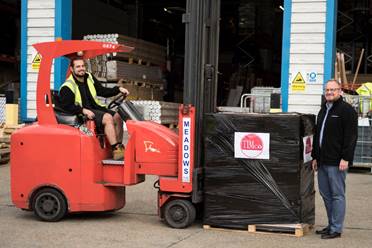
London contractor Meadows WR LLP (MWR) has been fined after a 60 year-old man fell off a ladder, through an opening and down to the lower floor of a house in St Albans.

St Albans Crown Court heard how the 60-year-old man, Mr Kundi, died three years after the incident. MWR contracted him to part demolish and refurbish a property in St Albans and convert it into four maisonettes.

The incident took place on 30 May 2012, when the electrician Mr Kundi was working on the first floor of the house. Access was through an opening to the first floor. He was working on his own stepladder on the first floor, when he fell off the stepladder and through the opening onto the ground floor.

The worker broke his spine in three places and was paralysed from the chest down; he spent three months in a coma and a total of twelve months in hospital.

Mr Kundi died in May 2015, with the cause of death being respiratory failure due to a collapsed lung and pneumonia alongside his spinal injuries and paraplegia.

The HSE found the opening onto the first floor had no edge protection to prevent the risk of failing through. It was also found that MWR failed to plan, manage and monitor the work to the required standard

An investigation by the Health and Safety Executive (HSE) found the opening onto the first floor had no edge protection to prevent the risk of failing through. It was also found that MWR failed to plan, manage and monitor the work to the required standard.

Meadows WR LLP of City Road, London has pleaded guilty to breaching Regulation 22 (1) of the Construction (Design Management) Regulations 2007.

The company has been fined £10,000 and ordered to pay costs of £10,000.

Speaking after the hearing HSE inspector John Berezansky said: “Working at height is a high-risk activity as well as all construction work, effective controls and management is essential to avoid serious injuries and incidents like this.

“The developer Meadows WR LLP failed in its duty to ensure such measures were in place to prevent this tragic incident.”

PassivSystems Partners with ENGIE

Following ENGIE’s recent move into the UK home energy market ­ the energy and services company has announced it will provide smart heating controls from PassivSystems to customers choosing its new three-year fixed ENGIE Control tariff.

The controls, which are part of the PassivLiving HEAT service, will provide homeowners with the ability to regulate their living space and water heating from any location using a web-enabled smart device such as a phone, PC or tablet.

Eliminating the need for complicated timers, the smart heating system works with networked sensors.

It considers several factors, including weather conditions, the home’s thermal properties and boiler performance to make sure customers’ properties are heated to suit their needs, using as little energy as possible.

The flexible, smart thermostat controls are designed to improve comfort and heating control within the home, while aiming to reduce heat consumption.

Colin Calder, CEO of PassivSystems, said: “With no upfront costs required for the supply and installation of the smart thermostats, the partnership between ourselves and ENGIE announced today will deliver significant energy cost savings for customers.

More people will be given access to Passiv’s heating controls, while also benefitting from the protection of rising energy prices through choosing fixed tariff schemes such as those now offered by ENGIE.”

Paul Rawson, CEO of ENGIE’s UK home energy business commented: “The cost of heating our homes makes up the greatest proportion of household energy bills so it made absolute sense to us to make smart heating more accessible.

“By allowing our customers to only heat their home when they need to, we hope ENGIE Control will help them feel more in control, reduce the amount of energy they use and save money in the process.”

www.passivsystems.com