Sunday, January 25, 2026
spot_img
Home Blog Page 111

Precious Scrap Metal

0

Have you noticed any increase in the number of scrap metal men doing the rounds? I certainly have, not least because the scrap metal I had set aside recently on one of my jobs walked off after just ten minutes. Two hours later I had another visit from someone who was similarly interested, but this time he didn’t particularly care whether the copper tube was old or new. So keen was this young man on the concept of recycling, that he thought he might just cut out the middle man (me) and go from the merchant to scrap dealer without the copper ever being used for plumbing.

I stopped him in the nick of time. He was not particularly bothered by being caught like this. He had, in the process of stealing things from building sites, become desensitised to physical and verbal abuse. “It’s the Chinese” he said “They’re taking all the scrap and there’s a shortage”.

This champion of free enterprise who was scurrying down the drive with my copper, was just doing his patriotic best to help alleviate the shortage.

I was impressed by this immediate blame transference. He gets caught stealing and it is immediately the fault of some mythical figure from halfway around the world. It seems that the Chinese are now to blame for everything from global warming to material shortages. This champion of free enterprise who was scurrying down the drive with my copper, was just doing his patriotic best to help alleviate the shortage. By keeping the supply up he was also helping keep the price down – which is good for me when I have to replace it.

Scrap metal for recycling

It suddenly dawned on me that perhaps the problem is not that we don’t have enough raw materials, it is simply that these materials are not moving around the system fast enough. The 25 years (minimum) that copper spends lying around in people’s house is way too long. We need a much faster throughput.

The Scrap Metal Conundrum

If you are wondering what I did with the thief having recovered my property, the answer is nothing. I could have called the police but in my experience, they never turn up when you need them. I may also have ‘taught him a lesson’ but it wouldn’t have been not to steal, it would have been to run faster next time.

The serious point here is that scrap metal theft is now such a serious problem, that millions of pounds worth of cable is being stolen from our railway lines, manhole covers are being removed from roads and war memorials stolen. Scrap metal dealers know they are buying stolen goods, but often turn a blind eye. The Home Office is now looking to change the law to make it harder to sell scrap. They are looking at increased regulation of scrap dealers, which is a typical government response. Produce another licence. This is wishful thinking because the problem starts way down the chain from the legitimate dealers who would buy the licence.

The scrap metal business at this level is run like the drug trade, small dealers to bigger dealers and always for cash. In fact there are many drug addicts who rely on scrap metal theft for their daily fix. The only way that this business will be brought into line is if the cash is eliminated from the transaction.

If those people who earn their living roaming the streets looking for scrap could only receive payment through BACS, you would see an immediate drop in thefts. As it is at present they turn up at the scrap dealer with a false name, give a false vehicle registration and are gone. It is so easy and lucrative it is a wonder that everyone isn’t doing it.

Who Needs A Waste Carriers Licence?

Aircrete Blocks Cracking up – Unwanted Trouble

0

If you have been drawn to this blog by the title alone, I will save you wasting further time by saying from the outset that I am talking about buildings here – not a mental breakdown, though that can never be ruled out in the building game.

Certainly the owner of the house in this story needs an extraordinary degree of optimism and patience, in order to preserve his sanity, as his new house continues to crack before his eyes.

There are of course many reasons why buildings may crack, but this blog is talking about buildings made of Aircrete blocks, which a few months after completion started showing a number of large cracks.

As with so many of these problems, everyone involved is pointing a finger at someone else. Is it the blocks, the brickies, the plasterers or the architect who is to blame?

Aircrete blocks are lightweight and have a very high degree of insulation. When introduced they seemed like the wonder product of the age and to some extent, they do a job that no other materials can do.

I think it’s accurate to say that when they were first developed, the intention was to use them on internal skins of cavity walls instead of breeze blocks, which are heavier and not such good insulators.

This is still where they are mostly used. There are however a growing number of buildings being built with external skins of Aircrete blocks, and there are even buildings being built with solid Aircrete. That is to say no cavity.

The appeal of Aircrete blocks over bricks is speed and affordability. They are a good product in their own way, but the builder needs to understand their limitations.

The appeal of Aircrete blocks over bricks is speed and affordability. They are a good product in their own way, but the builder needs to understand their limitations.


Aircrete Blocks Golden Rule

There is a golden rule in the building industry that states:

‘mortar should never be stronger than the material it is joining’.

It’s a rule often broken. Having worked as a brickie’s labourer in my teens, I can tell you from my own experience two very good reasons that this rule is broken: One is laziness, and the other is ignorance.

Often the two go hand in hand. The general advice is that a cavity wall is brought up more or less equally on both sides, rather than building the inner skin and then the outer.

Again this isn’t always done, but if it is done then it is highly likely that the mortar being used is sometimes the same strength inside and out.

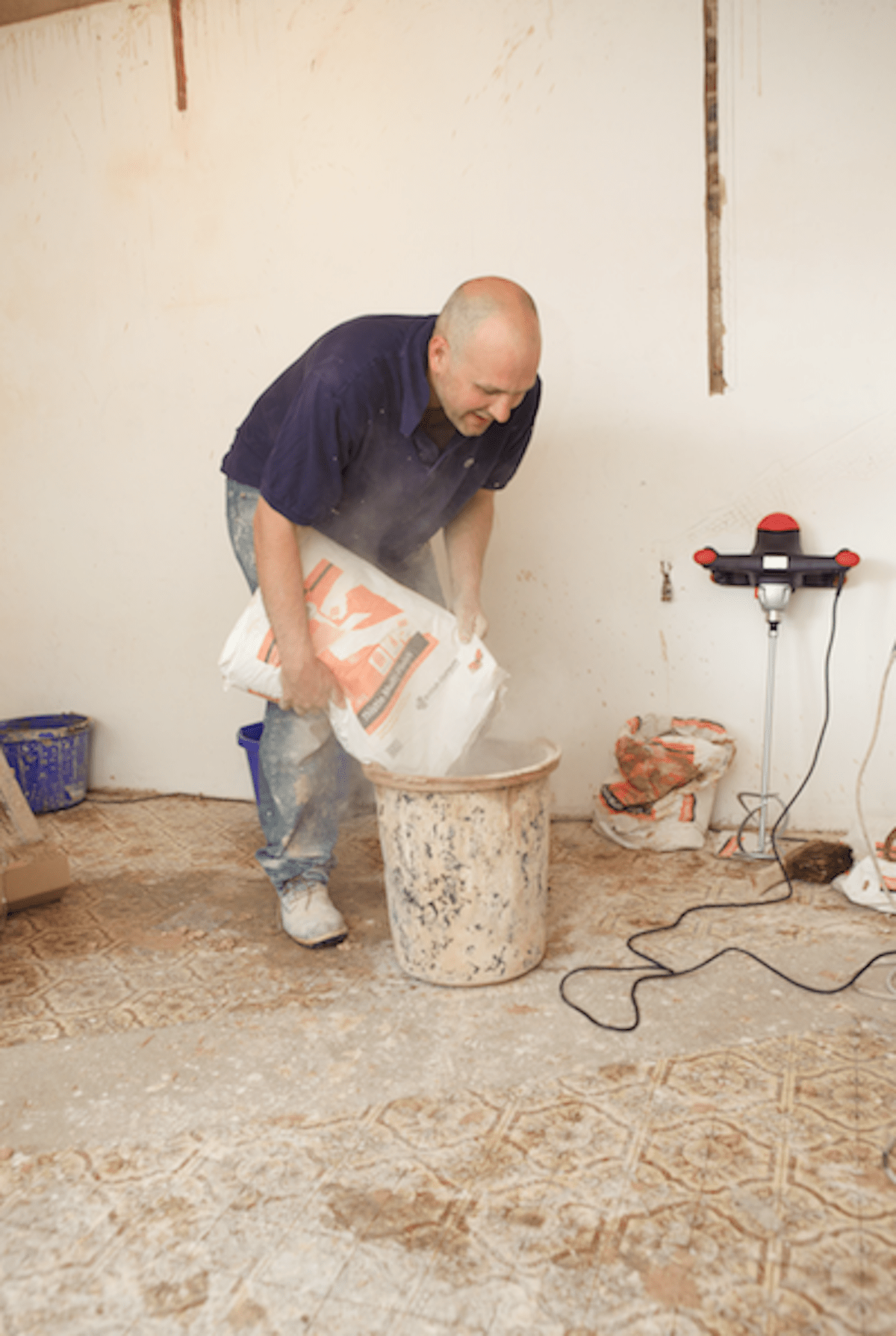
Labourers just can’t be bothered to chop and change mixes, or throw stuff away. At best they may put it back in the mixer and add a bit more cement, but even that is a hassle, so they tend to mix a fairly strong mortar for the bricks and serve it up for the blocks as well.

Another bit of advice is that Aircrete blocks should ideally be laid with a sand/cement/lime mix of around 6.1.1 or even 8.1.1 for Solar blocks.

If you look at how much lime a builders merchant sells compared to the number of Aircrete blocks he shifts, you will see that very few people follow this recipe.

It is far more likely that they will weaken the mortar with plasticisers or (in some cases) washing up liquid.

This gives them a lightweight mix with plenty of room for movement, but the problem here is that the amount of cement is not sufficient to cover all that sand.

I would argue that for this reason alone, lime is always better than plasticiser, because it mixes with the cement and spreads it further to form a more consistent mix.

The block manufacturers are painfully aware of all these problems and issue guidelines to avoid cracking.

This involves the use of movement joints, which must come all the way through the render. You only need to look around at rendered houses to see how rarely this is done.

That is the ideal scenario but, as I have said, the reality is that the labourer will often knock up a 4 or 5 to 1 mix of sand and cement with a squirt of plasticiser, which is then used throughout the build.

If the Aircrete blocks are used on the internal skin only, and that is later dry-lined with plasterboard, then the subsequent shrinkage cracks will never be seen. In any event this will probably do no harm.

If the Aircrete blocks are used on the external skins, then the cracks cannot be covered because they will almost invariably show through the render.

Even if the build mortar is the right strength to allow for movement in the blocks, this good work can be undone by applying render that is too strong.

Getting the render mix right is absolutely critical, but once again there are plenty of plasterers out there who struggle to keep a good coat of render on an Aircrete wall, and to make matters worse their answer is to use even more cement.

The real answer is to apply a slurry coat to the blocks and then when this is dry, apply the scratch coat.

The Aircrete block manufacturers are painfully aware of all these problems and issue guidelines to avoid cracking.

This involves the use of movement joints, which must come all the way through the render. You only need to look around at rendered houses to see how rarely this is done.

People just don’t like the look of them. The other measure to avoid cracking is to use bed joint reinforcement at vulnerable points. This is typically around and below windows.

The fact that there is no load directly beneath a window, means that the block work can simply pull apart in the middle.

Again, you only need to ask a builders merchant for bed joint reinforcement to see that it is rarely used. Very few stock it, and some merchants have never heard of it.

What this means is that block manufacturers can simply point to these omissions or errors and wash their hands of any problems. “If you don’t follow the guidelines, you only have yourself to blame” they will say.

I would say they could help a lot more by printing the guidelines on the packs, but I suspect they don’t really like the word ‘cracking’ to appear too close to their brand name.

There is another little point that can also help prevent cracking in rendered walls (this applies to brick as well) and that is the use of serpentine curves in the scratch coat.

It seems like such a small and insignificant thing, but it can make all the difference. If the first coat of render is lined through with horizontal lines, then the topcoat will grab it along these lines.

As that topcoat shrinks, it will pull on those horizontal lines, and hold the wall in tension as the render dries out and tries to shrink.

The problem is that all the tension is in a vertical direction, so the natural tendency is for the wall to move in the opposite direction, which is horizontal. So, as strange as it may seem, a horizontal scratch coat will produce vertical cracks.

Again I see hundreds of jobs where the scratch coat is horizontally lined, often with a notched tiling trowel.

Is it the Aircrete blocks, the Brickies, the Plasterers or the Architect who is to blame?

In fact, the whole approach of plasterers to rendering Aircrete blocks, is often completely wrong. They assume that the wavy lines which are put on the blocks at the factory, are a key for their plaster or render – which is wrong.

If you walk around many buildings using Aircrete blocks a few weeks after they have been rendered and tap the walls, you will often here a hollow sound.

Shortly after that come the cracks, and after that the solicitor’s letters, with everyone pointing the finger at someone else. The best excuse of all… the weather.

More articles and info

What’s the Best Mix for Rendering?

Thermalite aircrete blocks

Tax Laws Power Market Inequality

0

I have just heard an item on BBC Radio 4 about the huge increase in the cost of raw materials for the building industry. The price of Bricks and concrete have reportedly soared by a potent 20%! Tax laws are an important factor fuelling inequality within this market. While average inflation, according to the retail price index, shows a 2 or 3% rise, the cost of ‘trade’ inflation could be much higher.

The trouble is that there is no barometer for this because the cost of raw materials is only picked up when those materials go through to the retail sector. The retail price index measures a selected basket of items sold in the shops, and by ‘shops’ they don’t mean builder’s merchants.

“But for builders faced with rising materials costs, the fact that they can’t pass this increase onto the customer is not quite so good.”

The building industry is even further out of the loop because house prices are not even included in the inflation index. I suppose there is a good reason for that because houses can be sold on to people who have also benefited from price hikes, but if you are trying to save up for your first house, the rate at which prices are moving away from you is the most relevant bit of inflation there is.

Happily, for first time buyers, house prices are falling or at least static. But for builders faced with rising materials costs, the fact that they can’t pass this increase onto the customer is not quite so good. The only way that increased material costs can be absorbed is in reducing labour costs, or cutting profits. You can guess which is more likely. With high unemployment and a huge army of migrant workers looking for any job they can find, it is wages that end up bearing the brunt of this shortfall.

“Tax Laws Distort The Market”

For anyone looking to have work done on an existing property the fall in labour costs may also offset the rise in materials, but there is another factor which distorts the market – Tax laws. VAT is not charged on new builds, but is charged on home improvements. It is even more biased because small builders are sometimes zero rated for VAT because their turnover is below the threshold.

With VAT now being 20%, this can make a huge difference to a quotation. So although we have a 20% increase in materials there is a possible saving of 20% on labour costs if you turn tax laws to your advantage, and find a builder who is either not VAT registered or is willing to do the job for cash.

Do Tax laws punish the honest builder?

The idea of having a VAT threshold is to encourage start-up businesses, but I know plenty of builders who have been trading for 20 years or so who still manage to keep below the VAT threshold. They do this by working for cash, or getting the customer to buy the materials. Meanwhile, the honest builder (yes there are some) who is forced to charge VAT, loses jobs to the fly by nights.

The obvious answer here is to address unequal tax laws. The government should give the same VAT relief to home improvements, as they do to new build projects, or abolish the VAT threshold. I, and many others in the industry, would prefer tax laws to treat new build and refurbishments equally. It would be a brave move, but one which would give some real stimulus to our industry. At a time when there are skilled tradesmen stacking shelves in supermarkets and people are in desperate need of housing, bold change could make a huge difference.

More From Skillbuilder – VAT Explained

Gov Building Materials Commentary