Home Blog Page 104

Free apprentice for a year

0

A new apprenticeship scholarship programme has launched today, which will give two construction companies the chance to benefit from the placement of an apprentice who will be completely funded to work for them for 12 months.

The initiative is being launched by the construction audit, contract and payroll provider, Hudson Contract, to celebrate its 20th anniversary and also provide opportunities to two young apprentices hoping to take their first steps on the construction career ladder.

Hudson Contract will sponsor the apprentices by covering their salaries for up to a year. To be in with a chance of gaining one of the apprentices, visit www.hudsoncontract.co.uk  and describe in up to 100 words how an apprentice could benefit your company.

The scholarship scheme is designed to help support the future of the construction industry. Latest government figures show that there has been year-on-year growth in apprentice starts across England. A record 18,290 construction apprenticeship programmes started in 2014/2015 compared to 15,890 in the previous year.

Managing director of Hudson Contract, Ian Anfield, comments: “Having worked in the construction industry for 20 years, we’re a business that is passionate about investing in apprenticeships.

“The building trade is one of the biggest apprenticeship employers, and with a serious skills shortage impacting the sector we really wanted to give something back to construction firms of all shapes and sizes. Hopefully it can also provide the perfect platform for two apprentices to kick-start their careers.”

The scholarship offers coincide with Hudson Contract’s ongoing apprentice support. Through its Apprenticeship Scheme, the company has now part-funded over 70 apprentices since 2011.

Ian Anfield added: “The scheme was put in place after discovering construction students were struggling to find companies willing to take on apprentices, particularly small firms that couldn’t afford to do so. We’re now building on this heritage of supporting apprentices by completely removing the financial headache for two more firms through our 20th anniversary scholarship programme.”

The winning apprentices will start their scholarship in Autumn 2016, and will produce a video diary of their experiences throughout the year.

www.hudsoncontract.co.uk

Contractor fined for safety failings

A company based in Cardiff has been fined for safety failings during a property development which included breaching the Construction (Design and Management) Regulations 2015.

Pontypridd Magistrates’ Court heard Ziman Trading Limited, formerly Ziman Investments Limited (Ziman), was acting as the principal contractor at the property development of the former New York Hotel, York Street, Porth.

An investigation by the Health and Safety Executive (HSE) found that the company failed to ensure that appropriate measures were in place to control risks onsite, including falls from height, exposure to asbestos and the risk from fire.

Failure to plan

The company failed to effectively plan and manage the work which put workers at risk. Ziman did not cooperate with the investigation and failed to comply with enforcement action taken by the HSE.

Ziman Trading Limited, of Cefn Coed Road, Cyncoed, Cardiff, pleaded guilty to breaching Regulation 13(1) of the Construction (Design and Management) Regulations 2015 and Section 33(1)(G) of the Health and Safety at Work etc. Act 1974. The company was fined £50,000 and ordered to pay costs of £5,478.

For further information construction sites visit: www.hse.gov.uk/construction/areyou/commercial-client.htm

Roofer fined after passer-by reports unsafe work

0

A Bracknell based roofer has been fined for safety failings after a complaint was made to the HSE regarding unsafe roof work.

No-one was injured in the incident at Sabine Gates, Old Bracknell Lane, Bracknell on 27 August 2014, however members of the public were endangered by the potential for falling objects.

unsafe roof work

Reading Magistrates’ Court heard that Terry Colwell trading as T Colwell Roofing, from Bracknell had been contracted to undertake roof repairs to the property by Grosvenor Court (Bracknell) Management Company Limited (Grosvenor Court).

Terry Colwell chose to carry out the work without a scaffold, working at heights of up to eight metres with no fall protection or falling object protection to protect members of the public.

An investigation by the Health and Safety Executive (HSE) established that Terry Colwell undertook the work for £650. The price of a scaffold would have been between £1400 and £1500.

Terry Colwell, trading as T Colwell Roofing, of Hardwell Way, Harmans Water, Bracknell, was fined a total of £2,000 and ordered to pay £1,966 in costs after pleading guilty to a single breach of the Health and Safety at Work etc Act 1974.

After the hearing HSE Inspector John Caboche said: “This was a serious incident that could have ended in tragedy for Mr Colwell or a member of the public had he fallen or had a loose roof tile been dislodged during the repairs.

“The incident was wholly preventable and could have been avoided had Mr Colwell used a scaffold and not undercut the other roofing company and if the operation been better planned and managed.

“It is essential that roof work is carefully assessed by competent persons, with a plan in place to prevent falls of persons and objects. Roof work remains one of the most dangerous activities in the construction sphere.

“Terry Colwell was fully aware of the dangers of roof work and HSE publishes extensive guidance that is readily-available of how to safely manage this type of work.”

Further information on how to properly manage roof work can be found on the HSE website at www.hse.gov.uk/construction/safetytopics/roofwork.htm

Further fall in construction inspections

The number of unannounced construction inspections being undertaken by the Health and Safety Executive continued to drop last year according to construction union UCATT.

In 2015/16 there was a total of 9,219 inspections compared to 9,656 in 2014/15, a decrease of 4%.

The number of construction inspections has been declining steadily in recent years with figures revealing that in three years the number of inspections has fallen by 13%.

Most regions in the UK saw a decline in inspections in 2015/16. The biggest drop was in the South East where inspections fell by 26% which comes on top of a 19.6% reduction in the previous two years.

Other regions to record declines in 2015/16 were: Wales 18%, Eastern 13%, Yorkshire 13%, North East 10%, West Midlands 7% and London 5%.

Brian Rye, Acting General Secretary, of construction union UCATT, said: “These statistics are far from meaningless. They paint a serious picture of how a resource starved HSE is increasingly unable to do its job.”

Mr Rye added: “Inspections save lives and prevent accidents. The reduction in inspections is endangering the lives, health and wellbeing of construction workers. This is a political decision by the Government which have decided that it is financially justified to play fast and loose with the safety of construction workers.”

No excuses for being overweight

0

With figures from the Driver and Vehicle Standards Agency (DVSA) revealing that almost nine in 10 (88.5%) of the 2,381 vans it weighed last year were overloaded, Venson Automotive Solutions is urging van owners to ensure their vehicles are safe and legally road compliant.

Van operators need to take into consideration how their vehicles are used, including the working environment and the payload of the goods and equipment they are carrying. Crucially, these need to be considered prior to any conversion. Organisations also need to make sure staff know how to operate the vehicle and the on-board equipment.

“When it comes to equipping vehicles, it’s essential to keep in mind the payload quoted by the manufacturer,” explains Operations Director, Gil Kelly at Venson Automotive Solutions. “Fitting crash tested storage equipment, such as racking, and including a bulk head in the vehicle helps improve driver safety.  And whilst equipment can be recycled, where appropriate, it’s important any products being reused should meet current legislation. Fitting telematics can also help with some aspects of driver safety and security, as well as providing businesses with the data they need to improve operational and business efficiency.

“Too many businesses cut corners when it comes to equipping their vehicles, or don’t recognise the impact an inferior product could have on vehicle or driver safety. The worst offenders include overloaded vehicles, poorly secured equipment and a lack of pedestrian warning systems.”

Gill Kelly concludes, “Getting the vehicle specification correct at the outset can save businesses time and money but more importantly improve staff safety. We work closely with clients and using years of experience are able to fit out all sorts of vehicles for all kinds of industries. Our purpose built workshop in Yorkshire is a destination centre for all the main vehicle manufacturers, which means cars and vans can de delivered direct to us for conversion/fitting out, ready then for onward delivery to the client and into active service.”

Venson offers SMEs top tips on best practice to ensure vehicles are safe and legally road compliant.

Vehicle Loading Safety Tips 

  • Know the weight and weight limits of your vehicle. Maximum permitted axle weight and Gross Vehicle Weight (GVW) can be found in your driver handbook or sometimes on a plate located by the bulk head or by the driver or passenger door.
  • Be careful not to mix up the Gross Vehicle Weight (GVW) with the Gross Train Weight (GTW). The GVW is the maximum permitted weight of the vehicle (plus any load it is carrying), while the GTW is the maximum permitted weight of the vehicle plus any trailer being towed (plus any load being carried in the vehicle and trailer)
  • Ensure the load is distributed evenly. After any drop-offs, re-check the distribution of the remaining load and that it is secured safely – heavy items on the bottom, lighter items on the top.
  • Ensure the GVW is checked before setting out using your own weigh pads or use a public weigh-bridge. Alternatively consider having your vehicle fitted with on-board weighing systems.
  • Never automatically trust declared weights, invoices or delivery notes given to you by customers. Remember that you and your employer hold the responsibility for not overloading, not the customer.
  • Loads should be secured to make sure they do not slide around during transport. In vehicle storage solutions may help.
  • Carry out health & safety assessment for loading and unloading the vehicle, both internal items and external items such as ladders, materials etc.
  • Consider alternative storage solutions. What was once carried on the roof/side of vehicle is now not necessarily required.
  • Is everything that is being carried in the vehicle required? Consider alternative solutions such as onsite delivery from suppliers.

Scottish Apprenticeships Endangered by Levy Uncertainty

0

Growth in apprenticeship numbers in Scotland could be scuppered unless the Scottish Government commits to ring-fencing the new UK-wide Apprenticeship Levy for training according to the Federation of Master Builders (FMB).

Responding to figures published by Skills Development Scotland (SDS), Gordon Nelson, Director of FMB Scotland, said: “Although the increase in apprenticeship numbers is welcome, the quality and employment outcomes of apprenticeships should take precedent. Equally there is now a fear that this good work could soon be undone if the Scottish Government doesn’t commit to re-investing funds raised by the new UK-wide Apprenticeship Levy. There is a leadership vacuum in terms of demonstrating how the Apprenticeship Levy will be implemented in Scotland.”

Nelson continued: “However, in the Scottish Government’s defence, the Apprenticeship Levy has been foisted upon them with no or very little consultation. The business community in Scotland has been particularly frustrated as it was impossible to properly engage with policy-makers on this important matter in the run-up to the Scottish Parliamentary elections. Now that the elections are behind us, and the relevant Ministers are in place, we want a clear message from the Scottish Government that they will engage with the construction industry and others to develop a workable policy for investing the Apprenticeship Levy that works for the Scottish construction sector.”

Nelson concluded: “It’s crucial that we get this right as the Scottish construction industry is already in the midst of a skills crisis – the FMB’s latest State of Trade Survey showed that nearly half of SME employers are struggling to recruit carpenters, and that more than one in three are finding it difficult to source plumbers. These kinds of shortages could have a potentially disastrous effect on the nation’s key housing and infrastructure objectives. The only way to ensure that Scotland keeps building is by developing more home-grown talent, and to achieve this, the construction industry needs the Government to prioritise quality apprenticeships and the upskilling of existing workers.”

Base extends safety trainers range

BASE has extended its range of safety trainers with three new options, which the company says will make you feel like you are walking on air.

Frisbee, Be-Shiny (pictured) and Colosseum join the existing Martin and Opera BASE trainer line-up, and have a lot in common in terms of comfort and style. Among the lightest safety trainers on the market, Frisbee and Be-Shiny are designed to fit like a glove and feel almost weightless.

Be lighter on your feet

Both Frisbee and Be-Shiny trainers are fitted with BASE SlimCap – a metal-free toe cap which is said to be 35% lighter than standard steel toe caps and with a pre-shaped protective bend for additional protection. Both safety trainers also have a tough and slip-resistant TPU-Skin, which makes the soles of the footwear ultra-flexible, to cushion the foot and bend as required. With its steel toe cap, the Colosseum trainer is also flexible and comfortable to wear, thanks to its Airtech anti-fatigue sole.

Frisbee features BASE’s Dry ‘n’ Air technology, an ergonomic footbed for comfort plus air circulation to keep feet cool and fresh.

SmellStop technology

All three new trainers not only help to reduce foot fatigue thanks to features such as padded collars, they also have SmellStop technology, with a fabric lining that has a permanent anti-bacterial treatment to help prevent odours.

www.brianhyde.co.uk

Construction training charity to close

0

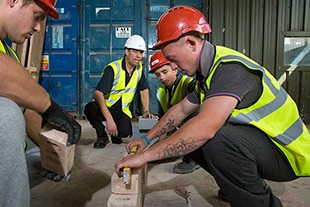
Building Lives, the award-winning construction training charity, is to close at the end of the month due to a lack of sustainable funding.

Building Lives was started by Lakehouse founder Steve Rawlings in 2010 and has taken those furthest from the workforce and trained them for successful careers in construction.

The charity’s closure comes at a time when skills shortages in construction are undermining the Government’s aim of building a million new homes in five years.

Building Lives said: “Given the skills crisis in London, it is incredibly disappointing that we are unable to continue with our model, especially as it provides huge value for money for the tax payer.

“To put a young person through a Building Lives traineeship costs just £4,000. On average 8 out of 10 people on our Careership training programmes go into work or apprenticeships. This contrasts with the cost of a young person being out of work to the UK economy of £165,000. Last year, the Further Education (Skills Funding Agency) budget in England alone was £7.5bn. At the same time, the construction Industry Training Board raised £120m from across the construction sector to tackle the skills shortage.”

Building Lives Managing Director Sian Workman said: “In order to continue operating for another year, Building Lives needed £900,000 to deliver 380 Careerships across four Training Academies based in the heart of London Council Estates. That’s a drop in the ocean compared to how much money is spent for no guaranteed job outcomes. The bottom line is, although a Careership may not have fitted with existing government funding criteria, it led to real construction jobs, helping reduce unemployment and the skills shortage – ultimately, benefiting us all.

“I am deeply disappointed we have failed in our attempts to secure the financial support needed from government and the construction sector to continue. However, I am also incredibly proud of what the team has accomplished since Building Lives first opened its doors. Proud that we dared to be different and in the process supported more then a thousand people into construction careers. Proud that we genuinely tried to make a real difference to our society. And no matter what, that is something we will hold on to.

“We hope the legacy and learning left behind, will assist other organisations to support people into construction careers.”

“We would like to take this opportunity to thank all partners, stakeholders and friends for their support and commitment over the years. Together we have built many lives across London.”

Training academies will be handed back to Building Lives’ partners to determine their future purpose from 30 June 2016.

One man cladding device review

Roger Bisby spends a day out on site with James Gibbens inventor of Cladman.

I had seen Cladman featured in Inventors Corner in an issue of Professional Builder and it whetted my appetite. I have done more than my fair share of cladding and weather boarding and for me it has always been a two man job. Nothing wrong with that, it is nice to work with someone and have a bit of banter but having one guy cutting the lengths while the other is fixing means you can fly through the job at three times the speed and the accuracy is assured.

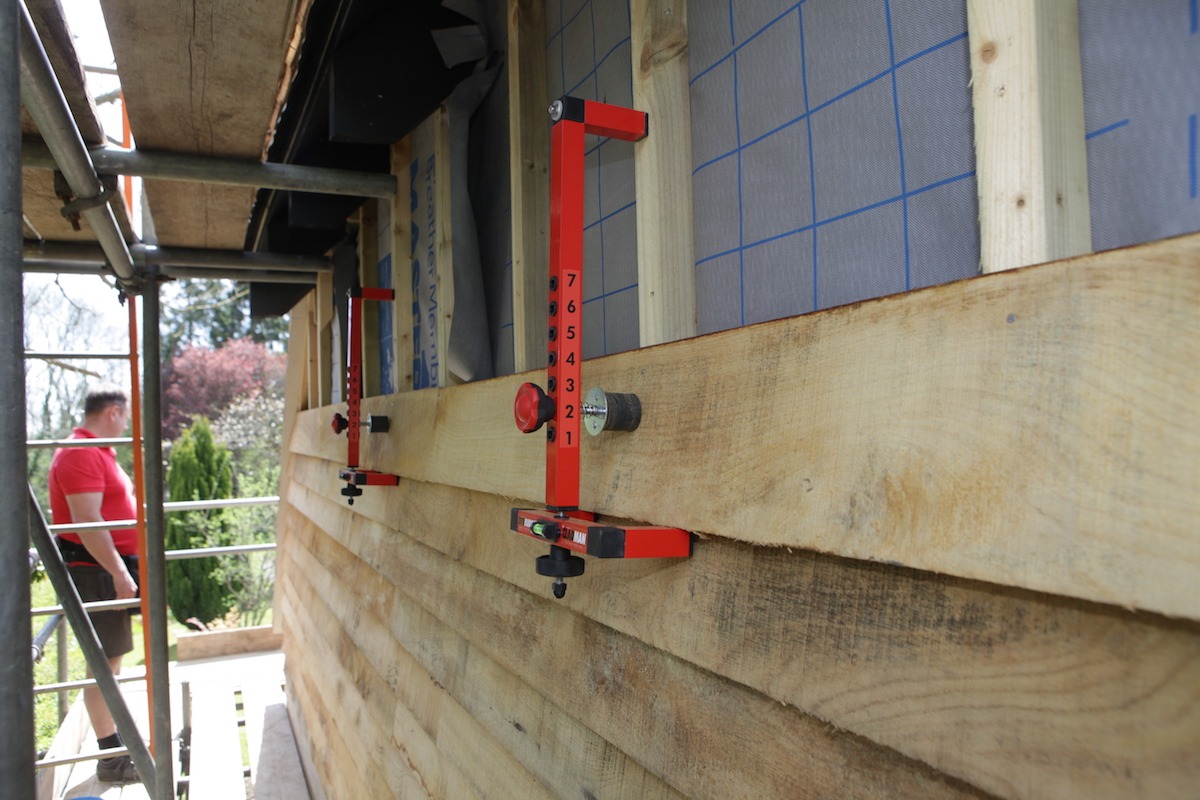
The Cladman is adjustable to suit different board widths but it is also able to handle different thickness’s. There are other devices on the market that will do the same job but there isn’t one that works with cement fibre boards and timber feather-edge. The device I have seen for cement board, for example, has a thin strap that goes down the back of the board. It works well enough but when you pull the straps out they have a tendency to scratch the boards. That makes the customer unhappy so you have to get out the touch up paint. All of a sudden you are a decorator rather than a carpenter. That won’t make you rich or happy.

You can see that the Cladman has a rubber buffer on the front to prevent such scratches and the buffer is also the roller that supports the board above and allows it to roll along its length without marking

Claman looks simple enough but that is deceptive, it has gone through a lot in the design. Nobody ever gets it right first time and James has produced a series of prototypes in his workshop to get to the finished article. When I visited him he had finalised the tool but was busy designing a special carrying case to hold a pair of Cladmen.They are robust enough but they have precision adjustments that would be better off if they were not knocked about by throwing them into the back of the van.