Home Blog Page 36

Leaking Roof That Wasn’t Leaking

0
An ongoing leaking roof

Roger inspects another new build nightmare and talks to Reg about the disruption and huge cost of his problem.

Heat Pump Secrets They Don’t Want You to Know

0
Air Source Heat Pump Secrets..

Roger Joins Jeremy Vine on BBC Radio 2.

https://skill-builder.uk/bbc-radio-2-on-air-source-heat-pumps

Heat pump manufacturers installation instruction manuals

? Daikin: https://bit.ly/3FeTwVB

? AeroMax: https://bit.ly/3K7p17U

? Grant: https://bit.ly/3rdQpbo

USING AN AIR SOURCE HEAT PUMP FOR HEATING

Heat pumps work best when there’s less of a difference between the inside and outside temperatures. In much the same way that your fridge has to work harder in hot weather.

This makes them a good match for underfloor heating systems. Floors cover a much bigger area than radiators so they don’t need to get as hot to provide the same amount of heat.

Air source heat pumps also have a lower output than a gas or oil-fired boiler. This means they can’t deliver heat as quickly. Instead, they’re best used to heat your home up slowly over a longer period.

AIR SOURCE HEAT PUMP SECRETS AND RADIATORS

If you have radiators in your home, and you’re switching from a gas-fired heating system to an air source heat pump, you’ll probably need to buy some bigger radiators to keep your house toasty.

USING AN AIR SOURCE HEAT PUMP FOR HOT WATER

Heat pumps can also be a great source of hot water – but the water will be cooler than from a boiler. Practically this means that If you’re running a bath, you’ll need more hot water and less from the cold tap. So you’ll likely need a bigger hot water tank to cover your needs too.

REGULATIONS

A fly in the ointment for some is the need to meet regulations when installing an ASHP. Although the vast majority of people don’t need planning permission, there are a couple of things that must be adhered to in order for the ASHP install to be without issue with the local council.

This includes making sure the installation is at least a metre from the boundary of your home, will be used only for heating, is installed on a suitable surface such as the ground or a flat roof (1 metre from the edge), has a maximum volume of .6 cubic metres.

_______________________________
David Hayman – New Clean Energy
? https://newcleanenergy.co.uk

Roger Joins Jeremy Vine on BBC Radio 2 to Discuss Air Source Heat Pumps

0

Skill Builder’s Roger Bisby was invited to join Jeremy Vine on BBC Radio 2 to discuss the pros and cons of air source heat pumps.

Listen to the full interview here:

Solid Gear Prime GTX — Hi-Tech Safety Boots For The Winter

0

Incorporating some of the most advanced technical features in safety boot design.

With a focus on comfort and S3 safety, Solid Gear’s new and athletic-looking Prime GTX boots are probably the most comfortable and robust footwear you can get for the winter.

This hi-tech safety footwear will keep your feet dry so you can work comfortably in the roughest conditions on site – with effective protection all day long.

Solid Gear has combined a Vibram® outsole with a full and lightweight EPTU mid-sole to prioritise top-line comfort and stability.

The sole combines excellent durability with oil-and slip-resistance and outstanding grip on snow and ice – even at low temperatures.

What’s more, the GTX combines ergonomics with a torsional rigidity for safety that is enhanced by the durable microfiber upper that has a waterproof and breathable GORE-TEX® membrane.

Comfort and fit are delivered to the highest standard with the GORE-TEX® Stretch Technology in the upper which, together with a high heel counter and the snug BOA® Fit System, make this boot truly a unique experience in safety footwear protection.

To get more information on Solid Gear Safety Footwear, check out www.solidgearfootwear.com; you can call the Helpline on 01484 854788 or email sales@hultaforsgroup.co.uk

What is Multifoil Insulation? — With Byron Lawson

0
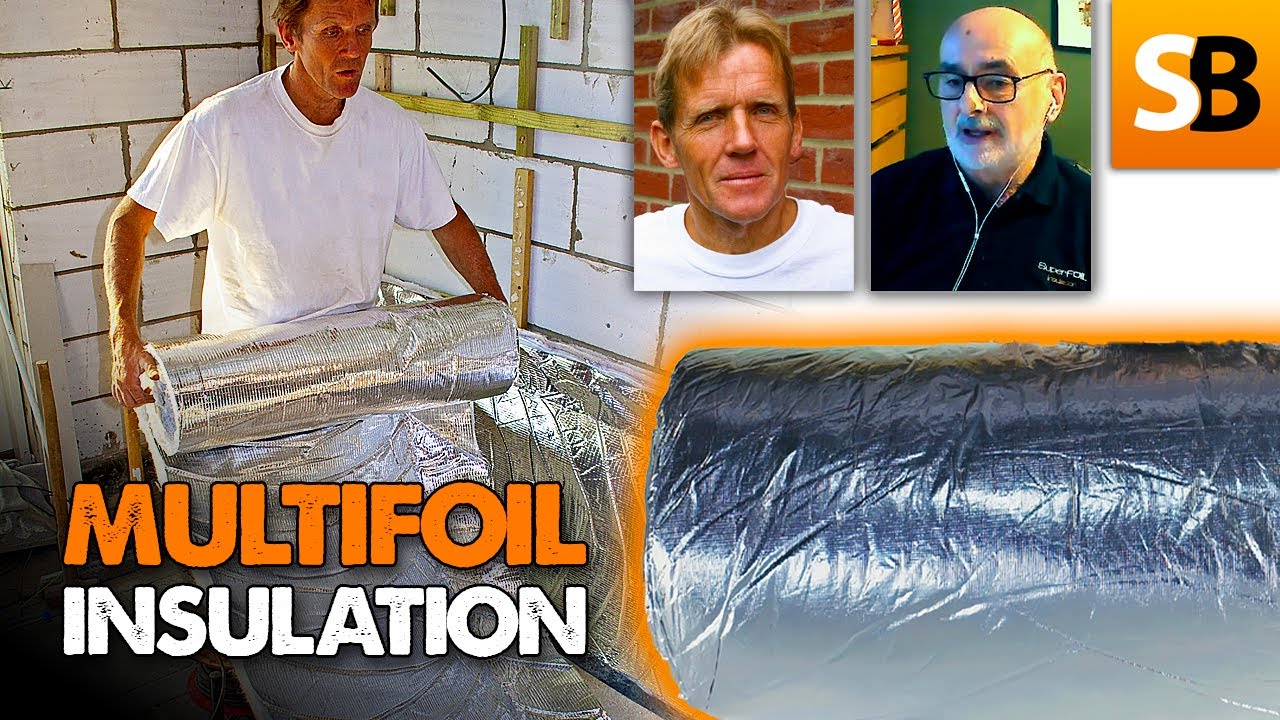
The benefits of multifoil insulation

Byron Lawson from SuperFOIL explains…

🔗 https://www.superfoil.co.uk

Multifoils explained — FAQ from PBC Today

So how does multifoil insulation work?

It’s not magic but multifoil insulation controls the three mechanisms of heat transfer; radiation, conduction and convection. The low emissivity outer layers reflect up to 95% of infra-red radiation back into the house and prevent the house from emitting infrared radiation to the outside. At the same time, the fibrous insulation core reduces heat loss through conduction and convection.

Multifoil insulation also controls air and vapour movement and as the product is installed across rafters or timber studs it acts as a thermal break and reduces continuous cold bridging.

How is this different to traditional insulation?

Rigid board and fibre insulation are both good at controlling heat loss, but that is all they do.

They don’t control air movement and they don’t control water vapour. By controlling heat, air and vapour movement in one, multifoils address all the needs of the building.

Are multifoils accepted by building control?

LABC has embraced the correct use of multifoil insulation and a number of products, including PhotonAir and PhotonFoil, have been registered within the LABC Registered Detail scheme ensuring their acceptance by building control across England and Wales.

Can multifoil insulation meet new build regulations on its own?

No. There is no multifoil product that will meet current new-build regulations by itself – all will need to be used with additional insulation, for example, PhotonFoil with 65mm PIR will achieve a U-value of 0.18 W/m2.K in a pitched roof.

In refurbishment projects requiring different U-values, there may be situations where multifoil insulation is accepted as an upgrade as a single layer. Here, where the standard is not technically, functionally or economically feasible, the thermal element should be upgraded to the best standards achievable – delivering a simple payback of no greater than 15 years. Generally, this lesser standard should not be worse than 0.7w/m2.k. PhotonAir (an insulating breather membrane) can achieve a U-value of 0.60 in 75mm rafter at 400mm spacing.

It is advisable in these circumstances to consult with your local building control officer.

What goes on the warm side/cold side?

Vapour barrier multifoils, such as PhotonFoil will go on the inside of a roof while breathable products, such as PhotonAir, will go on the outside of a building. In simple terms, it’s about preventing water vapour from getting into the cavity, but, if it does, it needs a mechanism to escape or it runs the risk of developing harmful condensation.

Remember, vapour barrier on the warm side, breathable on the cold side.

Why do I need airgaps and what is optimum?

Airgaps are needed for thermal performance and the optimum is 20mm but it can be less with a small reduction in the R-value.

Do airgaps need to be ventilated to reduce condensation risk?

No, they should be unventilated or the thermal benefit won’t be achieved. All our accepted solutions have condensation risk analysis so they can be used with confidence. Again remember the rule: vapour barrier on the warm side, breathable on the cold side.

If I only have one airgap does this give me a condensation risk?

No, it doesn’t but it will drop the thermal performance. All PhotonFoil and PhotonAir Registered Details have been independently assessed by LABC to ensure they deliver the necessary thermal performance.

What batten sizes do I need?

The Photon range, being 33mm thick, needs a 38mm batten to provide the optimum air gap. Thicker products do however need bigger battens to achieve the optimum air gap, for example, a 40mm thick multifoil typically needs a 50mm batten and 50mm thick multifoil a 70mm batten!

For anything thicker than this then the question is `is it practical or really space-saving?’.

See the full article here: https://www.pbctoday.co.uk/news/energy-news/multifoils-explained/22073/

How To Install a Ground Source Heat Pump

0
Install A Ground Source Heat Pump – Sponsored by Worcester Bosch

🔗 https://www.worcester-bosch.co.uk/heat-pumps

What are the basic workings of a heat pump?

A heat pump is a relatively new technology in the UK although they are widely used in Scandinavia and many parts of Europe where there is an abundance of renewably sourced electricity.

A heat pump takes energy from outside and transfers it into heat to be circulated around a heating and hot water system.

A heat pump uses electricity to run the components of a heat pump, principally a fan, compressor and circulating pumps to transfer the energy from the heat source into the heat sink or heating system.

Greenstore LECP heat pumps overview

Worcester Bosch Greenstore ground source heat pumps provide economical, low carbon energy, enabling you to meet all of the heating and hot water requirements of your home from one renewable source.

Available in two versions, the system version has been designed for use with a G3 approved Greenstore solar-ready cylinder for the production of hot water, whilst a G3 approved Combination model includes a built-in 185-litre cylinder.

Find out more: https://www.worcester-bosch.co.uk/products/heat-pumps/directory/greenstore-lecp-heat-pumps

The Crazy Cost of Going Cordless?

0
The next time you are considering buying a new power tool you are very likely to be going cordless..

That is not me reading your mind, it is what all those sales and marketing people have been drip-feeding us in our sleep. It may well be true that a cordless is the best choice but as I am about to explain it might not.

I am old enough to remember when cordless tools first came in. The first 7.2-volt battery drill was nothing more than a gutless toy. It was ok for driving in small screws, but it was certainly no match for this Yankee pump-action screwdriver. The fact that most of you have probably never seen one of these shows just how far cordless tools have come in those years.

Cordless tools were not invented for the moon landing, but this is where they first came to the attention of the world.

You may have seen the pictures of the first man on the Moon using a bloody great hammer drill. No wonder people thought the moon landings were fake. There were a couple of blokes bouncing around in helium-filled suits to make it look like they are in zero gravity and just look at that they haven’t even plugged their drill in.

It was just beyond people’s imagination. Landing on the moon and using a drill that you didn’t need to plug in. The pinnacle of man’s achievements. A lot of people think that the cordless drill was invented for moon landings, but it was around before that. you just couldn’t buy them from Home Depot or B&Q as it is in England.

So Nasa already knew there was such a thing as a battery-powered drill but they needed something special so they contacted Black and Decker to help them develop one that would work on the moon.

Now if you are taking one cordless drill to the moon and you choose a Black and Decker some might call that a brave decision because they were a bit DIY but for Black and Decker it was a result. Their marketing department must have been well…. over the moon ….. but just have a look at that picture of the astronauts using that drill. Try as I might I don’t see the Black and Decker logo on it.

Had these people never watched a James Bond film? Didn’t they understand the concept and value of unsubtle product placement at every opportunity. I mean a few well-placed logos on those pictures that were beamed into every television set on Earth. How much would a deal like that be worth? And why stop there?

Moon Boots by Nike, Space Suit by Pierre Cardin, they could have paid for the whole trip with the advertising revenue and that isn’t including the merch!

But what did the astronauts want a drill for anyway? Bye darling I’m off to the Moon. Have a good trip honey and don’t forget to take your drill.

Well, I can tell you that Neil Armstrong wasn’t going to put up any shelves, which is probably the first act of any colonisation after planting a flag, because he didn’t even take a spirit level. Anyway, the actual drill they took would have been no good for that. It was a core drill for extracting core samples of moon rock so they could take them home and sell ’em on eBay.

Going to the moon? Bring me back a stick of rock. Cut it and it says moon all the way through.
How did they do that?

Actually, while I am talking about NASA’s contribution to cordless technology, even more impressive was the impact wrench that Black and Decker designed with Nasa for the Gemini project. It needed to be able to spin nuts in zero gravity without actually spinning the astronauts around. And that good people is why you can now drive in huge screws one-handed without the impact driver breaking your wrist.

It is all down to kinetics. So, before I get too side-tracked by the wonders of space let’s get back down to Earth.

Houston, we have a problem.

And the problem is that the limitation of cordless tools has always been the battery. They have evolved through NiCad with all its memory issues to Nickel Metal Hydride which is still used on little rechargeable batteries but for other stuff and we have moved onto Li-Ion which gives you more power and a longer run time with less weight, but we are not there yet.

Would You Live In This Oast House?

0
The Kentish Oast House Project

Dan Cox completes work on this beauty.

Check out Dan’s Roofing Square: https://www.essential-carpenter-tools.co.uk

SHOPPING LINKS

🛒 Tracer AMK1 Deep Pencil Marker: https://amzn.to/3nlVsEr

🛒 Makita GN900SE Gas Nailer: https://amzn.to/3DggA6y

🛒 Dead On Steel Milled Hammer: https://amzn.to/2QSzQ6B

🛒 Swanson 7-inch Speed Square: https://amzn.to/3jigG5M

__________________________
More info on Oast houses:

The Hop Farm Country Park at Beltring.
🔗 https://en.wikipedia.org/wiki/Hop_Farm

The story behind those weird oast house buildings all over Kent and Sussex
🔗 https://www.kentlive.news/news/kent-news/full-story-behind-those-weird-3887160

A history and description of English Oast houses
🔗 http://www.geograph.org.uk/article/Oast-Houses

Enjoy a nice glass of Spitfire Amber Kentish Ale:
🔗 https://amzn.to/3mChiV0

Cold Weather Working With Snickers Workwear’s Sustainable Climate Control

0

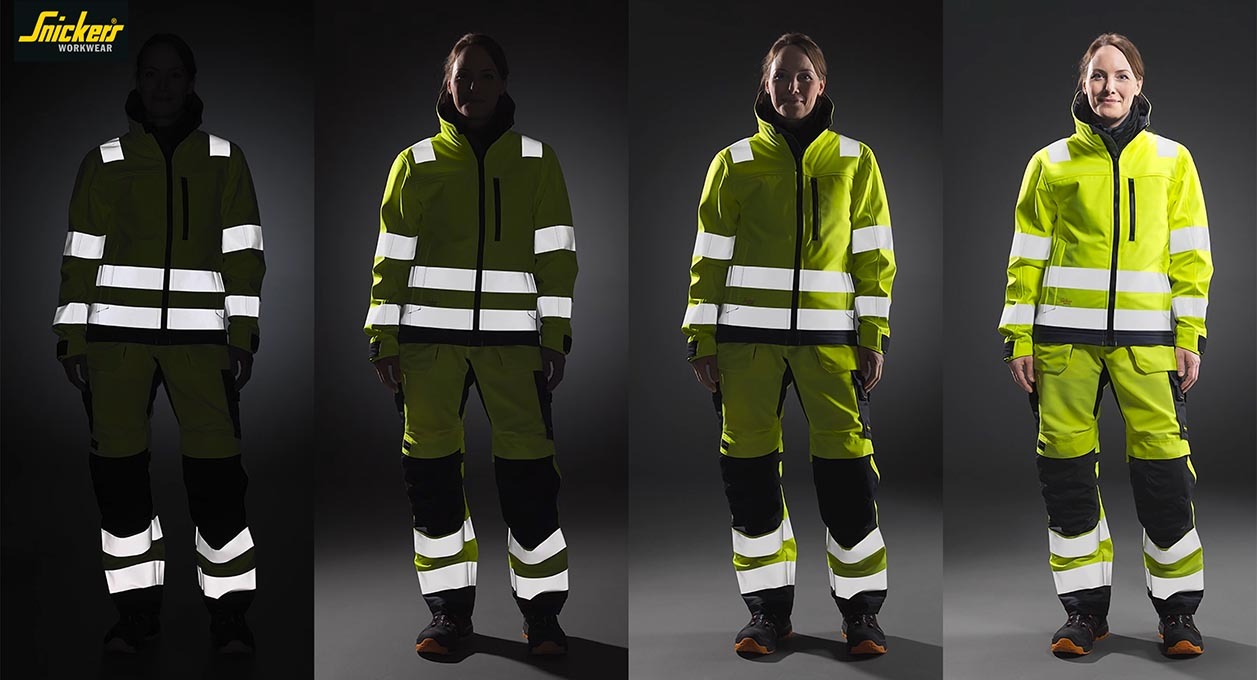
Dressing right and staying comfortable when it’s cold and wet demands the best in Climate Control working clothes.

Continuous work in cold weather produces body heat and sweat. But when your rate of work slows, the sweat cools and you’ll start to feel cold and damp.

The solution is Snickers Workwear’s body-mapping Mid-layer working clothes that deliver advanced ventilation to control and regulate the heat from your body.

Made to last from sustainable fabrics such as micro fleece and recycled polyester, they’re great for both work and leisure activities.

These garments insulate and keep heat around your body by effectively creating an air pocket inside your clothes.

They complement Snickers Workwear’s FlexiWork Base-layer undergarments that combine sustainable animal-friendly Merino Wool with polyamide for warmth and ventilation.

As well as the Top-layer or ‘outer shell’ AllroundWork and Flexiwork Weatherproof Jackets and Trousers that will keep you warm, dry and comfortable all day long.

For more information on Snickers Workwear’s sustainability philosophy and it’s Climate Control garments you can call the Helpline on 01484 854788; check out www.snickersworkwear.co.uk or email sales@hultaforsgroup.co.uk

Snickers Workwear Climate Control – Baselayer Underwear

0

Dressing for the cold is like building a house – start with a good foundation.

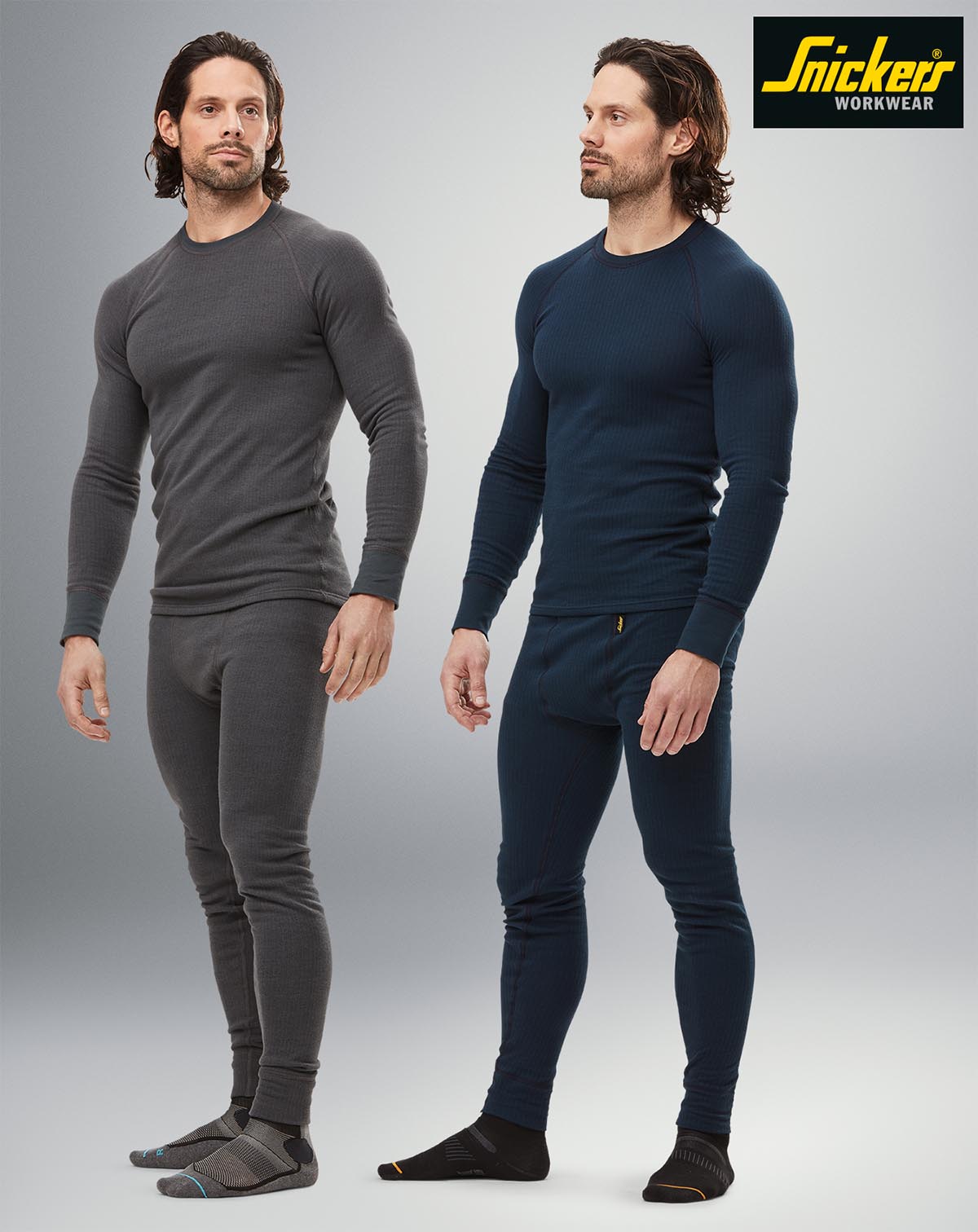
The Snickers Workwear Baselayer clothing for professional tradesmen and women uses high-tech breathable fabrics for ventilation and body moisture transport for sustainable warmth and comfort.

The Base-, Mid- and Toplayer clothing combines to keep you working dry, warm and comfortable wherever you are on site.

With sustainability at the forefront of Snickers Workwear’s clothing philosophy, garments are available in recycled polyester and merino wool as well as the 37.5® technology ventilating fabric to suit different types of work in a variety of cold and wet weather conditions.

Snickers Workwear Baselayer Underwear

The cutting-edge AllroundWork, FLEXIWork and LITEwork designs and fabrics will keep you warm and dry – so you won’t get cold, wet and shiver.

All the garments are made from quick-drying, fabrics that come with special ventilation features to control and regulate the heat from your body.

All in all, Snickers Workwear Baselayer clothing will give you the kind of warm, dry and fresh working comfort you wouldn’t have thought possible.

That’s why Snickers Workwear is the brand of choice for working outside in the winter.

So, to make sure you get the right protection, visibility, flexibility, durability and ventilation, check out the Climate Control garments from Snickers Workwear that work together to suit your workday.

For more information on Snickers Workwear’s sustainability philosophy and its Climate Control garments you can call the Helpline on 01484 854788; check out www.snickersworkwear.co.uk or email sales@hultaforsgroup.co.uk

Designed For Performance – The Revolution 2 GTX Safety Trainer

0

Solid Gear’s fastest safety shoe is designed for performance and safety to keep you going for longer at work.

The GTX’s hi-tech, lightweight construction is a giant leap forward from the look and feel of ordinary safety shoes.

It combines a high-performance blend of ergonomic design, athletic comfort and S3 protection.

The waterproof GORE-TEX® upper delivers constant dryness while the locking drawstring ensures the shoe fits like a glove.

Combined with its E-TPU midsole and the ‘bounce back’ technology, foot and knee fatigue after a hard day’s work could be a thing of the past.

The New Revolution 2 GTX is more than just a market-leading safety trainer, it’s a workmate that will keep your feet fresh, safe and dry – all day long.

So get to know more about the quality, innovation and top-class safety functionality in every Solid Gear product – your feet will notice the difference.

Building An Oast House – Part 2

0
Dan Cox is Building An Oast House..

Let’s watch him continue his work on the Kentish house project.

Check out Dan’s Roofing Square: https://www.essential-carpenter-tools.co.uk

__________________________
More info on Oast houses:

The Hop Farm Country Park at Beltring.
🔗 https://en.wikipedia.org/wiki/Hop_Farm

The story behind those weird oast house buildings all over Kent and Sussex
🔗 https://www.kentlive.news/news/kent-news/full-story-behind-those-weird-3887160

A history and description of English Oast houses
🔗 http://www.geograph.org.uk/article/Oast-Houses

Enjoy a nice glass of Spitfire Amber Kentish Ale:
🔗 https://amzn.to/3mChiV0

Building An Oast House – Part 1

0
Dan Cox Building An Oast House

Skill Builder meets Grand Designs as Roger Bisby joins Dan Cox on his exciting Kentish oast house project.

What is an oast house?

An oast, oast house or hop kiln is a building designed for kilning (drying) hops as part of the brewing process. They can be found in most hop-growing (and former hop-growing) areas and are often good examples of vernacular architecture. Many redundant oasts have been converted into houses. The names oast and oast house are used interchangeably in Kent and Sussex. In Surrey, Hampshire, Herefordshire and Worcestershire they are called hop kilns.

They consist of a rectangular one or two-storey building (the “stowage”) and one or more kilns in which the hops were spread out to be dried by hot air rising from a wood or charcoal fire below. The drying floors were thin and perforated to permit the heat to pass through and escape through a cowl in the roof which turned with the wind.

The freshly picked hops from the fields were raked in to dry and then raked out to cool before being bagged up and sent to the brewery. The Kentish dialect word kell was sometimes used for kilns (“The oast has three kells”) and sometimes to mean the oast itself (“Take this lunchbox to your father, he’s working in the kell”). The word oast itself also means “kiln”.[1]

The earliest surviving oast house is at Golford, Cranbrook near Tunbridge Wells. It dates from sometime in the 17th century and closely mirrors the first documentary evidence on oasts soon after their introduction of hops into England in the mid 16th century. Early oast houses were simply adapted barns but, by the 18th century, the distinctive tall buildings with conical roofs had been developed to increase the draught.

At first these were square but around 1800 roundel kilns were developed in the belief that they were more efficient. Square kilns remained more popular in Herefordshire and Worcestershire and came back into fashion in the south east in the later 19th century. In the 1930s, the cowls were replaced by louvred openings as electric fans and diesel oil ovens were employed.

Hops are today dried industrially and the many oast houses on farms have now been converted into dwellings.

The Hop Farm Country Park at Beltring.
🔗 https://en.wikipedia.org/wiki/Hop_Farm

The story behind those weird oast house buildings all over Kent and Sussex
🔗 https://www.kentlive.news/news/kent-news/full-story-behind-those-weird-3887160

A history and description of English Oast houses
🔗 http://www.geograph.org.uk/article/Oast-Houses

Sick of Tool Theft? Watch This & Join The Fight!

0
Fighting Tool Theft

Find your MP: https://members.parliament.uk/FindYourMP

Find your Police and Crime Commissioner: https://www.apccs.police.uk/find-your-pcc

MP letter template:
https://skill-builder.uk/wp-content/uploads/2021/12/MP_Letter.rtf

MP LETTER TEMPLATE (copy and paste)
***********************************

Dear [INSERT NAME OF MP]

I would like to bring to your attention a national crime wave that is affecting a great many trades people, causing many to go out of business or suffer mental health problems. The crime is tool theft, and it takes place mostly at night from vans.

Following a petition from nearly half a million tradespeople. The Home Office has looked into ways of tackling this crime and consulted with police forces but, despite this, it is on the increase and it seems very little is being done to stop it.

Part of the problem is that the stolen tools are being sold openly at markets and car boot sales and the police seem reluctant or powerless to prevent it. The crime of handling stolen goods used to carry a prison sentence, but it seems to have been downgraded so those selling the tools have nothing to fear.

The sellers of these tools need to be challenged to prove that they have legitimate rights to them. If the law prohibits such a challenge, then the law needs to be changed. The sellers of these tools should be able to produce purchase documents to validate their purchase from legitimate sources and if they can’t the assumption must be that they are stolen.

Quite apart from the huge cost and distress to the victims of this crime it is also being used to finance drug dealing.

At a time when we are trying to encourage and train young people to join the building industry the loss of tools serves a devastating blow to those people who are working hard to make an honest living. Many of the victims have been robbed several times and are no longer able to obtain insurance. They deserve better from the forces of law and order and from their elected representatives.

I sincerely hope that you will take up the issue with The Home Secretary and our local police force to see what more can be done to tackle this crime.

Yours sincerely

[INSERT YOUR NAME]

********************************

The Tall Carpenter’s van break in video:
https://youtu.be/dkGGoBvj2tA

How to Lay a Real Brick Path (with a laugh)

0
How To Install A Traditional Real Brick Path

Roger visits Meadvale Builders

Extension with Meadvale Builders coming soon, hit subscribe – don’t miss it.

Check out Meadvale Builders:

https://www.mybuilder.com/profile/view/meadvale_builders

Tel: 01737 227009

Pythagoras – Genius or Murderous Fraudster?

0
The Career Of Pythagoras

Roger examines, to see if it’s time to cancel him.

Unbelievably Simple Roof Construction Trick

0
Simple Roof Construction

🔗 Dan Cox Playlist: https://bit.ly/3F879Im

🛒 Ultimate Roofing Square: essential-carpenter-tools.co.uk

Watch This Video if You Have a Gas Boiler

0
The Future Of Gas Boilers

Martyn Bridges, from Worcester Bosch Group, returns to talk with Roger.

Worcester Bosch Boilers
🔗 https://www.worcester-bosch.co.uk/products/boilers

Worcester Bosch Heat Pumps
🔗 https://www.worcester-bosch.co.uk/heat-pumps

A heat pump is a relatively new technology in the UK although they are widely used in Scandinavia and many parts of Europe where there is an abundance of renewably sourced electricity.

A heat pump takes energy from outside and transfers it into heat to be circulated around a heating and hot water system.

A heat pump uses electricity to run the components of a heat pump, principally a fan, compressor and circulating pumps to transfer the energy from the heat source into the heat sink or heating system.

Which is better, OSB or Plywood?

0

Roger compares OSB 3 board and plywood and gives his opinion on the best option.

OSB OR PLYWOOD?
(from Champion Timber)

OSB board and plywood are both hugely popular sheeting materials used in modern-day property builds. Whether they’re being used in wall sheathing, flooring or roofs, they both have their own particular suitability and also their own downfalls. So which is best to use in your project?

OSB board

OSB board was introduced in the 70s as an alternative to plywood for load-bearing building applications. It’s made up of layers of cross-oriented strands of timber and bonded with a waterproof resin. Their unique formation allows them to withstand high levels of stress. They are more often than not covered by layers of plaster and paint to achieve a polished look.

Plywood

Plywood has been around much longer than OSB board and was the favoured sheeting material until the cost savings of OSB became apparent. Flexible, durable and hardwood plywoods are suitable for a variety of applications.

Both OSB board and plywood are flexible and durable options for any project. They are ideal for property builds as sheet materials for walls, floors and roofs and are also great for use in smaller projects.

Environmental factors

OSB board is made from a FSC mix 70% timber, meaning that it is composed of a minimum of 70% FSC certified wood/pulp and the balance is controlled wood or reclaimed material. Plywood is certified as FSC 100%.

The majority of the time OSB boards are the cheaper option and for this reason, are now favoured in most building applications. However, when it comes to DIY plywood still reigns supreme – most probably due to the natural wood appearance of ply.

https://www.championtimber.com

Kitchen Refurbishment – 7 Day Makeover

0
A kitchen Refurbishment

Roger follows a project with a new group of tradesmen.

Meadvale Builders
🔗 https://www.mybuilder.com/profile/view/meadvale_builders

Reigate Plasterers
🔗 https://reigateplasterers.co.uk

Surrey Kitchen Installations
🔗 http://www.surreykitcheninstallation.co.uk

Stonefish Mosaics Floor Tiling Specialist
🔗 http://stonefishmosaics.co.uk

Good Wood Floors
🔗 https://www.goodwoodfloors.co.uk